八旗通志初集 · 卷 1–11
Comprehensive History of the Eight Banners, 第 94–204 頁
逐詞解析 · word-by-word(82 詞)
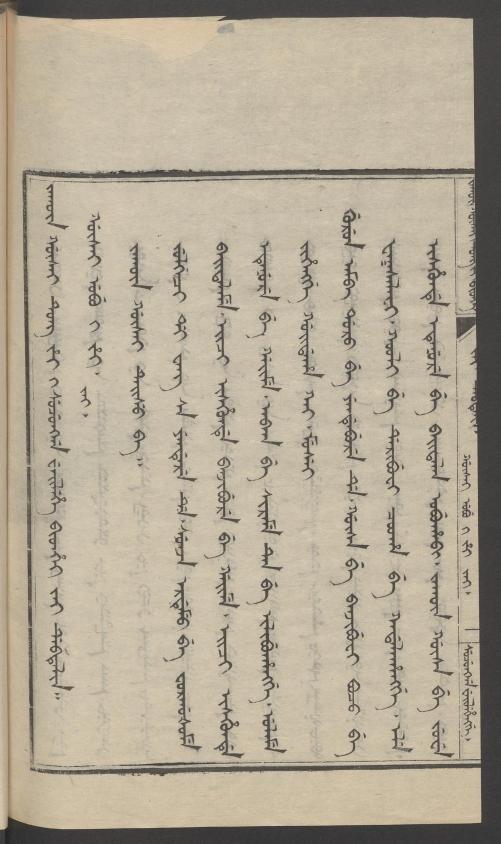
《八旗通志初集》卷第二·旗分志二·八旗本地 自古帝王隆興,五德遞相為用,或取相生,或取相勝,繼天立極,傳之者久矣。我國肇興大業,創制八旗,分定旗色,建立章程,統率兵伍,尤以相勝為用。將八旗分為二……
EnglishThe Second Volume of the Imperially Commissioned First Edition of the Eight Banners General History, Treatise on Banner Divisions, Part Two: The Localities of the Eight Banners. Since antiquity, when emperors and kings flourished, the Five Virtues were cyclically employed; either the principle of mutual generation was adopted, or that of mutual conquest was adopted. (Thus) Heaven was succeeded and the supreme standard was established; this tradition has long been handed down! When our nation was elevating its great enterprise, the Eight Banners were created, colors were differentiated, regulations were instituted, and the troops were commanded, (with) the use of mutual conquest being made even more predominant. The Eight Banners into two…
逐詞解析 · word-by-word(119 詞)
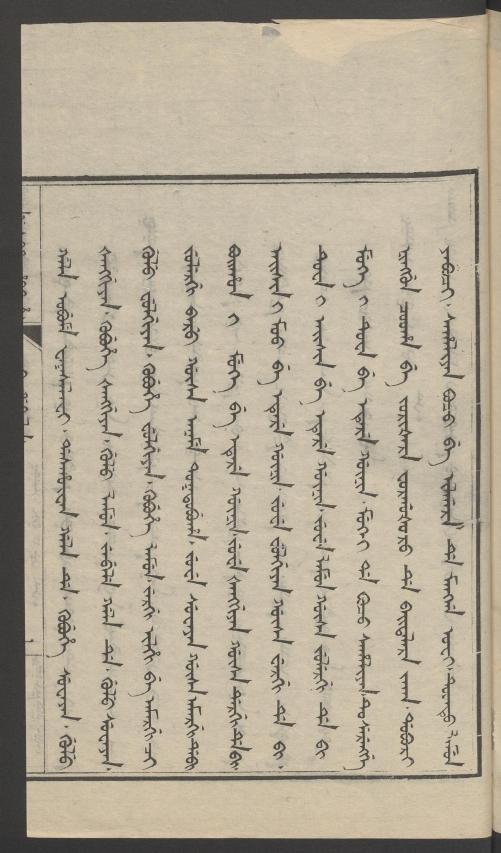
分為左右二翼,左翼則鑲黃、正白、鑲白、正藍,右翼則正黃、正紅、鑲紅、鑲藍,其次第自北而南,依次定旗。二黃旗在北,取土克水之意;二白旗在東,取金克木之意;二紅旗在西,取火克金之意;二藍旗在南,取水克火之意。水本之黑色大纛,乃調遣六軍所用之物。夜間行軍,因黑色難於辨認,故看藍色〔?〕。
EnglishThey are divided into two wings: in the left wing are Bordered Yellow, Plain White, Bordered White, and Plain Blue; in the right wing are Plain Yellow, Plain Red, Bordered Red, and Bordered Blue. Their order is established from north to south, with the banners arranged in sequence. The two Yellow Banners are in the north, embodying the intention of earth conquering water. The two White Banners are in the east, embodying the intention of metal conquering wood. The two Red Banners are in the west, embodying the intention of fire conquering metal. The two Blue Banners are in the south, embodying the intention of water conquering fire. The great black banner, whose origin is water, is an item used for directing and maneuvering the six armies. When marching at night, because the black colour is difficult to distinguish, it looks at blue〔?〕.
逐詞解析 · word-by-word(96 詞)
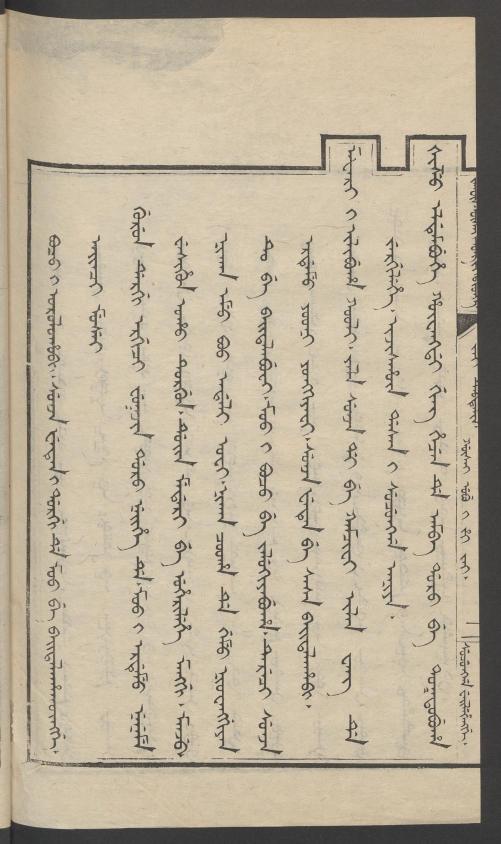
颜色之更代,五行之中不用木者,想因我国自东方肇基创业之日,木德已先显贵故也。统一四海之后,满汉既成一家,汉军乃悉用绿旗,使青色得以充盈。由是五德全备,五行遂能并用。祖宗所垂法度,诚合五帝之规而并伦于三王。顺治元年,世祖章皇帝在京师奠定大体。
EnglishThe colour has been replaced. That wood is not used among the five elements is perhaps because, when our nation first established its rule from the east, the virtue of wood was already pre-eminent. After the four seas were unified, as Manchu and Han became like one family, the green banners were employed for all Han troops, thereby making the colour of wood fully present. Henceforth, the five virtues were complete, and the five elements came to be used together. The code laid down by the ancestors indeed combines the tradition of the Five Emperors and stands alongside the Three Kings. In the first year of the Shunzhi reign, Emperor Shizu Zhangdi stabilized the great polity in the capital.
逐詞解析 · word-by-word(105 詞)
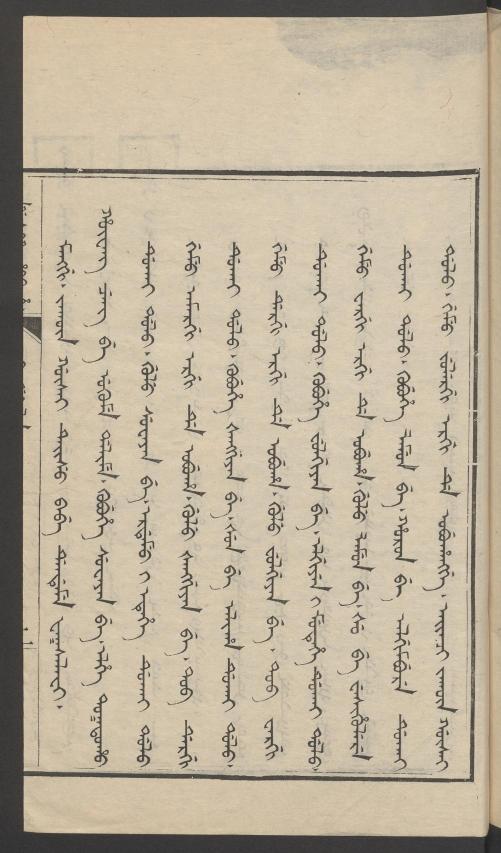
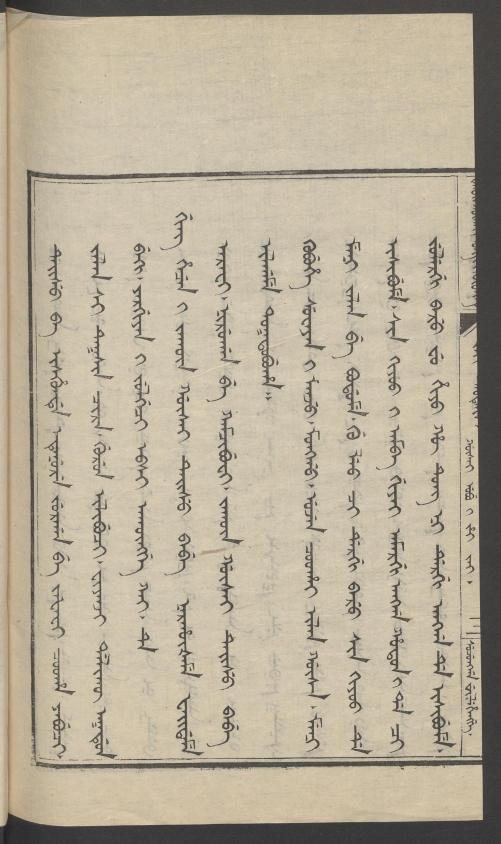
之後,將八旗各職分之地劃分開來,環拱皇城。鑲黃旗置於安定門內,正黃旗置於德勝門內,皆在北邊。正白旗置於東直門內,鑲白旗置於承日門內,皆在東邊。正紅旗置於西直門內,鑲紅旗置於阜成門內,皆在西邊。正藍旗置於崇文門內,鑲藍旗置於宣武門內,皆在南邊。此想必係八旗之
EnglishAfterwards, the respective territories of the Eight Banners were divided and arranged, encircling the Imperial City. The Bordered Yellow Banner was placed within the Gate of Stability (Andingmen); the Plain Yellow Banner was placed within the Gate of Virtuous Victory (Deshengmen); all were situated in the north. The Plain White Banner was placed within the Eastern Straight Gate (Dongzhimen); the Bordered White Banner was placed within the Gate of Receiving the Sun (Chaoyangmen); all were situated in the east. The Plain Red Banner was placed within the Western Straight Gate (Xizhimen); the Bordered Red Banner was placed within the Gate of Abundant Completion (Fuchengmen); all were situated in the west. The Plain Blue Banner was placed within the Gate of Advocating Culture (Chongwenmen); the Bordered Blue Banner was placed within the Gate of Manifesting Might (Xuanwumen); all were situated in the south. This is presumably of the Eight Banners
逐詞解析 · word-by-word(100 詞)
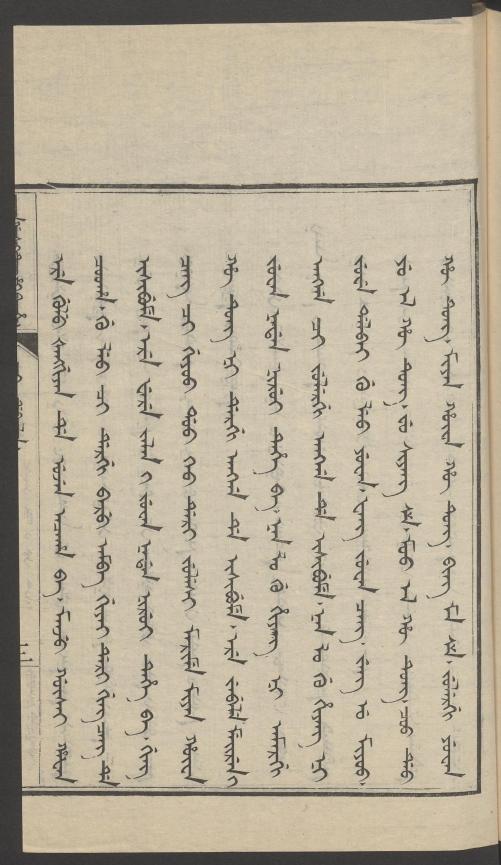
各守方位,秉持相勝之道,行軍則隊伍整肅,立國則屏藩鞏固,誠自古以來所未有者也。今將京城八旗各該方位詳細排列成文,並附繪圖,區別釐定八旗方位。鑲黃旗滿洲、蒙古、漢軍三旗,各計其地界:自鼓樓向東至新橋,自新橋大街北口、城根向南至府學胡同東口。
EnglishHolding the principle of mutual overcoming in their respective positions, when troops march, the ranks are orderly; when a state is established, the protective barrier is firm and solid—truly, there has been nothing like this since ancient times. Now the corresponding locations of the Eight Banners in the capital have been carefully set out in writing, and with a map attached, the locations of the Eight Banners have been distinguished and fixed. For the Bordered Yellow Banner, including the Manchu, Mongol, and Ujen Cooha (Han Chinese martial) banners, their respective areas are planned: from the Drum Tower eastward to the New Bridge, from the northern entrance of the Great Street of the New Bridge and the city wall base southward to the eastern entrance of Fuxue Hutong.
逐詞解析 · word-by-word(116 詞)
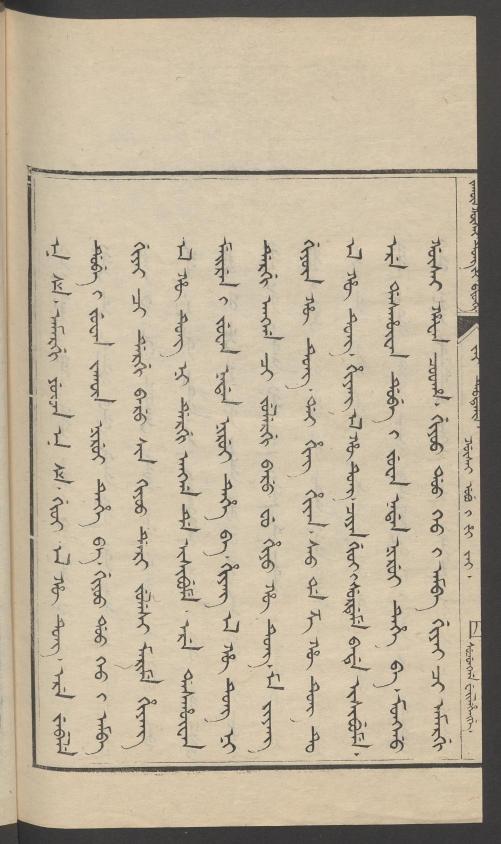
正白旗漢軍駐劄處所並滿洲旗官兵,自鼓樓迆東,由大街至經廠止。此頭甲喇十七牛錄駐劄處,自經廠由橋道口折而南,至棉花衚衕東口止。此二甲喇十七牛錄駐劄處,自南鑼鼓巷北口至南口止。南鑼鼓巷兩旁:鼓樓院坊、十倉、正武廟、魚兒衚衕、福相寺、木兒衚衕、曹弟衚衕、棉花衚衕、兵馬司南院。
EnglishThis, the place where the Hanjun were assembled in the Plain White Banner, together with the officers and soldiers of the Manchu banners, from the Drum Tower eastwards, along the Great Street, extends to the Scripture Depot (Jingcang). This, the dwelling place of the seventeen niru of the First Jalan (Fere Jalan), from the Scripture Depot, via Bridge Road Mouth (Qiaodaokou), turning southwards, extends to the East Entrance of Cotton Flower Lane (Mianhua Hutong). This, the dwelling place of the seventeen niru of the Second Jalan (Jebele Meiren), extends from the North Entrance to the South Entrance of South Gongs-and-Drums Lane (Nanluogu Xiang). On both sides of South Gongs-and-Drums Lane: Drum Tower Office (Gulou Yuanfang), Ten Granaries (Shicang), Orthodox Martial Temple (Zhengwumiao), Fish Alley (Yu’er Hutong), Blessing Minister Temple (Fuxiangsi), Wood Alley (Mu’er Hutong), Cao Di Alley (Caodi Hutong), Cotton Flower Lane (Mianhua Hutong), South Court of the Bureau of Military Horses (Bingmasi Nanyuan).
逐詞解析 · word-by-word(119 詞)
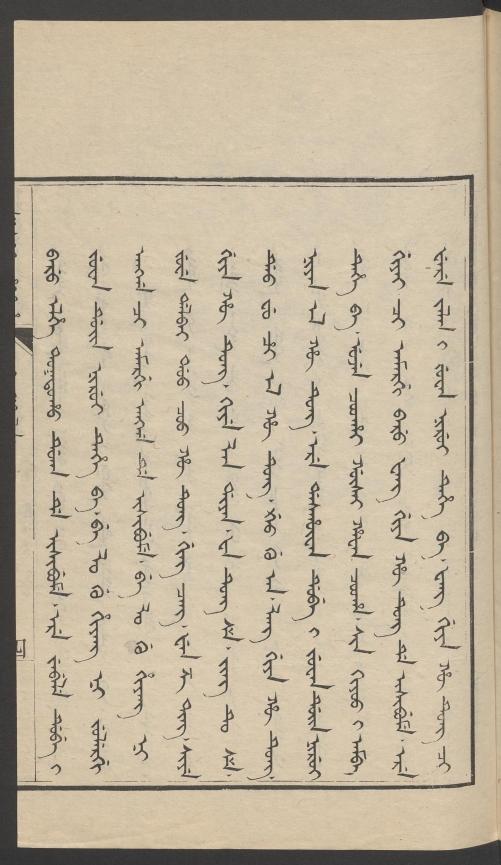
……那寺北、玉泉那寺、菊兒胡同。此右翼末甲喇十八牛錄駐地:自交道口大街向東,自新橋轉而向南,至香餌胡同東口止。此左翼副甲喇十七牛錄駐地:自香餌胡同東口向南,至府學胡同、馬將軍胡同、大興縣、掃帚胡同、土兒胡同、香餌胡同、錢局周圍處止。此左翼末甲喇十七牛錄駐地,蒙古旗官兵,自交道口大街向北……
English…Na Temple North, Yuquan Na Temple, Juer Hutong. The area where the eighteen companies of the Right Wing Rear Jalan are stationed: from the main street of Jiaodaokou eastward, turning south from Xinqiao, and extending to the east entrance of Xianger Hutong. The area where the seventeen companies of the Left Wing Deputy Jalan are stationed: from the east entrance of Xianger Hutong southward, extending to Fuxue Hutong, Ma Jiangjun Hutong, Daxing County, Saozhou Hutong, Tuer Hutong, Xianger Hutong, and the vicinity of the Coin Bureau. The area where the seventeen companies of the Left Wing Rear Jalan are stationed, for the Mongol Banner officers and soldiers: from the main street of Jiaodaokou northward…
逐詞解析 · word-by-word(121 詞)
向安定門,此三甲喇十四牛錄駐地,自鑼鼓巷南口至北口;鑼鼓巷兩旁之蹈鍬胡同、更倉分子亭斜街胡同、怯蘭殿法通寺淨土寺德福笞胡同、高古安朗街胡同、碾兒胡同,此五甲喇十四牛錄駐地,漢軍旗官兵自新橋大街向北至方家胡同,此頭甲喇十牛錄駐地,自方家胡同〔……〕
EnglishTowards Andingmen, this 14-niru garrison of the Third Jalan extends from the south entrance to the north entrance of Luogu Xiang; the 14-niru garrison of the Fifth Jalan, namely the hutongs on either side of Luogu Xiang—Dao Coo Hutong, Ging Cang Fen Dzi Ting Siye Giya Hutong, Kiye Lan Diyan Fa Tung Sy Jing Tu Sy Deo Fu C‘y Hutong, G’ao Gu An Lang Giya Hutong, Niyan El Hutong; the officers and troops of the Hanjun Banner extend from Xinqiao Avenue northwards to Fangjia Hutong; this 10-niru garrison of the First Jalan extends from Fangjia Hutong〔…〕
逐詞解析 · word-by-word(126 詞)
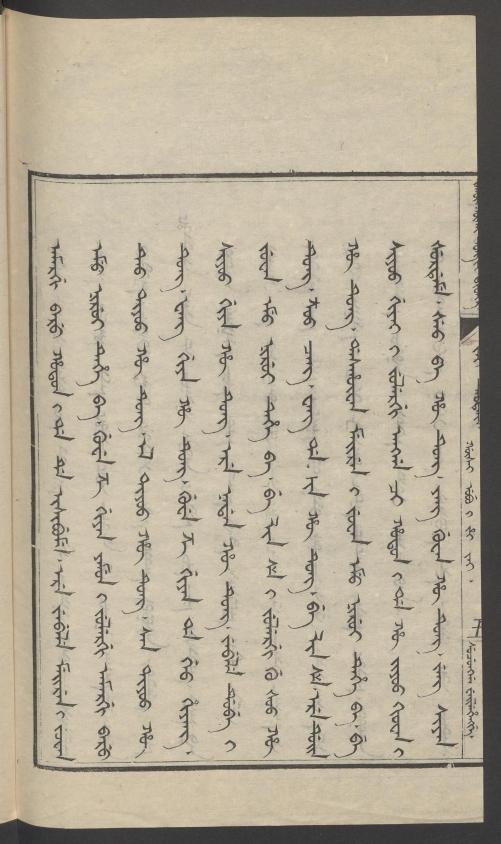
向北直到城守尉署,此為右翼二甲喇十一個牛錄的駐地。國子監衙門以南、以北,頭條胡同、二條胡同、三條胡同、方家胡同、國子監大街香小街胡同〔胡同名數目不符,原文如此〕,此七條胡同為右翼末甲喇十一個牛錄的駐地。將柏林寺以南之姑刷胡同、草場胡同、王大仁胡同、柏林寺,此四條胡同劃為左翼二甲喇十一個牛錄的駐地。由小街南口,繞城守尉護軍校周圍,赦八胡同、陽關胡同、正縣〔下殘〕
EnglishNorthward as far as the City Commandant's office, this is the station of the eleven companies of the Right Flank Second Regiment. From south to north of the Guozijian yamen, Toutiao Hutong, Ertiao Hutong, Santiao Hutong, Fangjia Hutong, Guozijian Dajie Xiangxiaojie Hutong 〔the number of lane names listed does not match〕 — these seven hutong are the station of the eleven companies of the Right Flank Rear Regiment. The four hutong south of Bolin Temple — Gushou Hutong, Caochang Hutong, Wang Daren Hutong, and Bolin Temple — are assigned as the station of the eleven companies of the Left Flank Second Regiment. From the southern entrance of Xiaojie, circling around the City Commandant's guards post, Sheba Hutong, Yangguan Hutong, Zhengxian… 〔text breaks off〕
逐詞解析 · word-by-word(111 詞)
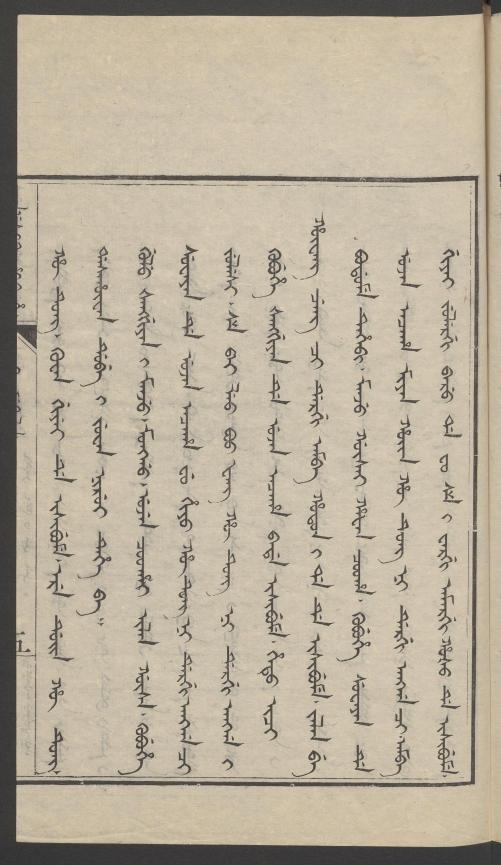
此四胡同(界定之區)延至寬街,此四胡同乃五甲喇十佐領駐地,屬正白旗滿洲、蒙古、漢軍三旗。與鑲黃旗接界處,自府學胡同東口向南,直至寺白樓報房胡同東口與鑲白旗接界處;橫向自皇城向東至大城根;按甲喇計居。滿洲旗官兵,自與鑲黃旗接界之綿線胡同東口起,沿大街向南,至大佛寺西北角。
EnglishThese four alleys, extending to Kuwang Gai (宽街), were the dwelling places of the ten niru of the Fifth Jalan. They belonged to the three gūsa of the Plain White Banner: Manchu, Mongol, and Ujen Cooha (Hanjun). At the border with the Bordered Yellow Banner, from the eastern entrance of Fu Hiyoo Hutong (府学胡同) southward, reaching to the place where the eastern entrance of Sy Bai Leo Boo Fang Hutong (寺白楼报房胡同) borders the Bordered White Banner; horizontally, from Hwang Ceng (皇城) eastward reaching to the base of the great city wall (大城根). They were dwelling counted by jalan. The Manchu banner officers and soldiers, from the eastern entrance of Miyan Hūn Hutong (绵线胡同), which borders the Bordered Yellow Banner, southward along the main street, reached to the northwest corner of Da Fo Sy (大佛寺).
逐詞解析 · word-by-word(113 詞)
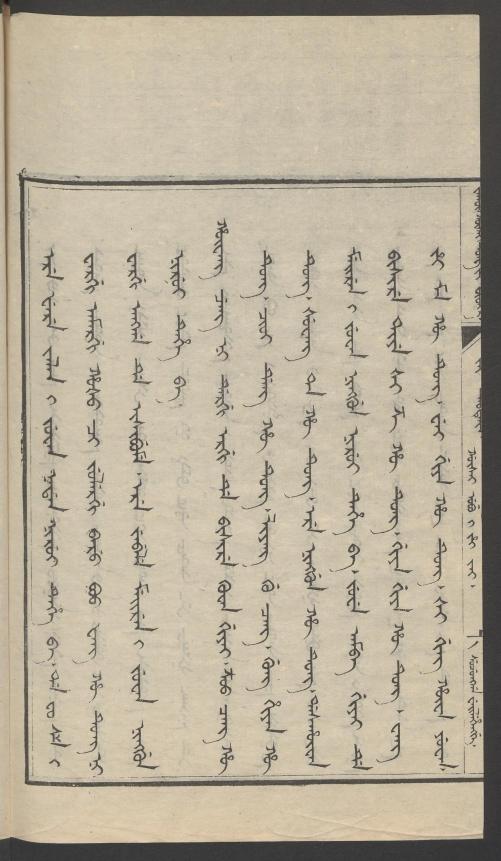
此頭甲喇之十七牛錄駐地,自大佛寺西北角向南,至寶坊胡同西口。此三甲喇之十六牛錄駐地,在皇城之東:貫街草場胡同、取燈胡同、糧穀倉、宮香胡同、雙塔胡同,此六胡同。此四甲喇之十六牛錄駐地,在兩條大街上:鐵獅子胡同、賈家胡同、汪芝麻胡同、魏家胡同、石經花園
EnglishThe quarters of the seventeen niru of this First Jalan extend from the northwest corner of the Temple of the Great Buddha southward to the western entrance of Baofang Hutong. The quarters of the sixteen niru of this Third Jalan, situated on the east side of the Imperial City, comprise these six hutong: Kuwan Giyai Street, Tsoo Cang Hutong, Cioi Deng Hutong, Liyanggu Cang, Gung Hiyan Hutong, and Shuwang Ta Hutong. The quarters of the sixteen niru of this Fourth Jalan, lying on two main streets, (include) Tieshizi Hutong, Jiajia Hutong, Wangzhima Hutong, Weijia Hutong, and Shijinghuayuan,
逐詞解析 · word-by-word(121 詞)
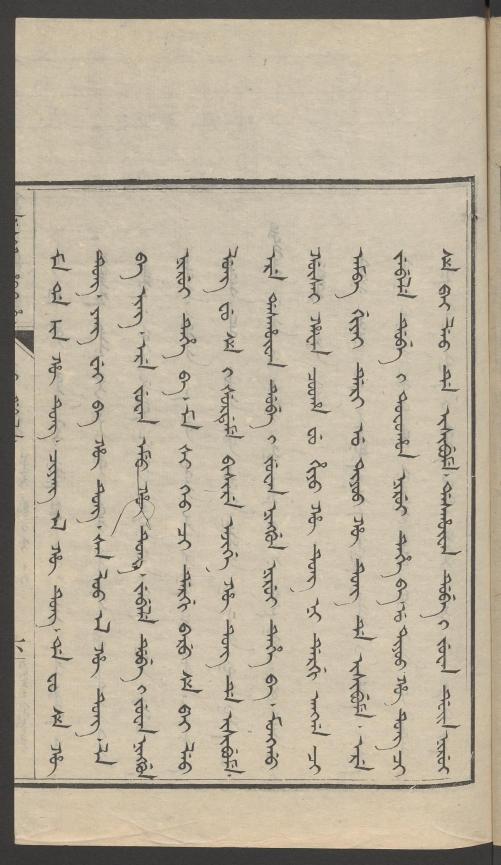
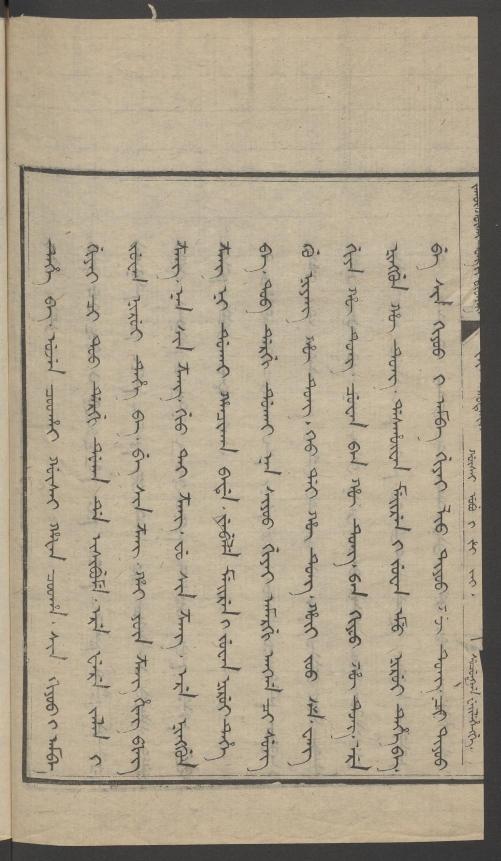
馬大人胡同、祥兒胡同、大佛寺胡同、羊尾巴胡同、山老兒胡同、喇叭營,此十一胡同爲三甲喇十六牛錄駐地。自馬市口向東,至四牌樓隆福寺週圍之小胡同,此爲五甲喇十六牛錄駐地。自蒙古旗官兵府學胡同東口,由大街至五條胡同,此爲三甲喇十五牛錄駐地。自五條胡同至四牌樓,爲五甲喇十四牛錄〔駐地〕。
EnglishMa Daren Hutong, Xiang’er Hutong, Dafosi Hutong, Yangweiba Hutong, Shanlao’er Hutong, Laba Camp — these eleven hutong/camp are the residential area of the sixteen niru of the third jalan. From Mashikou eastward to the small hutong surrounding the Sipailou Longfusi, this is the residential area of the sixteen niru of the fifth jalan. From the east entrance of Fuxue Hutong of the Mongol banner officers and soldiers, along the main street to Wutiao Hutong, this is the residential area of the fifteen niru of the third jalan. From Wutiao Hutong to Sipailou, (it is) the fourteen niru of the fifth jalan.
逐詞解析 · word-by-word(123 詞)
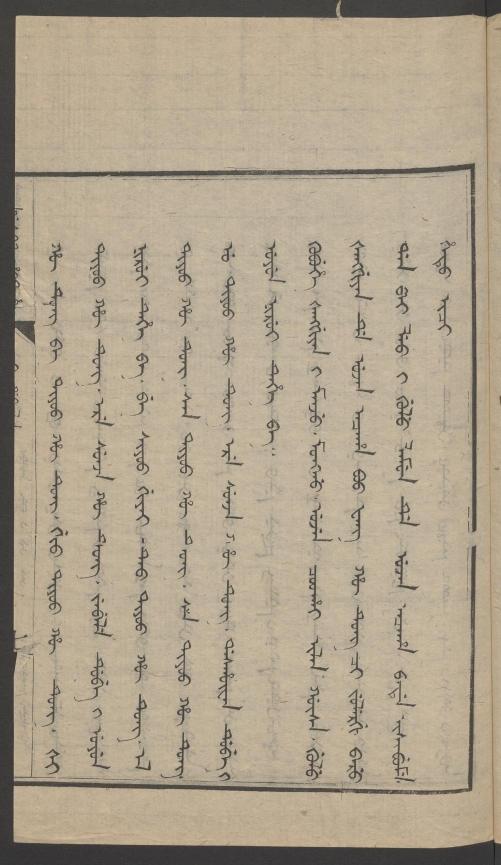
駐地,漢軍旗官兵,自西橋大街至陶東門止,此為頭甲喇十牛錄之駐地。 新倉、海運倉、興平倉、南新倉、舊太倉、富新倉,此六倉門稍近處,為右翼二甲喇十牛錄之駐地。 自陶東門南小街北口起,宋姑娘胡同、口袋胡同、徽州寺、王家胡同、船板胡同、板橋胡同,此六胡同,為左翼二甲喇十一牛錄之駐地,自新橋大街柳條胡同至條——
EnglishThe quarters of the officers and soldiers of the Hanjun Banner: from West Bridge Street to the Taodong Gate, these are the quarters of the ten companies of the First Jalan. In the vicinity of the gates of the six granaries—namely Xincang, Haiyuncang, Xingpingcang, Nanxincang, Jiutaicang, and Fuxincang—are the quarters of the ten companies of the Right Wing Second Jalan. From the north entrance of the South Alley outside the Taodong Gate, along the Songguniang Hutong, Koudai Hutong, Huizhou Temple, Wangjia Hutong, Chuanban Hutong, and Banqiao Hutong—these six hutongs—are the quarters of the eleven companies of the Left Wing Second Jalan, extending from the Liutiao Hutong of New Bridge Street to Tiao——
逐詞解析 · word-by-word(99 詞)
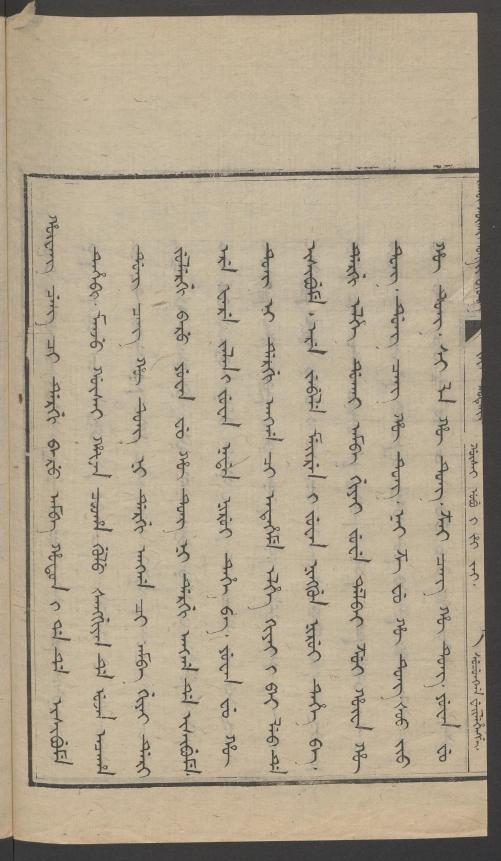
胡騰巴條胡同、珙條胡同、十條胡同,此五胡同為三甲喇九牛彔駐地;小街陶條胡同、額爾條胡同、三條胡同、寺條胡同、五條胡同,此五胡同為五甲喇九牛彔駐地。鑲白旗滿洲、蒙古、漢軍三旗,自與正白旗接界之保房胡同,向南,至與正藍旗接界之丹牌樓處,橫向集結。
EnglishThe five hutong—Hūteng Batiao Hutong, Giotiao Hutong, Shitiao Hutong—are the garrison of the nine niru of the Third Jalan. The five hutong—Xiaojie Taotiao Hutong, Eltiao Hutong, Santiao Hutong, Sitiao Hutong, Wutiao Hutong—are the garrison of the nine niru of the Fifth Jalan. The three banners of Manchu, Mongol, and Hanjun of the Bordered White Banner, from Boofang Hutong which borders on the Plain White Banner, southward to the place where Danpai Leo borders on the Plain Blue Banner, are assembled transversely.
逐詞解析 · word-by-word(116 詞)
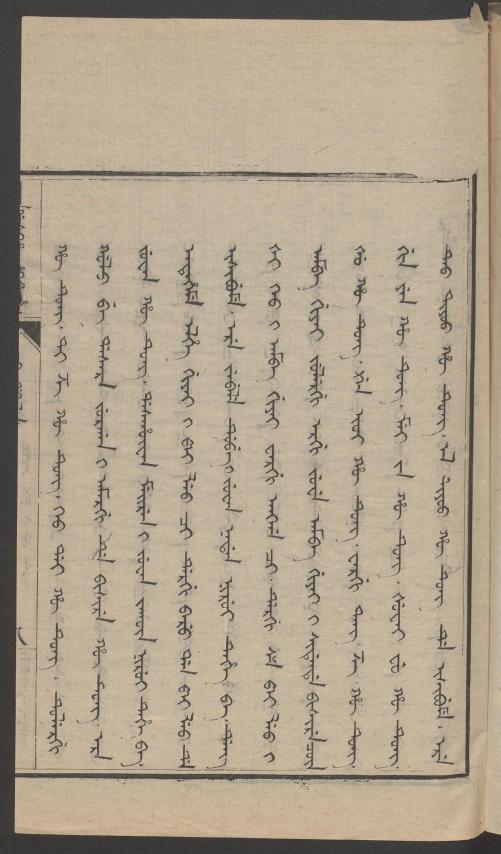
自皇城迤東,至大城根駐紮。滿洲旗官〔?〕與正白旗交界之東岔胡同東口起,沿大街而南,至原府胡同東口,此爲法勒甲喇〔?〕之十七牛录駐地。自原府胡同東口,至長安街牌樓,此爲二甲喇十六牛录駐地。東安門大街兩側:堆花胡同、東倉胡同、奶子府胡同、燒酒胡同、錫拉胡同、菜廠胡同、原府
EnglishFrom the Imperial City eastwards to the foot of the Great City, (s)he/they(?) were stationed. From the east entrance of Dongcha Alley, where the Manchu banner official COJOHA〔?〕 bordered on the Plain White Banner, along the main street southwards to the east entrance of Yuanfu Alley, this was the station of the 17th Niru of the Fare Jalan〔?〕. From the east entrance of Yuanfu Alley to the pailou of Chang'an Street, this was the station of the 16th Niru of the Second Jalan. On both sides of Dong'anmen Street: Duihua Alley, Dongcang Alley, Naizifu Alley, Shaojiu Alley, Xila Alley, Caichang Alley, Yuanfu
逐詞解析 · word-by-word(122 詞)
梯子胡同、口袋胡同、理藩院後之府門兒、十胡同,四甲喇十八牛录駐地,自長安街牌樓迤東至大牌樓,此右翼末十七牛录駐地。自燈市口大街西口迤東,至寺牌樓大街南側,兩大街之間有椿樹胡同、甘雨胡同、西堂子胡同、金魚胡同、煤渣胡同、帥府胡同、頭條胡同、二條胡同。
EnglishTi Dzi Hutung, Keo Dai Hutung, and Fumen'er with Shihutung to the north of the Lifan Yuan; the garrison of the 18 niru of the Fourth Jalan; from the archway on Chang'an Street eastward to the Great Archway, this is the garrison of the 17 niru of the Right Wing Rear. From the west entrance of Dengshikou Street eastward to the south side of the Temple Archway Street, within the area between the two main streets are Chūnshu Hutung, Ganyu Hutung, Xitangzi Hutung, Jinyu Hutung, Meizha Hutung, Shuaifu Hutung, Toutiao Hutung, Ertiao Hutung.
逐詞解析 · word-by-word(128 詞)
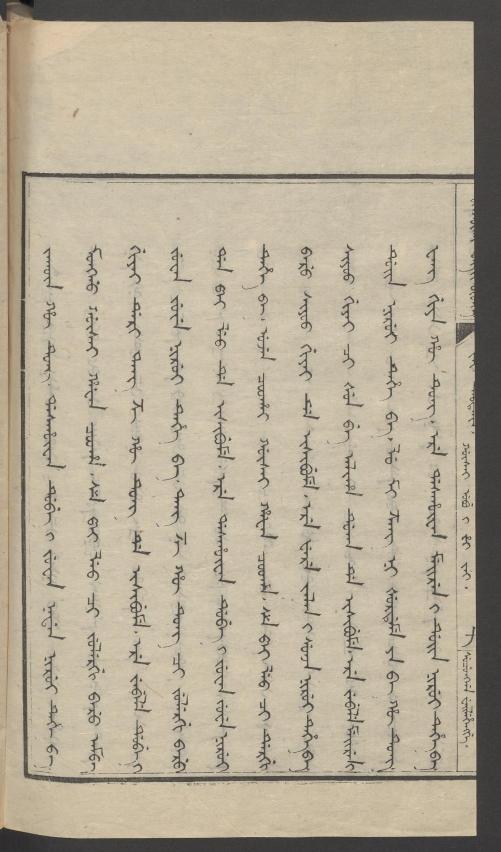
八胡同內,理政十七佐領駐地,自蒙古旗官軍司牌樓迆南,由大街至堂子胡同止,此為一處。 三甲喇十二佐領駐地,自太子胡同迆南,至單牌樓止,此為一處。 五甲喇十二佐領駐地,漢軍旗官軍司,自白牌樓迆東,至小街止,此為一處。 頭甲喇五佐領駐地,自小街至朝陽門止,此為一處。 二甲喇四佐領駐地,環路米藏,有鴉巴胡同、方家胡同等處,此為一處。 五甲喇二甲喇四佐領駐地〔以下闕〕
EnglishWithin the Eight Lanes, the area where the seventeen niru of the administration are stationed—stretching south from the pailou of the Mongol Banner’s military office, from the main street to T’ang-tzu Lane—this is [the matter]. The area where the twelve niru of the third jalan are stationed—from T’ai-tzu Lane southward as far as the single pailou—this is [the matter]. The area where the twelve niru of the fifth jalan are stationed—the military office of the Hanjun Banner, from the white pailou eastward as far as Small Street—this is [the matter]. The area where the five niru of the first jalan are stationed—from Small Street as far as the Gate of Receiving the Sun—this is [the matter]. The area where the four niru of the second jalan are stationed—surrounding Lu-mi-tsang, with Ya-pa Lane, Fang-chia Lane, etc.—this is [the matter]. The area where the four niru of the fifth jalan and the second jalan are stationed...
逐詞解析 · word-by-word(128 詞)
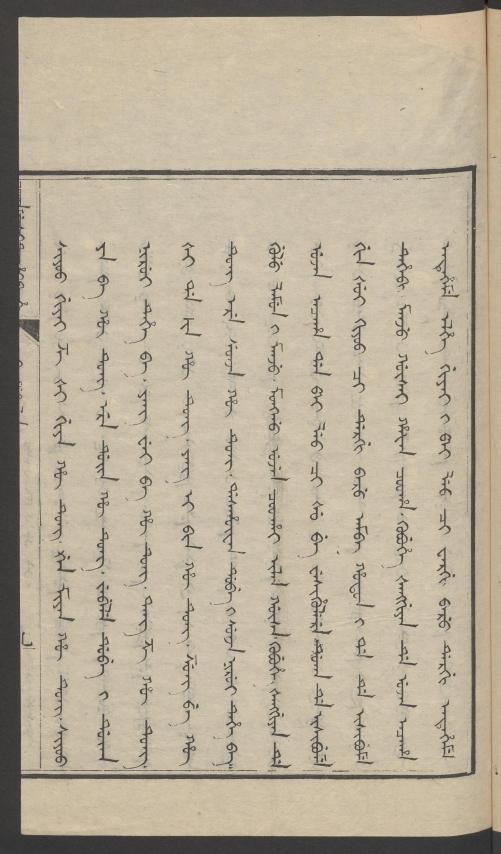
小街、子市街胡同、乾麵胡同、小啞巴胡同,此四胡同為右翼末甲喇都克牛錄駐地。 羊尾巴胡同、堂子胡同、石大人胡同、羊宜賓胡同、龍松柏胡同,此五胡同為左翼末甲喇五牛錄駐地。 正藍旗滿洲、蒙古、漢軍三旗,與鑲白旗接界,自丹牌樓至崇文門,由金水橋向東至大都城基駐扎。 滿洲旗官兵,與鑲白旗接界,自長安街牌樓向西,至東長安…
EnglishXiaojie (Xiao Street), Zishijie Hutong, Ganmian Hutong, Xiaoyaba Hutong—these four hutongs were the garrison site of the Duka Niru of the Right Wing Rear Regiment. Yangweiba Hutong, Tangzi Hutong, Shidaren Hutong, Yangyibin Hutong, Longsongbai Hutong—these five hutongs were the garrison site of the five niru of the Left Wing Rear Regiment. The three banners of the Plain Blue Banner—Manchu, Mongol, and Han armies—bordered the Bordered White Banner; from the Dan Memorial Arch to Chongwen Gate, and from Jinshui Bridge eastward to the base of the Great Capital wall, they were stationed. The officers and troops of the Manchu banners, bordering the Bordered White Banner, from the Chang’an Street Memorial Arch westward, to Eastern Chang’an…
逐詞解析 · word-by-word(124 詞)
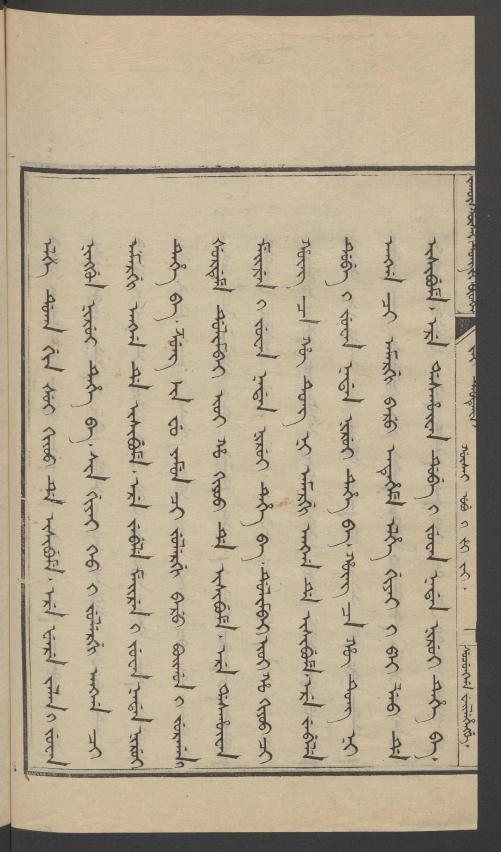
自長安門至金水橋,此爲頭甲喇十六牛錄駐地。 自新街口南口至北口,此爲二甲喇十七牛錄駐地。 自宗人府衙門向南,繞戶部至中御河橋,此爲四甲喇十七牛錄駐地。 自中御河橋至弓弦衚衕北口,此爲三甲喇十七牛錄駐地。 自紅岔衚衕口向北至長安街牌樓,此爲五甲喇十七牛錄駐地。
EnglishFrom Chang'an Gate to Jinshui Bridge, this is the station of the sixteen companies of the First Jalan. From the southern entrance to the northern entrance of Xinjiekou, this is the station of the seventeen companies of the Second Jalan. From the Imperial Clan Court southwards, around the Ministry of Revenue to Zhongyuhe Bridge, this is the station of the seventeen companies of the Fourth Jalan. From Zhongyuhe Bridge to the northern entrance of Gongxian Hutong, this is the station of the seventeen companies of the Third Jalan. From the entrance of Hongcha Hutong northwards to the Archway of Chang'an Avenue, this is the station of the seventeen companies of the Fifth Jalan.
逐詞解析 · word-by-word(128 詞)
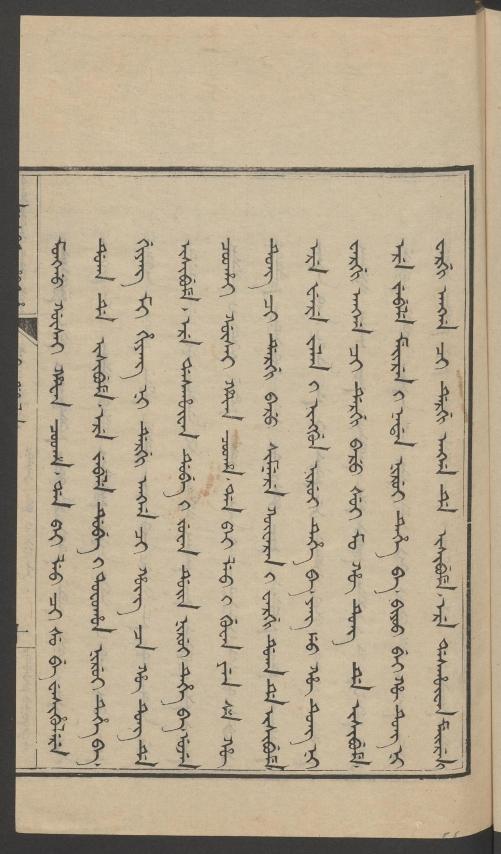
自蒙古旗官兵單牌樓至崇文門,此係鑲紅旗第十五佐領駐地。 自江米巷東口至紅草胡同,此係鑲黃旗第十四佐領駐地。 自漢軍旗官兵牌樓觀音寺胡同向東至貢院西大門,此係頭甲喇英瑞駐地。 自羊市胡同西口向東至水磨胡同,此係鑲白旗第七佐領駐地。 自裱褙胡同西口至東口,此係正紅旗……
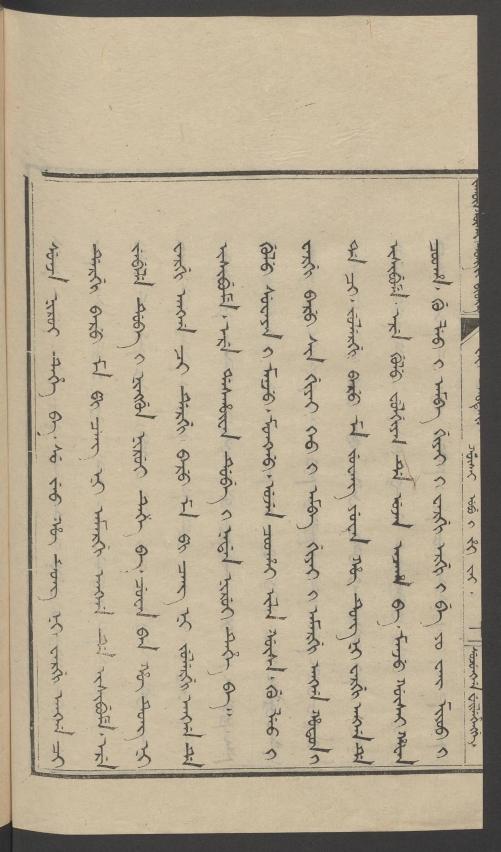
EnglishFrom the Mongolian Banners’ Officers and Soldiers’ Single Arch (pailou) to the Gate of Esteeming Literature (Chongwenmen), this is the residential area of the 15th Company of the Bordered Red Banner. From the eastern entrance of Jiangmixiang (Legation Street) to Hongcao Hutong (Red Grass Alley), this is the residential area of the 14th Company of the Bordered Yellow Banner. From the Guanyinsi Hutong (Guanyin Temple Alley) of the Hanjun Banners’ Officers and Soldiers’ Arch (pailou) eastward to the western gate of the Examination Compound (Gongyuan), this is the residential area of Yingrui of the First Jalan. From the western entrance of Yangshi Hutong (Sheep Market Alley) eastward to Shuimo Hutong (Water Mill Alley), this is the residential area of the 7th Company of the Bordered White Banner. From the western entrance to the eastern entrance of Biaobei Hutong (Mounting Scrolls Alley), this is that of the Plain Red Banner…
逐詞解析 · word-by-word(132 詞)
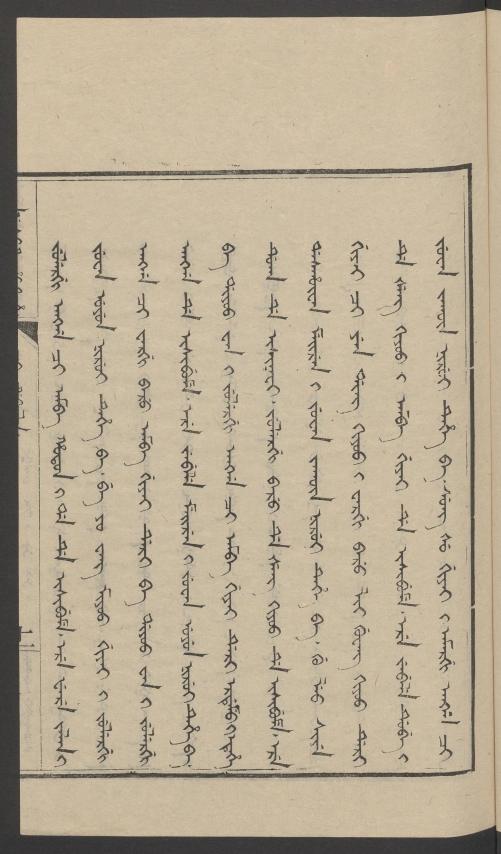
五牛彔之駐地:自蘇州胡同西口向東,至馬皮倉北口。此右翼末之六牛彔駐地:自船板胡同西口向東,至馬皮倉南口。此左翼末之七牛彔駐地:…… 正黃旗滿洲、蒙古、漢軍三旗,自鼓樓向西,新街口大街北口,自城守尉向南,至馬狀元胡同西口。此與正紅旗交界處,滿洲旗官兵,鼓樓大街西邊之北藥王廟之
EnglishThe station of the five niru: from the west entrance of Sujeo Hutong eastwards, extending to the north entrance of Mapicang. This station of the six niru of the right-wing rear: from the west entrance of Cuanban Hutong eastwards, extending to the south entrance of Mapicang. This station of the seven niru of the left-wing rear: ...... The three banners (Manchu, Mongol, Hanjun) of the Plain Yellow Banner: from the Drum Tower westwards, the north entrance of Xinjiekou Avenue, from the City Commandant southwards, extending to the west entrance of Mazhuangyuan Hutong. This place bordering the Plain Red Banner: the Manchu banner officers and soldiers, west side of Gulou Avenue, of the Northern Yaowang Temple ...
逐詞解析 · word-by-word(128 詞)
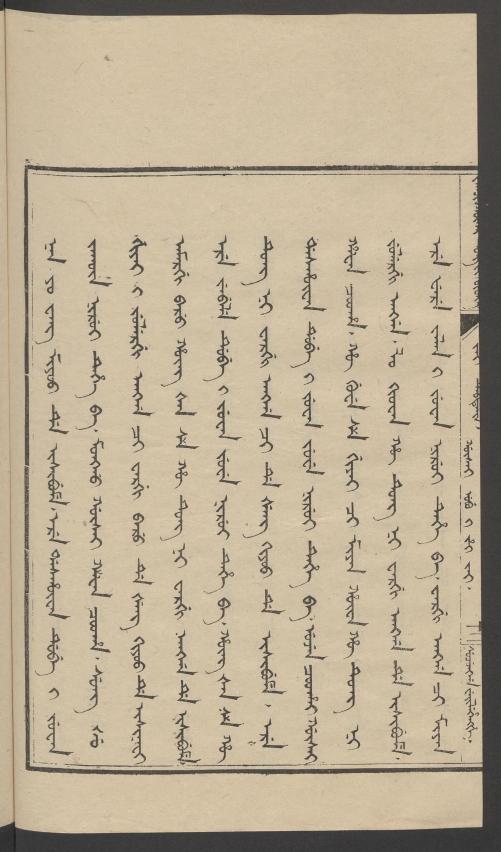
自南口至大城根,此處為頭甲喇十九牛彔駐地。 自北藥王廟街南口,向西由大街至八道灣南口,此處為右翼二甲喇十九牛彔駐地。 自八道灣南口,由大街至德勝門,向南至德勝橋,此處為左翼二甲喇十八牛彔駐地。 自鼓樓斜街、銀錠橋西,由李廣橋至德勝橋大街,此處為右翼末甲喇十八牛彔駐地。 自松樹街北口,……
EnglishFrom the south entrance to the base of the great city wall, this is the garrison area of the nineteen niru of the First Jalan. From the south entrance of North Yaowangmiao Street, westward along the main street to the south entrance of Badaowan, this is the garrison area of the nineteen niru of the Second Jalan of the Right Wing. From the south entrance of Badaowan, along the main street, reaching Deshengmen and then proceeding south to Deshengqiao, this is the garrison area of the eighteen niru of the Second Jalan of the Left Wing. From Gulou Xiejie Street, from the west side of Yindingqiao, via Liguangqiao to Deshengqiao Avenue, this is the garrison area of the eighteen niru of the Last Jalan of the Right Wing. From the north entrance of Songshu Street, ...
逐詞解析 · word-by-word(127 詞)
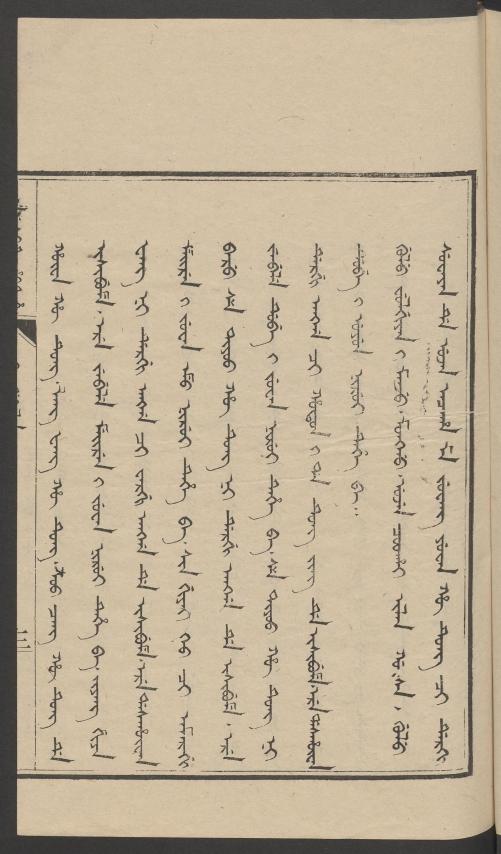
抵南鑰王廟,此五甲喇十八牛錄之駐地。蒙古旗官兵,自松樹巷南口向西至德勝橋,復向北至宏善寺胡同西口,此三甲喇十二牛錄之駐地。自宏善寺胡同西口至德勝橋,此五甲喇十二牛錄之駐地。漢軍旗官兵,自護國寺街至棉花胡同南口,又至羅圈胡同西口,此頭甲喇十牛錄之駐地,自西口至綿……
EnglishReaching to Nanyao Wang Temple, this is the station of the eighteen companies of the Fifth Jalan. Mongol Banner officers and soldiers, from the south entrance of Songshu Lane, westwards reaches to Desheng Bridge, then northwards reaches to the west entrance of Hongshan Temple Lane, this is the station of the twelve companies of the Third Jalan. From the west entrance of Hongshan Temple Lane, reaching to Desheng Bridge, this is the station of the twelve companies of the Fifth Jalan. Han Army Banner officers and soldiers, from Huguo Temple Street, reaching to the south entrance of Mianhua Lane, and to the west entrance of Luoquan Lane, this is the station of the ten companies of the First Jalan, from the west entrance to Mian...
逐詞解析 · word-by-word(121 詞)
由綿花胡同、廊房胡同、草倉胡同送至,此右翼三甲喇十牛录之駐地。 由江家坊東口至西口送至,此左翼三甲喇十一牛录之駐地。 由新街口向北至四條胡同東口送至,此右翼末甲喇十牛录之駐地。 由四條胡同東口至城之大通閘送至,此左翼末甲喇九牛录之駐地。 正紅旗滿洲、蒙古、漢軍三旗與正黃旗交界,自馬狀元胡同以東。
EnglishReaching to Mianhua Hutong, Langfang Hutong, and Caocang Hutong: this is the station of the ten niru of the right-wing third jalan. From the east entrance to the west entrance of Jiangjiafang: this is the station of the eleven niru of the left-wing third jalan. From Xinjiekou northwards to the east entrance of Sitiao Hutong: this is the station of the ten niru of the right-wing last jalan. From the east entrance of Sitiao Hutong to the Datongzha of the city: this is the station of the nine niru of the left-wing last jalan. The Manchu, Mongol, and Chinese-martial three banners of the Plain Red Banner bordered on the Plain Yellow Banner, from Ma Zhuangyuan Hutong eastwards.
逐詞解析 · word-by-word(100 詞)
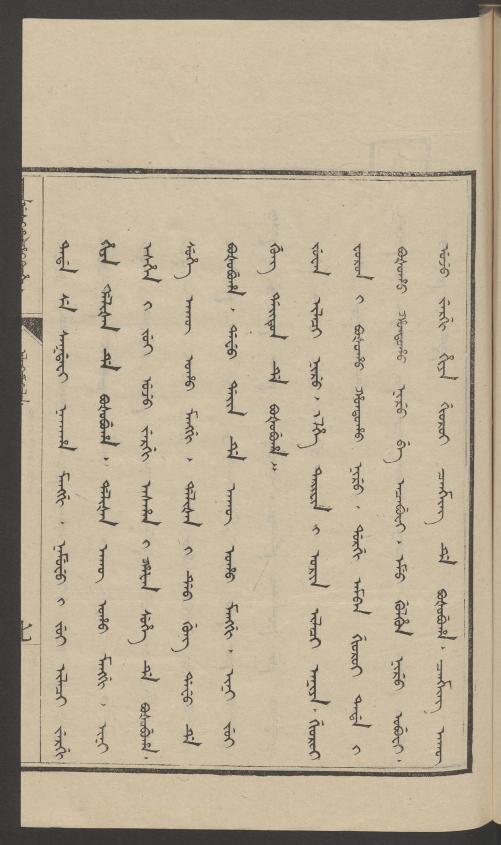
塔達因年老辭退後,其子那穆福之三等侍衛噶禮善承襲。達理善亡故後,其叔父之子一等阿斯哈尼哈番蘇赫承襲。蘇赫亡故後,達理善之弟公達福承襲。達福陣亡後,其子公代吞承襲。第十三佐領,於康熙二十三年將覺羅佛倫之管領半個佐領與內大臣覺羅塔達之管領半個佐領合併為一整佐領,由頭等侍衛覺羅查姆興承襲。查姆興〔?〕
EnglishAfter Tada grew old and resigned, Namufu's son, the third-class imperial guard Gališan, inherited (the niru). When Dališan passed away, his uncle's son, the first-class ashan i hafan Suhe, inherited (it). When Suhe passed away, Dališan's younger brother Gung Dafu inherited. After Dafu fell in battle, his son Gung Daitun inherited. The thirteenth niru: in the twenty-third year of Elhe Taifin, the half-niru commanded by Giori Foron and the half-niru commanded by the interior minister Gioroi Tada were combined into one whole niru, and it was inherited by the first-class imperial guard Gioroi Camsing. Camsing〔?〕
逐詞解析 · word-by-word(84 詞)
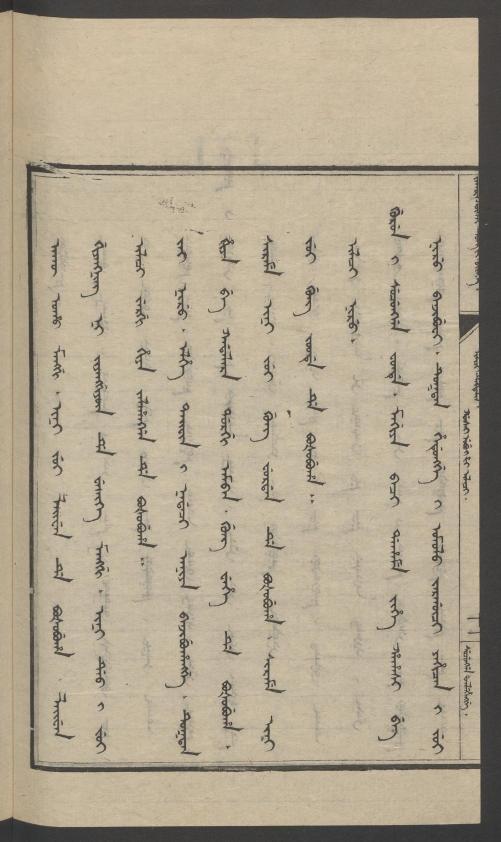
〔承襲者〕亡故後,其子來芬承襲。來芬在江寧將軍處〔?〕後,其弟之子三等侍衛朱爾杭阿承襲。第二佐領,係康熙七年編立。初由領侍衛內大臣公衛赫承襲。繼由其子公傅爾丹承襲。繼由其子公兆德承襲。第三佐領,國初自馬家地方來投之衆男丁編為佐領。初由赫東格之孫、扎爾固齊雅希禪之子……
EnglishAfter the death, the position was inherited by his son Laifen. After Laifen’s 〔?〕 at the Jiangning General, it was inherited by his younger brother’s son, Jalhangga, a Third-Rank Imperial Guard. The second niru was established in the seventh year of the Kangxi reign. It was initially inherited by Duke Weihe, an Interior Minister Commanding the Imperial Guard, then by his son, Duke Furdan, and subsequently by his son, Duke Joode. The third niru was formed from men who came from Magiya and submitted at the beginning of the dynasty. Initially, by the son of Jargūci Yahican, the grandson of Hedungge…
逐詞解析 · word-by-word(99 詞)
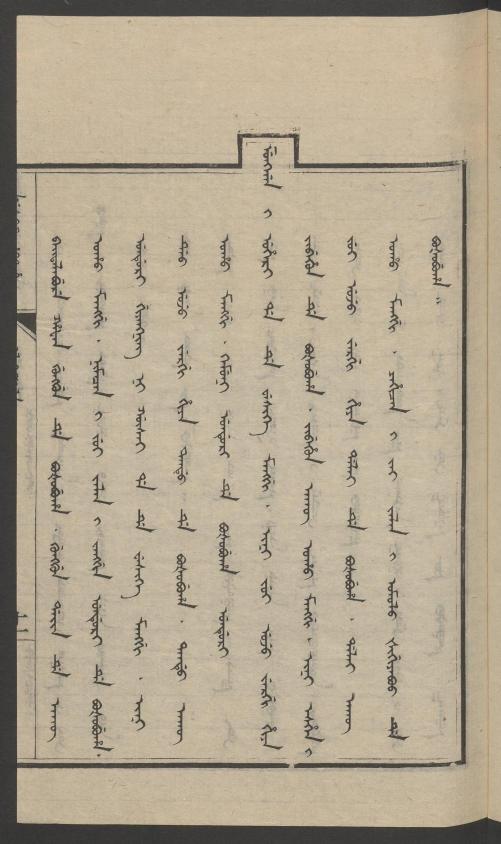
騎都尉一職,承襲與公滾。公滾陣亡後,由尼瑪察之子參領溫都里承襲。溫都里陞任江寧協領後,由其弟頭等侍衛坦度承襲。坦度亡故後,仍由溫都里承襲。溫都里陞任陵寢總管後,由其子頭等侍衛吉貝渾承襲。吉貝渾亡故後,由其叔父之子頭等侍衛達賴承襲。達賴亡故後,由雅希禪之曾孫席吉雅保承襲。
EnglishThe title of Baitalabure Hafan (Commandant of Cavalry) was conferred upon Gunggun. After Gunggun was killed in battle, it was conferred upon Nimacan's son, Jalan-i Janggin (Regimental Commander) Unduri. After Unduri was promoted to Gūsa-i Da (Colonel) of Giangning, it was conferred upon his younger brother, Uju Jergi Hiya (Senior Imperial Bodyguard) Tandu. After Tandu passed away, it was again conferred upon Unduri. After Unduri was promoted to Munggan-i Uheri Da (Director of the Imperial Mausoleum), it was conferred upon his son, Uju Jergi Hiya Jibehun. After Jibehun passed away, it was conferred upon his uncle's son, Uju Jergi Hiya Dalai. After Dalai passed away, it was conferred upon Yahican's great-grandson Shigiyaboo.
逐詞解析 · word-by-word(88 詞)
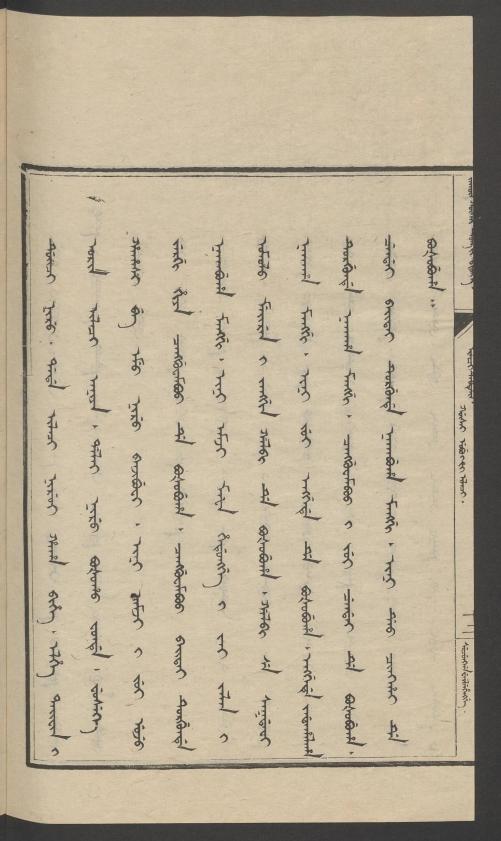
第四佐領,原係第三佐領壯丁。康熙二十三年,達賴佐領承襲時,將滋生壯丁等編爲一佐領,以其孫(子甘濟之子)頭等侍衛常關保承襲。常關保因事革退後,以其伯祖赫東額之曾孫、副都統噶爾弼承襲。噶爾弼年老辭退後,以其子恩格德承襲。恩格德因患宿疾去職後,以常關保之子陳岱承襲。陳岱因事革退後,以其弟青海承襲。
EnglishThe Fourth Company, originally men of the Third Company. In the 23rd year of Elhe Taifin, when the Dalai Company was inherited, the surplus men were formed into a company. His (the founder’s?) grandson (son of Kamji), First-Class Bodyguard Canggūwamboo, was made to inherit. After Canggūwamboo was dismissed due to an incident, his (the founder’s?) paternal great-uncle Hedungge’s great-grandson, Deputy Lieutenant-General Galbi, was made to inherit. When Galbi grew old and resigned, his son Enggede was made to inherit. After Enggede resigned due to a chronic illness, Canggūwamboo’s son Cendai was made to inherit. After Cendai was dismissed due to an incident, his younger brother Cinghai was made to inherit.
逐詞解析 · word-by-word(93 詞)
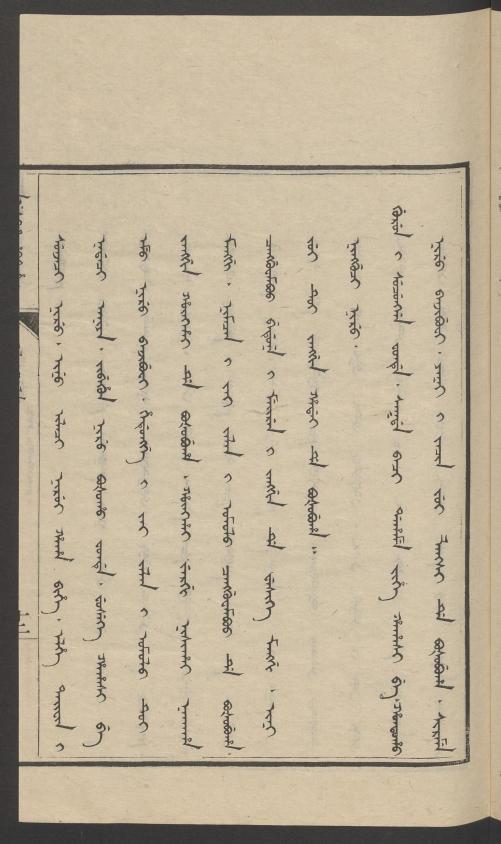
第五牛錄,原本亦係第三牛錄之壯丁。康熙七年,因催追齊布亨牛錄時,將孳生男丁編爲一牛錄,令赫東格之重孫、護軍統領洪海承襲。洪海等一併解任後,由尼瑪察氏之重孫常武保承襲。常武保陞授伯都訥副都統後,由其子、護軍統領哈達承襲。第六牛錄:國初,將自薩克達處來投之男丁編爲半箇牛錄,令煙靄生之次子朗西承襲。嗣經...
EnglishThe fifth niru, originally also men of the third niru. In the seventh year of Kangxi, when the Jibehen niru was being pursued, the proliferated men were organized into one niru, and it was inherited by Hedungge’s great-grandson, Captain-General Hūngkhai. After Hūngkhai and others were dismissed together, it was inherited by Nimaqan’s great-grandson Cangguwamboo. After Cangguwamboo was promoted to Deputy Lieutenant-General of Bedune, it was inherited by his son, Captain-General Hadai. The sixth niru: In the beginning of the dynasty, the men who came in submission from Sakda territory were organized into half a niru, and inherited by Yanai’s second son Langsi. Continuing...
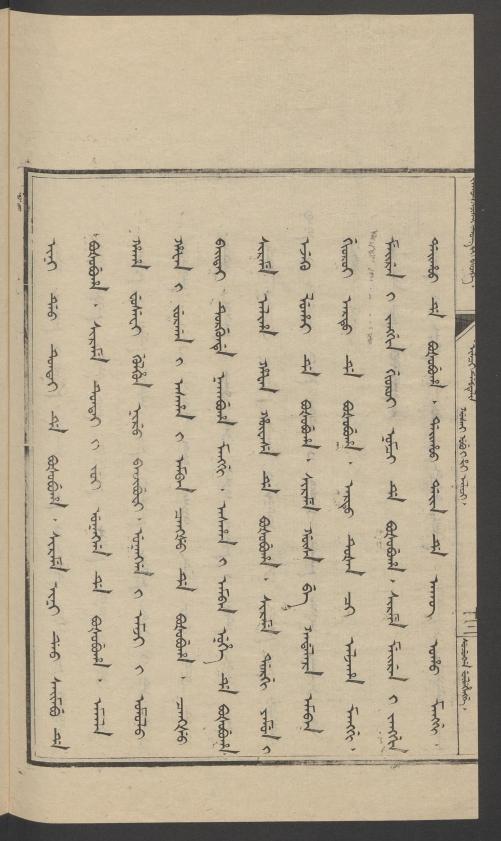
逐詞解析 · word-by-word(105 詞)
其弟屯台承襲,續由其弟薩音布承襲,續由屯台之子烏康噶承襲。嗣後滋生繁衍,編立崑崙牛錄,由烏康噶之伯祖之孫、吏部侍郎常舒承襲。常舒因事被革退後,由侍郎努赫承襲,續由正卿花色承襲,續由通政使司知事陸海承襲,續由都統覺羅阿爾圖承襲。阿爾圖離任後,由副都統覺羅諾姆奇承襲,續由副都統大伊承襲。大伊陣亡後,
EnglishIt was inherited by his younger brother Tuntai; then it was inherited by his younger brother Saimbu; then it was inherited by Tuntai’s son Ukangga. Later, when the population proliferated, the Gulgūn Niru was established, and it was inherited by Cangšu, a grandson of Ukangga’s uncle, who served as Vice Minister of the Ministry of Personnel. After Cangšu was dismissed due to a case, it was inherited by the Vice Minister Nuhe; then it was inherited by the Chief Minister Hūwase; then it was inherited by Luhai, the Secretary of the Office of Transmission; then it was inherited by Gioro Artu, the Commander-in-chief. After Artu left his post, it was inherited by Gioro Nomci, the Vice Commander-in-chief; then it was inherited by Daihoo, the Vice Commander-in-chief. After Daihoo died in battle,
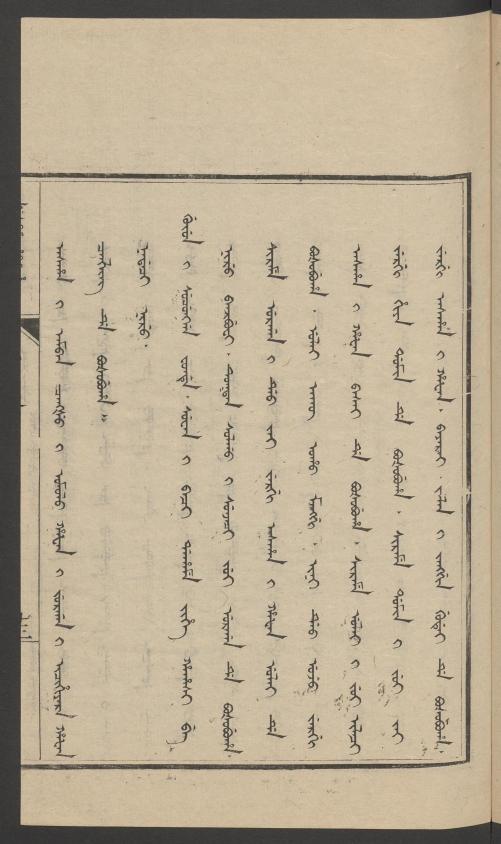
逐詞解析 · word-by-word(103 詞)
侍郎常舒之孫、吏部郎中查爾經承襲。第七古溫牛錄,初以蘇完地方投誠男丁編設,始由索爾果第五子烏爾干承襲;繼由其弟二等阿思哈尼哈番烏賴承襲;烏賴故後,由其弟頭等阿思哈尼哈番巴賽承襲;繼由烏賴之子三等侍衛多敏承襲;繼由多敏之子二等阿思哈尼哈番、護軍參領古德義承襲。
EnglishThe post was inherited by Calging, grandson of the Vice Minister Cangšu and a secretary of the Board of Civil Appointments. The Seventh Gūun Niru: originally formed from men who submitted from the Suwan region, it was first inherited by Urgan, fifth son of Solgo. Subsequently it was inherited by his younger brother, Ula, a baron of the second rank. After Ula died, it was inherited by his younger brother, Basa, a baron of the first rank. Subsequently it was inherited by Domin, Ula's son and an imperial guard of the third rank. Subsequently it was inherited by Gude, Domin's son, a baron of the second rank and a captain of the guards.
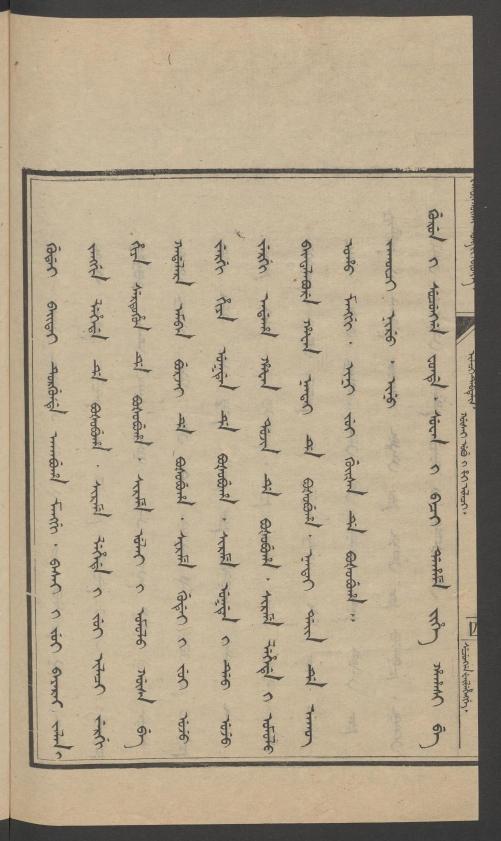
逐詞解析 · word-by-word(100 詞)
古歹事由遭受留難後,巴塞之子護軍參領勒赫德承襲;續以勒赫德之子三等侍衛塞爾圖袞承襲;續以烏拉之孫都統布寨承襲;續以庫德義之子頭等侍衛翁肯承襲;續以烏克德之弟頭等輕車都尉多錦承襲;續以勒赫德之孫騎都尉楠泰承襲;楠泰陣亡後,其子貴山承襲。否則,該牛錄亦係國初自蘇完地方來投之男丁……
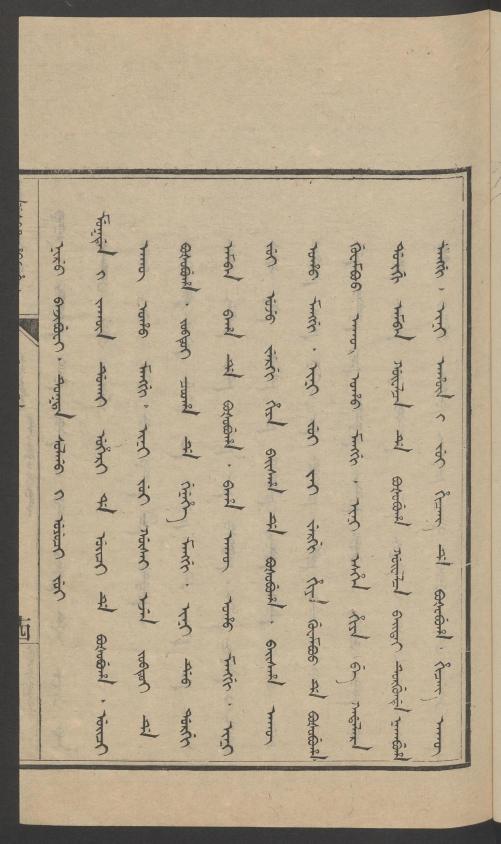
EnglishAfter being harassed on account of the Gudai affair, Basai’s son, the Baya ra i jalan i janggin Lehede, succeeded to it; successively, Lehede’s son, the ilaci jergi hiya Sertugun, succeeded to it; successively, Ulai’s grandson, the gūsa be kadalara amban Bujai, succeeded to it; successively, Gudei’s son, the uju jergi hiya Unkden, succeeded to it; successively, Ukde’s younger brother, the uju jergi adaha hafan Dojin, succeeded to it; successively, Lehede’s grandson, the baitalabure hafan Nantai, succeeded to it; after Nantai died in battle, his son, Guišan, succeeded to it. Otherwise, the niru was also, at the beginning of the state, composed of the men who had surrendered and come over from the Suwan region…
逐詞解析 · word-by-word(100 詞)
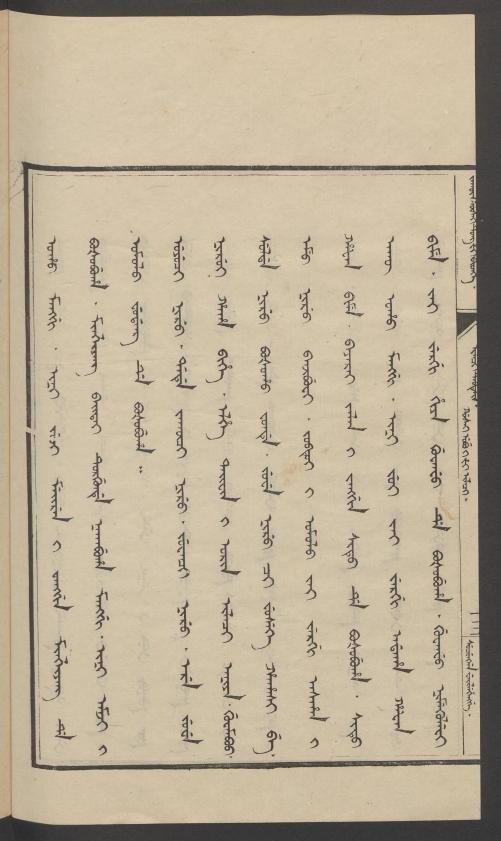
編設牛錄,以圖克屯索勒果之第九子、盛京八門總管額齊斯承襲。額齊斯歿後,其子固山額真卓布泰承襲。卓布泰從軍去後,其弟內大臣巴哈承襲。巴哈歿後,其子頭等侍衛巴伊沙承襲。巴伊沙歿後,其子二等侍衛瓜滿保承襲。瓜滿保歿後,其叔父領侍衛內大臣瓜勒察承襲。瓜勒察因事革退後,其兄之子喜常承襲。喜常歿。
EnglishA niru was established and inherited by Eici, the ninth son of Tukten Solgo, commander-in-chief of the Eight Gates of Mukden. After Uici died, the position was inherited by his son Jobtoi, the Gūsai Ejen. When Jobtoi went to the army, it was inherited by his younger brother Baha, a Grand Minister of the Interior. After Baha died, it was inherited by his son Baisha, a Senior Imperial Bodyguard. After Baisha died, it was inherited by his son Guwambo, a Junior Imperial Bodyguard. After Guwambo died, it was inherited by his uncle Gūwalca, the Grand Minister Superintendent of the Imperial Bodyguard. After Gūwalca was dismissed due to an incident, it was inherited by Hicang, the son of his elder brother. Hicang died.
逐詞解析 · word-by-word(97 詞)
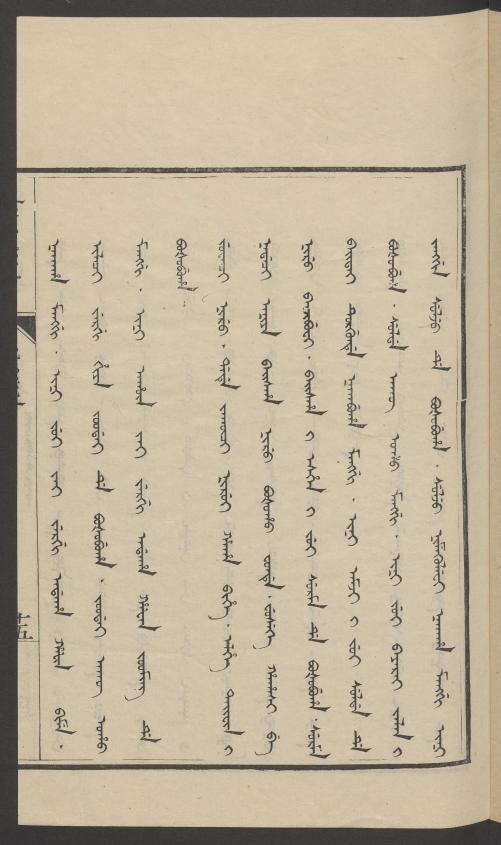
沒了之後,將其傑奇梅倫旺金明樣承襲。明樣因事革退。之後,將其伯父之孫傅當承襲。第九佐領原係第八佐領、第十佐領,此兩佐領之壯丁曾有。康熙二十三年,關保蘇爾達牛錄催趕之時,將此兩佐領孳生之男丁編為一佐領。卓布奇之孫、二等阿斯哈尼哈番兼護軍參領秀承襲。秀沒了之後,其子、二等輕車都尉兼二等吉雅關福承襲。關福患病……
EnglishAfter [he] was no more, his Jecimeiren-i Wanggin Minggiyang was made to inherit. Minggiyang was dismissed due to a matter. Thereafter, his paternal uncle’s grandson, Fudang, was made to inherit. The 9th company had originally been the 8th and 10th companies — there had been the men of these two companies. In the 23rd year of Elhe Taifin (Kangxi), when the Guwamboo Sulda company was being driven, the men who had proliferated from these two companies were formed into one company. Jobtci’s grandson, the Second-grade Ashan-i Hafan (Baron) and concurrently Bayarai Jalan-i Janggin (Lieutenant Colonel of the Guards), Sio, was made to inherit it. After Sio was no more, his son, the Second-grade Adaha Hafan (Light Chariot Commander) and concurrently Second-grade Giya, Guwanfu, was made to inherit. Guwanfu fell ill, …
逐詞解析 · word-by-word(94 詞)
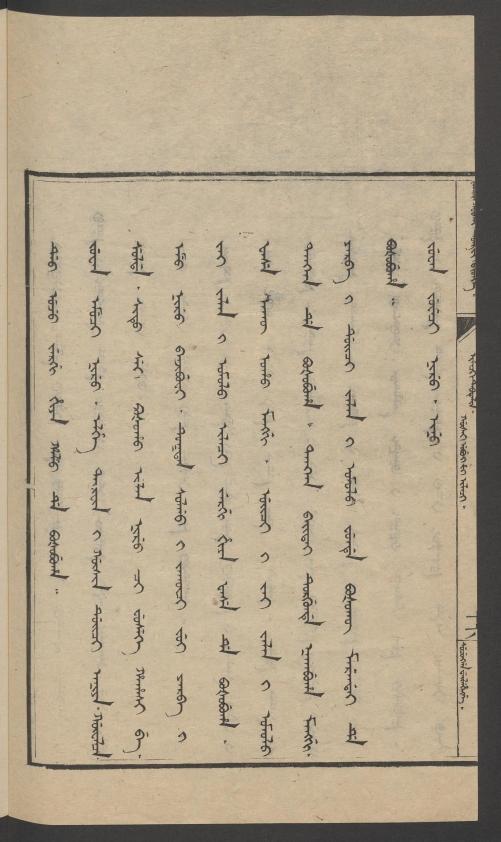
GUWANFU 因病辭退後,其子二等輕車都尉兼三等侍衛 JOODAI 承管。JOODAI 亡故後,其兄二等輕車都尉 JOOMING 承管。 第十二牛錄,原係第八牛錄壯丁,康熙七年,BAISHA 管牛錄時,將孳生壯丁編為一牛錄,令 BAISHA 之叔父之子 SUKMA 管理。因「聰穎事」被革退後,其伯父之子 SULDA 管理。SULDA 亡故後,其子護軍參領 SULJU 管理。SULJU 患病辭退後,其……
EnglishAfter Guwanfu resigned due to illness, his son, the second-class adaha hafan (light carriage commander) and third-class hiya (imperial guard) Joodai, was made to manage. After Joodai died, his elder brother, the second-class adaha hafan Joomin, was made to manage. The twelfth company, originally being the males of the eighth company, in the seventh year of Kangxi, when Baisha was managing the company, the additional males that had multiplied were formed into a company, and Sukma, son of Baisha's uncle, was made to manage. After (s)he was dismissed due to the Sure matter, Sulda, son of his/her father's elder brother, was made to manage. After Sulda died, his son, the bayarai jalan i janggin (guard battalion commander) Sulju, was made to manage. After Sulju fell ill and resigned, his…
逐詞解析 · word-by-word(87 詞)
第十一牛錄:康熙三十四年,由瓜勒察蘇爾達、希圖等所屬博碩果三牛錄內分出滋生男丁,另編一牛錄。初以朝鮮第八子雅爾巴之曾孫、三等侍衛法色承襲。法色亡故後,以烏義奇之曾孫唐喀承襲。唐喀因事革退後,以雅爾巴之四世孫、驍騎校馬仁岱承襲。第十二牛錄亦同。
EnglishThe 11th niru: In the 34th year of Elhe Taifin, from the three nirus of Bošogo under Guwalca Sulda, Situ and others, the surplus men were taken and formed into one niru. Initially it was inherited by Fase, a third-rank imperial guard (ilaci jergi hiya), the great-grandson of Yarba, the eighth son of Solgo. After Fase passed away, it was inherited by Tangka, the great-grandson of Uici. After Tangka was dismissed due to official business, it was inherited by Marendai, a lieutenant (funde bošokū), the fourth-generation descendant of Yarba. The 12th niru was likewise.
逐詞解析 · word-by-word(98 詞)
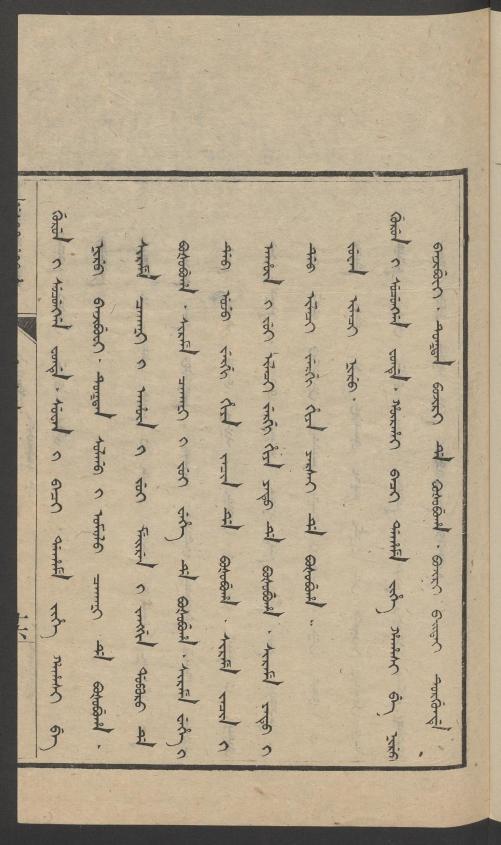
國初,將蘇完地方投誠人等編為牛彔,初令索爾果之孫察哈尼管。繼令察哈尼之兄之子副都統多博羅管。繼令察哈尼之子威赫管。繼令威赫之弟頭等侍衛扎欽管。繼令扎欽之兄之子三等侍衛雅圖管。繼令雅圖之弟三等侍衛雅爾賽管。第十三牛彔。 國初,將卦爾察地方投誠人等編為牛彔,初令博濟里管。博濟里以事
EnglishIn the beginning of the state, the men who came to surrender from Suwan area were organized into a niru. Initially it was entrusted to Qahani, grandson of Solgo. Subsequently it was entrusted to Doboro, the son of Qahani’s elder brother, a meiren i janggin. Subsequently it was entrusted to Wehe, son of Qahani. Subsequently it was entrusted to Jacin, younger brother of Wehe, an uju jergi hiya. Subsequently it was entrusted to Yatu, son of Jacin’s elder brother, an ilaci jergi hiya. Subsequently it was entrusted to Yarsai, younger brother of Yatu, an ilaci jergi hiya. The 13th niru. In the beginning of the state, the men who came to surrender from Gūrha area were organized into a niru. Initially it was entrusted to Bojiri. Bojiri, because of an affair
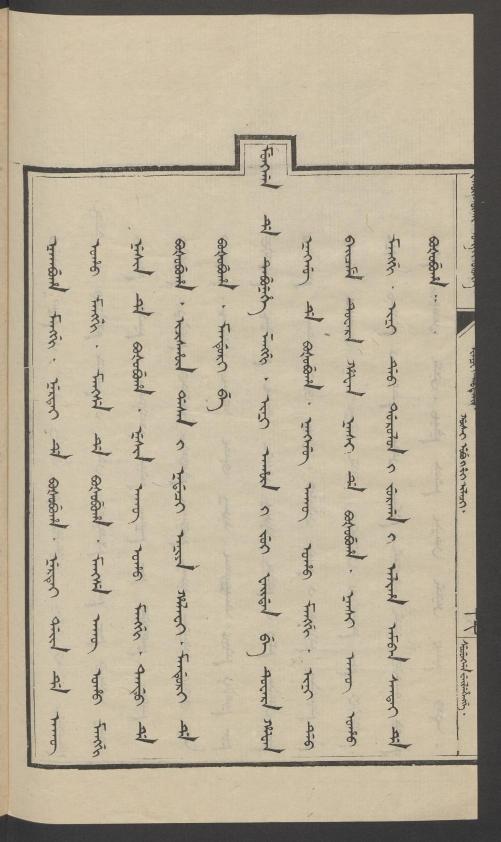
逐詞解析 · word-by-word(91 詞)
革退後,令訥勒承襲。訥勒陣歿後,令芒色承襲。芒色歿後,令內因承襲。內因歿後,令坦杜承襲。順治七年改令滿都里承襲。滿都里安葬入陵時,以其兄之子、鑾儀使囊古承襲。囊古歿後,以其弟、監察御史納西承襲。納西歿後,以其弟、禮部尚書散塔承襲。
EnglishAfter being dismissed, (the post) was passed on to Nertai. After Nertai died in battle, it was passed on to Mangse. After Mangse died, it was passed on to Nein. After Nein died, it was passed on to Tandu. In the seventh year of the Shunzhi reign, it was transferred and passed on to Manduri. When Manduri was interred in the mausoleum, (his) elder brother's son, Nanggū, the Commissioner of the Imperial Procession, inherited it. After Nanggū died, his younger brother, Nasī, the Investigating Censor, inherited it. After Nasī died, his younger brother, Santai, the President of the Board of Rites, inherited it.
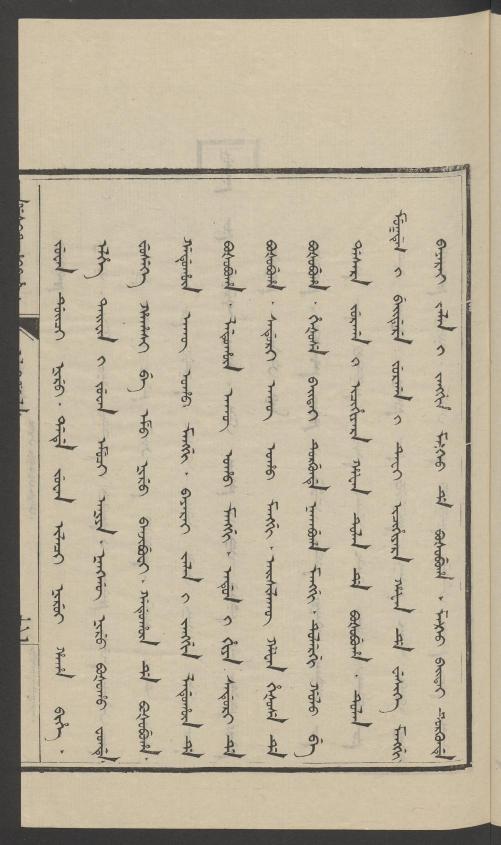
逐詞解析 · word-by-word(105 詞)
第十四佐領,原係第十三佐領之壯丁。康熙十一年,南固佐領催辦時,將滋生壯丁編為一佐領,令噶都渾承襲。噶都渾亡故後,由護軍甲喇章京拉都渾承襲。拉都渾亡故後,由牧群翼長薩都里承襲。薩都里亡故後,由員外郎赫碩色承襲。赫碩色因事革退後,由理藩院員外郎圖蘭承襲。圖蘭陞授盛京刑部理事官後,由巴牙喇甲喇章京孟克鄂承襲。孟克鄂因事……
EnglishThe fourteenth niru originally consisted of men from the thirteenth niru. In the eleventh year of Elhe Taifin, when Nanggū was commanding the niru, the excess men were formed into a separate niru, and Gaduhūn was ordered to inherit it. After Gaduhūn died, Bayarai Jalan-i Janggin Laduhūn inherited it. After Laduhūn died, Adun-i Giya Saduri inherited it. After Saduri died, Aisilakū Hafan Hešose inherited it. After Hešose was dismissed due to a case, Tuleri Golo be Dasara Jurgan-i Icigiyara Hafan Tulan inherited it. After Tulan was promoted to Mukden-i Beidere Jurgan-i Tefi Icigiyara Hafan, Banarai Jalan-i Janggin Mengkeo inherited it. Mengkeo, due to a case…
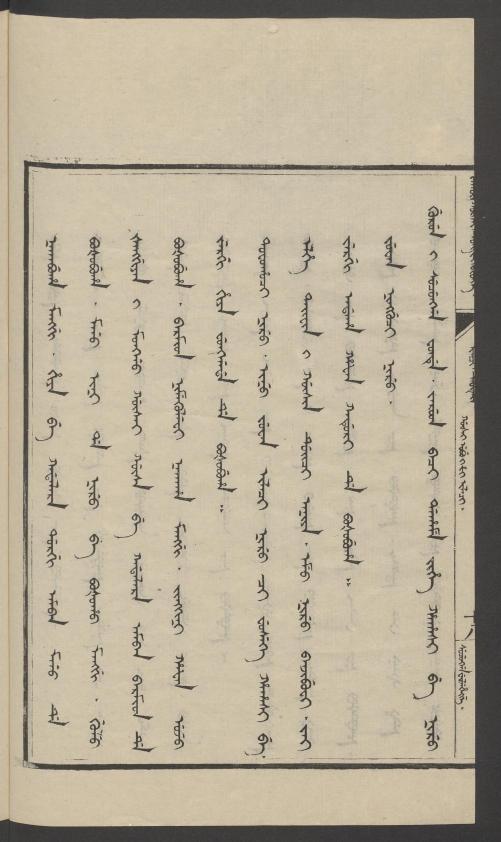
逐詞解析 · word-by-word(90 詞)
罷免後,襲與領侍衛內大臣瑪諾。瑪諾既襲其原管佐領後,襲與正白旗蒙古都統巴爾繆特。巴爾繆特因病休致後,襲與子爵頭等侍衛豐噶達。第十五佐領亦係由第十三佐領滋生之丁,於康熙三十四年編為一佐領,襲與二等輕車都尉喀都立。第十六佐領,國初自扎魯特來投之丁,編為佐領
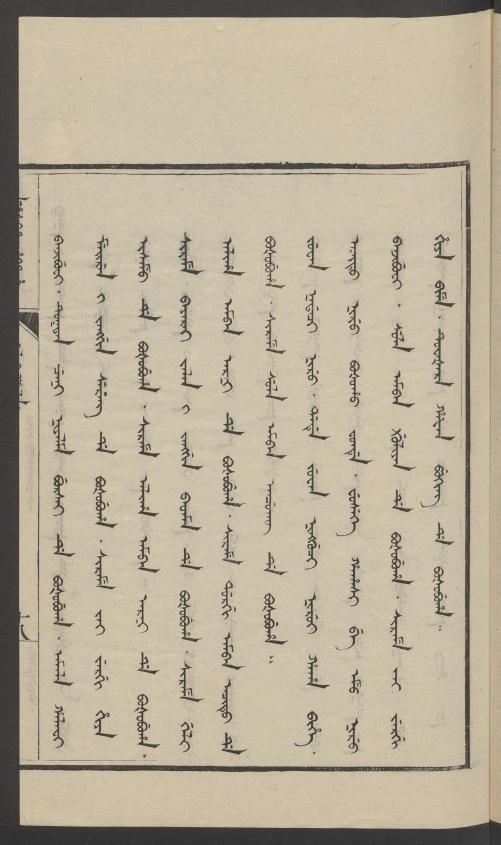
EnglishAfter (the person) was dismissed, it was inherited by the Dorgi Amban commanding the Guards, Mano. After Mano inherited his original company, it was inherited by the Gūsa be Kadalara Amban Barmiot of the Plain White Mongol Banner. After Barmiot fell ill and was discharged, it was inherited by the Jingkini Hafan, First-class Guard Funggada. The fifteenth company, also from the men who proliferated from the thirteenth company, was formed into a company in the thirty-fourth year of Kangxi, and was inherited by the Second-class Daha Hafan Kaduri. The sixteenth company, from the men who came and submitted from the Jarut in the beginning of the dynasty, was formed a company
逐詞解析 · word-by-word(98 詞)
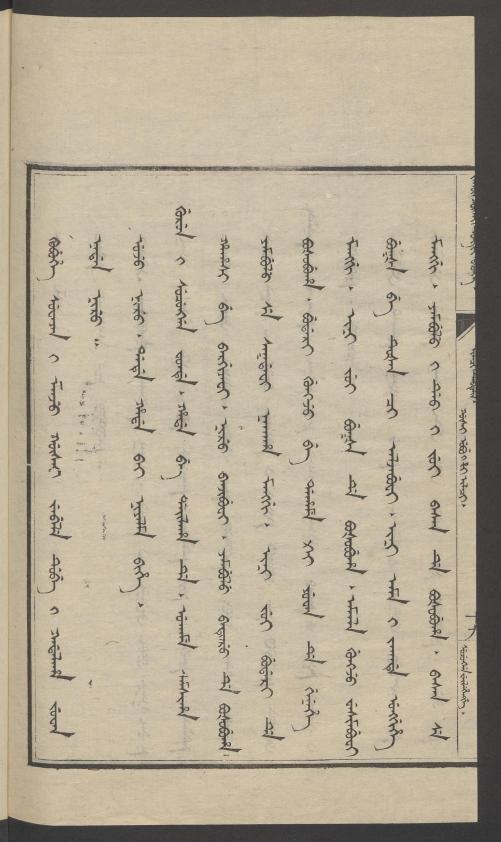
編設後,起初由彼等同族之人布爾賽管領。繼而噶拉斐、副都統色仁管領。繼由二等侍衛伊薩木管領。繼由尚書阿賴管領。繼由護軍參領巴特瑪管領。繼又由尚書阿賴管領。繼由內大臣阿奇圖管領。繼由散秩大臣安楚堪管領。第十七牛錄,原係第十六牛錄之噶哈〔?〕。阿奇圖管領牛錄時,將滋生男丁編為一牛錄,由散秩大臣果禮安管領。繼由〔?〕等侍衛兼雲騎尉普慶管領。
EnglishAfter being established, it was first administered by Bursai, a person of their own. Later, (it was administered) by Galafi and Meiren-i janggin Sereng. Then by Second-class Guard Isamu. Then by Minister Arai. Then by Bayarai jalan-i janggin Batma. Then again by Minister Arai. Then by Inner Minister Acitu. Then by idle minister Ancukan. The 17th niru was originally (that of?) Gaha of the 16th niru. When Acitu was administering the niru, the men who had multiplied were formed into one niru and it was administered by idle minister G'oliyan; then by Guard of ... rank and Cloud-Rider Captain Puking.
逐詞解析 · word-by-word(90 詞)
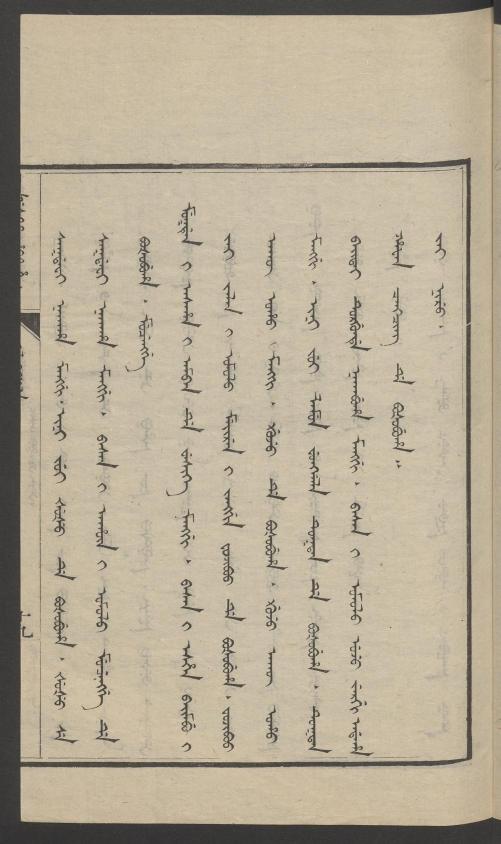
鑲黃旗滿洲三甲喇管轄之十七牛錄,第一牛錄原係哈達地方之人。國初征討哈達時,收聚潰散之眾編為牛錄,交揚布魯巴圖魯管領。揚布魯年老辭退後,由其子布達理管領。布達理隨公主前往開原後,由其子布克薩管領。嗣後公主奏請,將布克薩解任,送至其父處後,由揚布魯之弟之子巴山管領。巴山年老
EnglishOf the seventeen niru under the jurisdiction of the third jalan of the Manchu Bordered Yellow Banner, the first niru originally consisted of people from Hada. In the early days of the state, when Hada was subjugated, the scattered men were gathered and a niru was formed, and it was put under the charge of Yambulu Baturu. After Yambulu became old and retired, his son Budari took over its charge. After Budari followed the princess and went to Kaiyuan, his son Bukša took over its charge. Later, upon the princess memorializing, Bukša was removed from the post and sent to his father's place, after which it was put under the charge of Basan, son of Yambulu's younger brother. Basan old
逐詞解析 · word-by-word(88 詞)
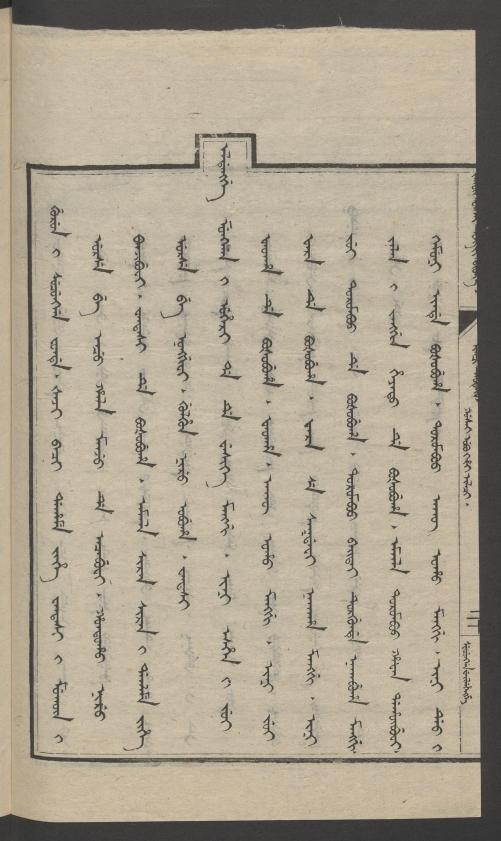
巴山年老休致後,其子舒舒承襲。舒舒年老休致後,由巴山之兄之孫穆成格承襲。穆成格陞任盛京侍郎後,由巴山之叔拜姆布之曾孫、副都統豐濟保承襲。豐濟保亡故後,由固柱承襲。固柱亡故後,其子藍翎侍衞圖克坦初承襲。圖克坦因事革退後,由巴山之孫、頭等輕車都尉常青承襲。 第二佐領
EnglishWhen Basan grew old and retired, his son Šušu inherited. When Šušu grew old and retired, Mucengge, the grandson of Basan's elder brother, inherited. After Mucengge was promoted to ashan i amban (Vice Minister) of Mukden, Fonjiboo, the great-grandson of Basan's uncle Baimbu and a meiren i janggin (Lieutenant General), inherited. After Fonjiboo died, G'uju inherited. After G'uju died, his son Tuktan, a lamun funggala (Blue Feather Guard), initially inherited. When Tuktan was dismissed due to a case, Cangcing, the grandson of Basan and an uju jergi adaha hafan (First-class Light Chariot Commander), inherited. Second Niru.
逐詞解析 · word-by-word(103 詞)
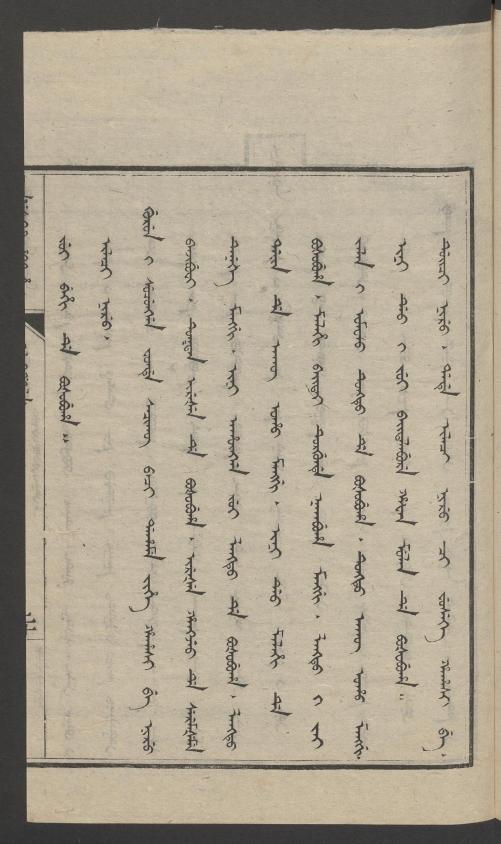
國初,將自沙濟地方來投誠之萬塔什族眾,編入異姓滿洲,分設半箇牛录,令萬塔什管理。嗣後,以相率來歸之人添入,改為整箇牛录。萬塔什陞授昭陵總管後,以其叔之子法塔承襲。法塔故後,以其子法拉承襲。法拉因年老告退後,以其子托倫保承襲。托倫保因事被革退後,以甲喇章京何雅圖承襲。其後,革去托倫保騎都尉世職,仍令其承管此牛录。托倫保故後,以其弟之…
EnglishAt the beginning of the dynasty, the people of Wantasi’s clan who had submitted from the Šaji region were attached to a different Manchu surname and formed into a half company, which was entrusted to Wantasi to command. Later, as people who successively came to submit were added, it was made into a full company. After Wantasi was promoted to superintendent of the Zhao Mausoleum, the company was inherited by Fatha, the son of his uncle. After Fatha died, it was inherited by his son Fara. After Fara retired on account of old age, it was inherited by his son Toromboo. After Toromboo was dismissed because of a case, the company was given to Heyatu, the jalan i janggin. Afterwards, Toromboo’s hereditary rank of ta’an (Junior Bulwark) was stripped, yet the company was still entrusted to him to command. After Toromboo died, his younger brother’s…
逐詞解析 · word-by-word(86 詞)
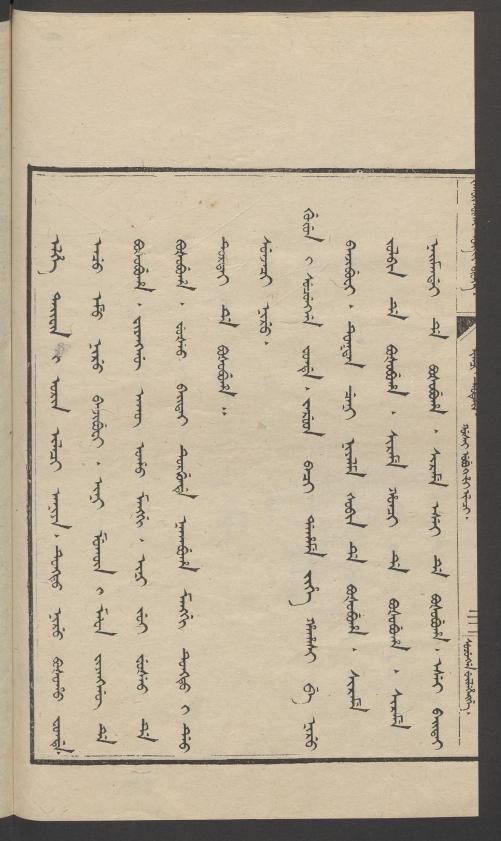
子 Behi 承襲。 第三牛錄,國初,自薩齊庫地方來投之漢人編為牛錄,初以 Irešen 承襲。Irešen 赴杭州駐防後,其長子 Langtu 承襲。Langtu 因鞍瘡亡故後,其弟 Malahi 承襲。Malahi 因事革退後,以 Langtu 之第二代孫 Tungtu 承襲。Tungtu 亡故後,以其弟之子騎都尉 Mulan 承襲。 第四牛錄,原自第三牛錄分出之衆男丁,
English(The position) was inherited by the son, Behi. The third company: At the beginning of the dynasty, the Han males who came and surrendered from the Sacikū region were formed into a company. Initially, it was inherited by Irešen. After Irešen went to Hangzhou to guard and station, his eldest son Langtu inherited it. After Langtu died of saddle sores, his younger brother Malahi inherited it. After Malahi was dismissed due to a matter, it was inherited by Langtu's second-generation grandson, Tungtu. After Tungtu died, it was inherited by his younger brother's son, the Light Chariot Commander Mulan. The fourth company: The males who originally multiplied from the third company, ...
逐詞解析 · word-by-word(80 詞)
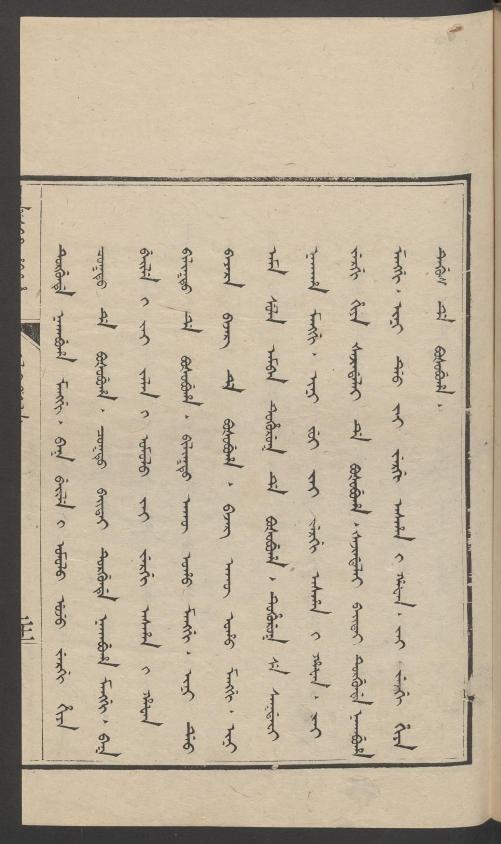
康熙二十三年,德克圖牛錄催辦時,另編一牛錄,令其宗族祖父費揚古承襲。費揚古去世後,令其子珠色承襲。珠色因事革退後,令圖圖之弟圖爾泰承襲。第五牛錄,國初時,以自扎魯特來歸之衆男丁編設牛錄,初令其族人碩賓承襲,續令卓爾賓承襲,續令洪齊承襲,續令奈曼岱承襲,續令額色承襲。額色因事〔……〕
EnglishIn the 23rd year of Kangxi, when the Tektu company was summoned for review, a separate company was formed, and (s)he appointed Fiyanggū, the elder of (his/her) clan, to inherit the post. After Fiyanggū passed away, (s)he appointed his son Juseo to inherit. After Juseo was dismissed due to a case, (s)he appointed Turtai, younger brother of Tungtu, to inherit. The Fifth Company: in the early days of the state, a company was formed from the men who came from the Jarut and surrendered. Initially, their man Šobin was appointed to inherit; successively, Jolbin was appointed; successively, Honci was appointed; successively, Naimandai was appointed; successively, Esei was appointed. Esei, due to a case, [...]
逐詞解析 · word-by-word(103 詞)
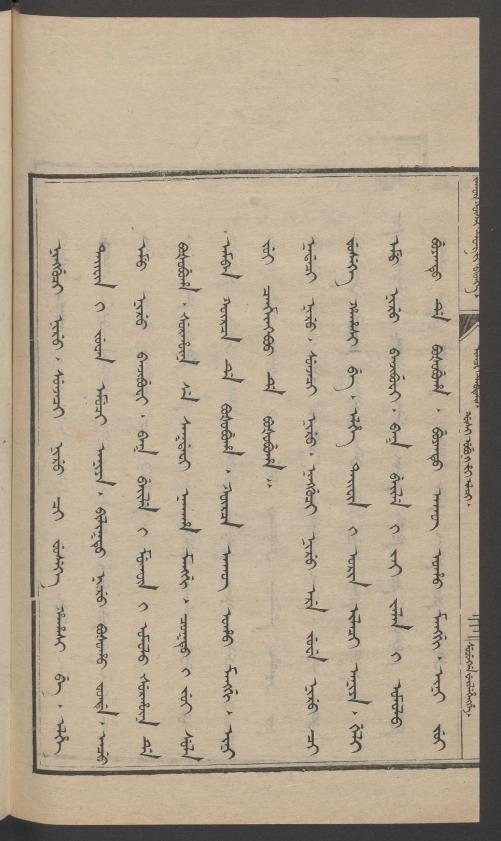
因事革退後,巴克貝勒之孫頭等侍衛綽克圖承襲。綽克圖因事革退後,巴克貝勒之曾孫二等男畢里克圖承襲。畢里克圖亡故後,其弟護軍巴扎爾承襲。巴扎爾亡故後,其父散秩大臣圖瑚魯克承襲。圖瑚魯克因年老辭退後,其子二等男兼二等侍衛沙扎達理承襲。沙扎達理因事革退後,其弟二等男兼二等侍衛特古承襲。
EnglishAfter it was ceased due to a matter, the company was assigned to Coktu, the grandson of Bak Beile and a first-rank imperial guard. After Coktu was ceased due to a matter, it was assigned to Biliktu, the great-grandson of Bak Beile and a second-rank baron (ashan i hafan). After Biliktu died, it was assigned to his younger brother, the guardsman Bajar. After Bajar died, it was assigned to his father, the idle grandee Tuhuruk. After Tuhuruk resigned due to old age, it was assigned to his son, the second-rank baron and second-rank imperial guard Šajindali. After Šajindali was ceased due to a matter, it was assigned to his younger brother, the second-rank baron and second-rank imperial guard Tegu.
逐詞解析 · word-by-word(97 詞)
第六佐領,原係由第五佐領孳生之男丁編設。康熙十一年,畢力格圖任領催時,又另編一佐領,令巴克貝勒族孫舒爾渾承襲。舒爾渾年老辭退後,由綽克圖之子散秩大臣庫爾察承襲。庫爾察亡故後,由其子昌鼎國承襲。第七佐領,係由第五、第六此二佐領孳生之男丁,於康熙二十三年再編一佐領,令巴克貝勒曾孫布顏圖承襲。布顏圖亡故後,以其子……
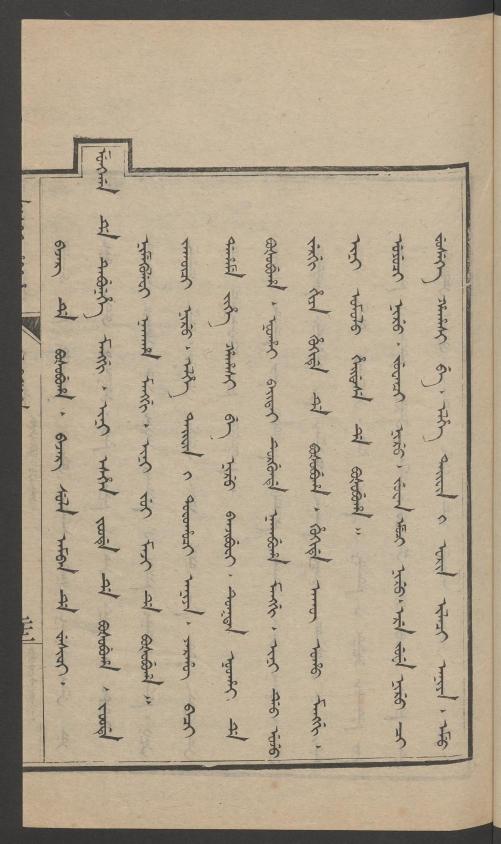
EnglishThe 6th company was originally formed from the male offspring produced by the 5th company. In the 11th year of Kangxi, when Biliktu served as the bošokū (corporal), a separate company was created and was assigned to Šurhūn, a grandson of the clan of Beile Bak. After Šurhūn resigned due to old age, it was assigned to Kūrca, Supernumerary Chamberlain and son of Coktu. After Kūrca passed away, it was assigned to his son Candinggu. The 7th company, from the male offspring produced by the 5th and the 6th companies, was again formed into a separate company in the 23rd year of Kangxi and was assigned to Buyantu, great-grandson of Beile Bak. After Buyantu passed away, it was assigned to his son …
逐詞解析 · word-by-word(93 詞)
讓巴扎爾承襲。巴扎爾陞授散秩大臣、安葬於陵寢後,由其叔父卓德承襲。卓德患病停止後,由其子瑪吉承襲。第八佐領:康熙十五年,將從雅爾古地方跟隨前來之噶哈西等人編爲佐領,最初令諾海承襲。諾海因事被革退後,由其弟頭等侍衛古奇德承襲。古奇德亡故後,由其孫黑尤色承襲。第九佐領、第十佐領、第十一佐領:從此二佐領孳生之男丁,於康熙二十三年一
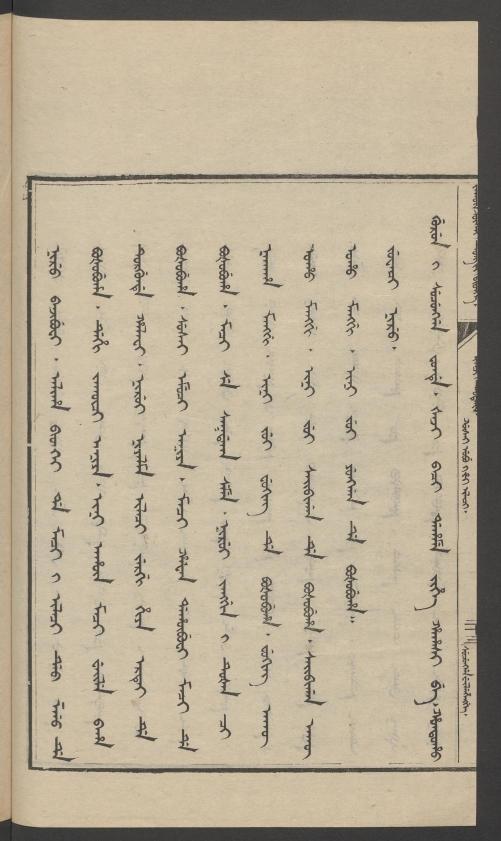
EnglishBarjar inherited. After Barjar was promoted to Sula Amban (idle high official) and interred in the mausoleum, his uncle Joode inherited. After Joode resigned due to illness, his son Maji inherited. The Eighth Niru: In the 15th year of Elhe Taifin (Kangxi), the Gahasi who came following from the Yargū area were organized into a Niru, initially inherited by Noohai. After Noohai was dismissed due to official matters, his younger brother, First-rank Imperial Guard Gukide, inherited. After Gukide passed away, his grandson Heiuse inherited. The Ninth Niru, Tenth Niru, Eleventh Niru: The men propagated from these two Niru, in the 23rd year of Elhe Taifin, one—
逐詞解析 · word-by-word(92 詞)
編為一佐領,令大學士馬齊之三弟馬武承襲。四十八年,因其兄馬齊獲罪,改令該佐領下人三等侍衛額爾特依承襲。五十一年,馬齊官復原職,令馬齊承襲。馬齊以年老辭去佐領之職後,令其子富景承襲。富景故後,令其子賽弼干承襲。賽弼干故後,令其子永干承襲。第二佐領:國初自沙濟地方來投之男丁,編為半個
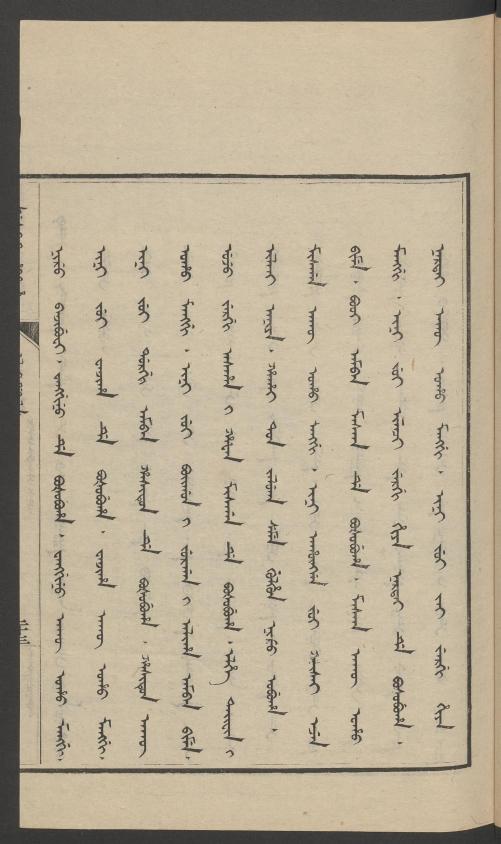
EnglishA company was formed and given to Ma'eo, the third younger brother of the Grand Secretary Maci, to inherit. In the forty-eighth year, because his elder brother Maci was convicted, it was transferred and given to Ertei, a man of the company and a Third Grade Imperial Guard, to inherit. In the fifty-first year, Maci's official post was restored, and the company was given back to Maci to inherit. After Maci resigned from the post of company captain on account of old age, the company was given to his son Fuking to inherit. After Fuking died, it was given to his son Saibigan to inherit. After Saibigan died, it was given to his son Yunggan to inherit. The second company: In the early days of the dynasty, men who came and submitted from the Šaji place were formed into a half
逐詞解析 · word-by-word(110 詞)
編立牛錄,令旺吉努承襲。旺吉努亡故後,其子旺濟哈承襲。旺濟哈亡故後,其子內大臣哈什屯承襲。哈什屯亡故後,其子戶部尚書兼一等男爵米思翰承襲。康熙三年,因壯丁數額已滿,編為整牛錄。米思翰亡故,昂吉〔?〕其長子吉賽額真〔?〕兼總管內務府大臣瑪山承襲。瑪山亡故後,其子三等侍衛那爾泰承襲。那爾泰亡故後,其子二等侍衛……
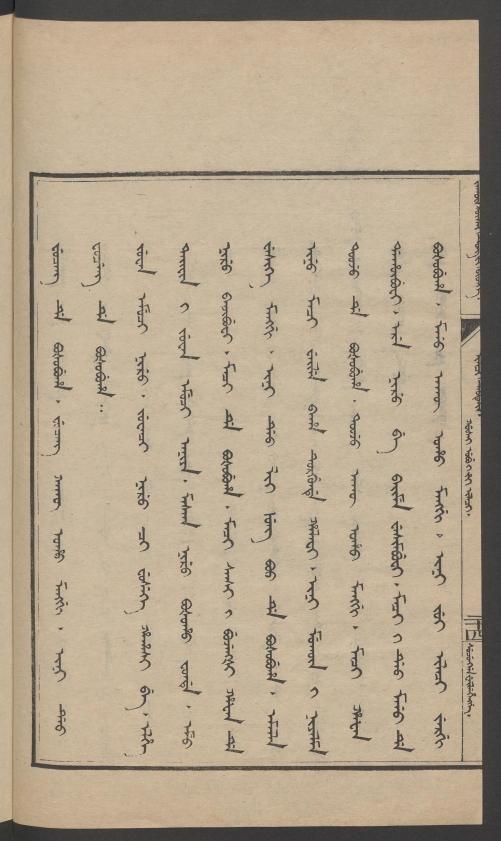
EnglishA niru was established and Wangginu was made to inherit it. After Wangginu died, his son Wanji inherited it. After Wanji died, his son, the Grand Minister of the Imperial Household Hasitun, inherited it. After Hasitun died, his son, the President of the Board of Revenue and Baron of the First Class Misagan, inherited it. In the third year of Kangxi, as the number of males had become full, it was made a complete niru. Misagan died, Anggi〔?〕 his eldest son Gisai Ejen〔?〕 and Superintendent of the Imperial Household Masan inherited it. After Masan died, his son, the Imperial Bodyguard of the Third Rank Nartai, inherited it. After Nartai died, his son, the Imperial Bodyguard of the Second Rank…
逐詞解析 · word-by-word(96 詞)
福常承襲,委常亡故後,其弟福成承襲。第十一佐領,由第十佐領孳生男丁,於康熙十一年馬薩克管佐領時,編設一佐領,令馬齊承襲。馬齊陞授山西布政使後,其弟李中保承襲。嗣因馬齊亦獲罪,乃改由其族中人陶柱承襲。陶柱亡故後,馬齊復職,奏請將此佐領令其弟瑪諾承襲。瑪諾亡故後,其子三等
EnglishFucang was made to inherit. After Wecang died, his younger brother Fuceng was made to inherit. The 11th company: from the men multiplied out of the 10th company, in the 11th year of Kangxi, when Masakn was administering the company, one company was created and Maci was made to inherit. After Maci was promoted to the position of Provincial Administration Commissioner of Shanxi, his younger brother Lii Žung Boo was made to inherit. Later, because Maci had also incurred an offence, it was changed and a person of his clan, Tooji, was made to inherit. After Tooji died, Maci’s office was restored, this company was petitioned for, and Maci’s younger brother Mano was made to inherit. After Mano died, his son, third class
逐詞解析 · word-by-word(89 詞)
侍衛寶柱承襲。第十二佐領。國初,由哈勒敏地方投誠而來之諸男丁,編設半個佐領,令扎齊巴承襲。扎齊巴年老辭退後,其弟邦蓀承襲。邦蓀亡故後,其子碩色承襲。康熙二年,以壯丁滿額,改為整佐領。碩色亡故後,其子圖爾喀承襲。圖爾喀因事被革退後,由扎齊巴之弟蘇克扎哈墨之孫尼揚安承襲。嗣後,圖喀獲免其罪,仍〔?〕
EnglishThe imperial guard Booju inherited. (It was) the 12th company. In the early days of the state, the men who came to submit from Halmin were formed into a half company, and Jaciba was caused to command. When Jaciba, having grown old, retired, his younger brother Bangsun inherited. When Bangsun died, his son Šose inherited. In the second year of Kangxi, because the number of men was complete, it was made a full company. When Šose died, his son Turka inherited. When Turka was dismissed on account of a matter, Niyangan, grandson of Sukjahame (who was) Jaciba’s younger brother, inherited. Later, Tuka was pardoned from his offence and still...
逐詞解析 · word-by-word(95 詞)
仍令圖拉卡承襲。又因事緣由罷免後,令其弟阿喇努承襲。阿喇努亡故後,令其子托克托霍承襲。托克托霍因事緣由罷免後,令尼雅干之子、禮部侍郎舒希承襲。舒希亡故後,令其子關保承襲。第十三佐領、第十二佐領之鋪戶人丁等,於康熙二十三年阿喇努承襲佐領時,另編一佐領,令扎奇巴之孫常顧承襲。常顧被委爲前鋒參領,前往從軍。
EnglishStill was assigned to inherit to Turaka. Again because of a matter was dismissed, then was assigned to inherit to his younger brother Aranu. After Arantu died, was assigned to inherit to his son Toktoho. After Toktoho was dismissed because of a matter, was assigned to inherit to Niyagan’s son, the Vice Minister of the Ministry of Rites Šuhi. After Šuhi died, was assigned to inherit to his son Guwamboo. From the 13th company and the 12th company, the shopkeeper men were taken, and in the 23rd year of Elhe Taifin (Kangxi), when Arantu was heading the company, a separate company was created and was assigned to inherit to Jaciba’s grandson Canggū. Canggū was made a Gabsihiyan I Janggin (Frontier Commander) and went to the army.
逐詞解析 · word-by-word(86 詞)
陣亡後,令其子舒泰承襲。舒泰亡故後,令其子福明嘎承襲。第十四佐領:國初,以蘇克素滸河畔瓜爾佳處來投誠之男丁編為牛录,起初令那爾察承襲。那爾察亡故後,令其子佛索禮承襲。佛索禮亡故後,令其弟固山額真瑚沙承襲。瑚沙亡故後,令其子頭等侍衛噶爾弼承襲。噶爾弼亡故後,其……
EnglishAfter he died in battle, his son Šutai was made to inherit. After Šutai passed away, his son Fumingga was made to inherit. The Fourteenth Niru: At the beginning of the state, the men who came and surrendered from the Gūwalgiya at the bank of the Suksuhu River were formed into a niru, and initially Narcai was made to inherit it. After Narcai passed away, his son Fosori was made to inherit. After Fosori passed away, his younger brother, the Gūsai Ejen (Banner Commander) Hūša, was made to inherit. After Hūša passed away, his son, the First-Class Guard Galbi, was made to inherit. After Galbi passed away, his...
逐詞解析 · word-by-word(93 詞)
叔父厄克伊(Eken Ekei?)之子、二等侍衛色仁承襲。色仁亡故後,其兄散秩大臣庫弼圖承襲。庫弼圖安葬於景陵後,其子護軍參領英祿承襲。英祿陞任永陵翼長後,其子大伊衙門主事堆欽(Duicin)承襲。第十五牛錄:自第十四牛錄分出之鋪戶壯丁,於康熙八年噶爾弼佐領任內,別編一牛錄,以噶爾弼之…〔?〕…、佛索禮之孫,尚未
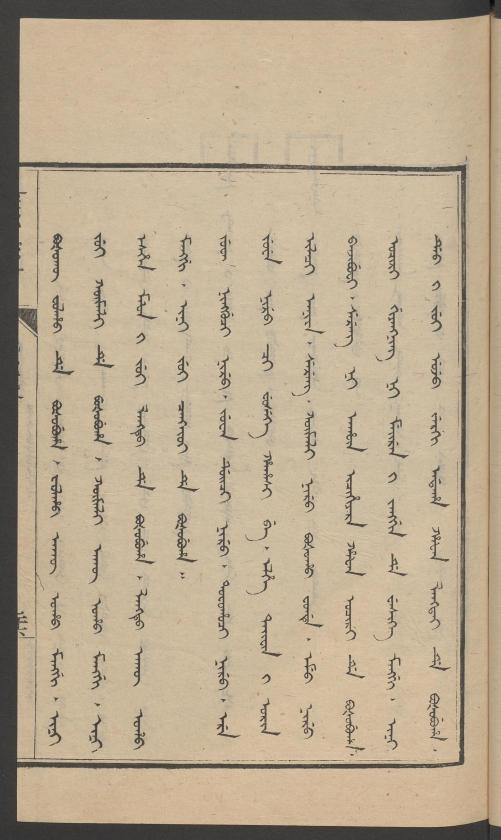
EnglishHis uncle Eken(?) Ekei's son, Junior Guardian of the Second Rank Sereng, inherited it. After Sereng deceased, his older brother, Attendant Minister of the Imperial Presence Kūbitu, inherited it. After Kūbitu was interred at the Jing Mausoleum, his son, Company Commander of the Imperial Guard Inglu, inherited it. After Inglu was promoted to Wing Commander of the Eternal Mausoleum, his son, Manager of the Dai I Office Duicin, inherited it. The 15th Niru: From the male retainers of the shopkeepers who were split off from the 14th Niru, in the eighth year of Kangxi, when Galbi was the niru commander, a separate niru was created, and it is not yet [recorded?] as belonging to Galbi's…〔?〕… and Fosori's grandson.
逐詞解析 · word-by-word(96 詞)
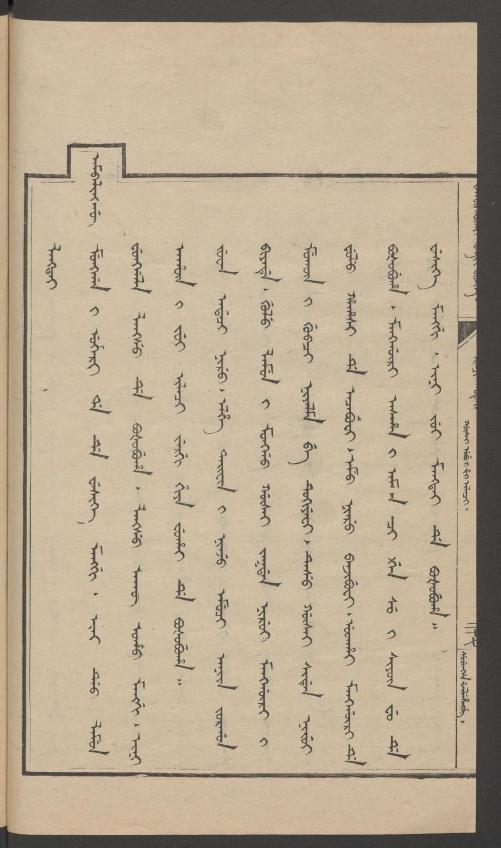
領催佛爾霍承襲。佛爾霍故後,其子科伊瑪里承襲。科伊瑪里故後,其叔父之子朗圖承襲。朗圖故後,其子倉奎承襲。第十六牛录、第十四牛录、第十五牛录,此二牛录孳生男丁,於康熙二十三年色仁在科伊瑪里牛录領催時編為一牛录。色仁之兄理事官鄂奇奇之職,由鄂齊爾承襲。鄂齊爾陞江寧副都統後,其弟之子頭等輕車都尉朗泰承襲。
EnglishFoho the Bosokū was inherited. After Foho died, his son Koimali inherited. After Koimali died, the son of his uncle (i.e., his cousin) Langtu inherited. After Langtu died, his son Cangkioi inherited. From the sixteenth niru, the fourteenth niru, and the fifteenth niru—these two niru—the men produced by natural increase were, in the twenty-third year of Elhe Taifin, when Sereng was the Bosokū of Koimali’s niru, organized into one niru. The post of Ociqi, the executive official and elder brother of Sereng, was inherited by Ocir. After Ocir was promoted to Lieutenant General of Jiangning, his younger brother’s son, Langtai the Light Chariot Commandant of the First Rank, inherited.
逐詞解析 · word-by-word(95 詞)
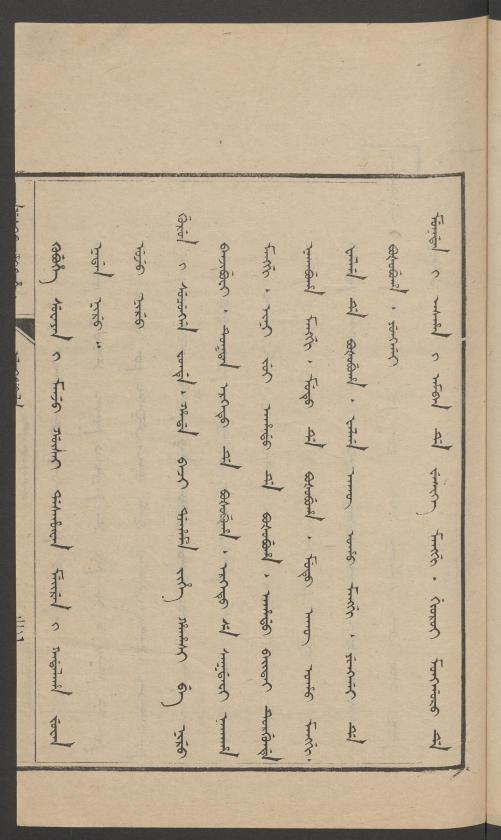
郎泰陞任景陵總管後,其弟藍翎郎蘇承襲。郎蘇卒後,其兄之子三等侍衛福海承襲。第十佐領。康熙六十一年臘月,將正藍旗蒙古固山扎克丹佐領下莽古爾族之全體人丁揀出,合於本旗公中佐領之餘丁,編爲一佐領,即令莽古爾承襲。莽古爾由副〔?〕陞任甘肅巡撫後,其子莽泰承襲。
EnglishAfter Langtai was promoted to the Director of the Jingling Mausoleum, his younger brother, the Blue Feather Langsu, was made to inherit (the post). After Langsu died, his elder brother’s son, the Third Rank Guard Fuhai, was made to inherit (it). The 10th Company. In the twelfth month of the sixty-first year of Kangxi, all individuals of the Manggūri clan from the Jakdan Company of the Plain Blue Mongol Banner were selected and combined with surplus males of the public company of the same banner, one company was formed, and then Manggūri was made to inherit it. After Manggūri was promoted from Assistant〔?〕to Governor of Gansu, his son Mangtai was made to inherit (it).
逐詞解析 · word-by-word(77 詞)
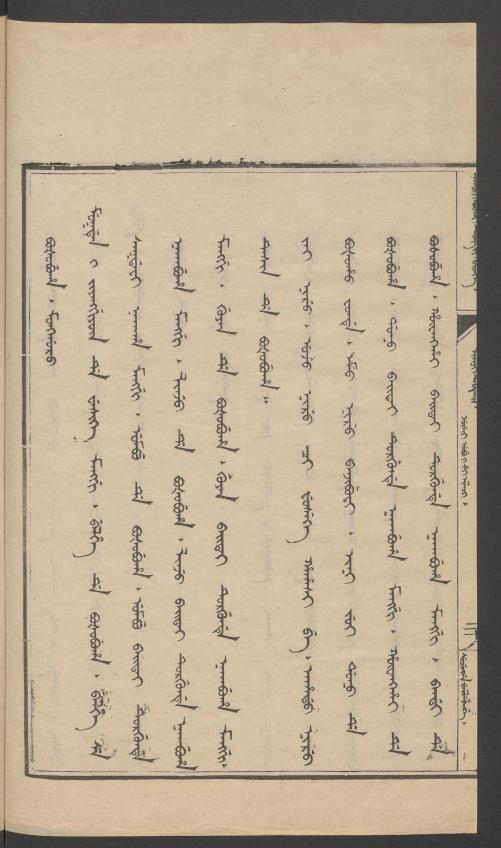
鑲黃旗滿洲四甲喇所轄第十七佐領之第一佐領,國初自哈達來投之衆男丁編為佐領,初由鄂日格圖承襲。鄂日格圖年老辭退後,由其子阿哈圖承襲。阿哈圖因事革退後,由穆圖承襲。穆圖亡故後,由法爾噶承襲。法爾噶亡故後,永嘎陞盛京侍郎後,由覺羅蒙古爾……
EnglishFirst company of the 17th company under the jurisdiction of the Fourth Jalan of the Bordered Yellow Manchu Banner, at the beginning of the dynasty, men who came and submitted from Hada were organized into a company, initially inherited by Erketu. After Erketu became old and resigned, it was inherited by his son Ahado. After Ahado was dismissed due to a case, it was inherited by Mutu. After Mutu passed away, it was inherited by Falga. After Falga passed away, after Yunggai was promoted to the position of Mukden i Ashan i Amban (Vice Minister of Shengjing), to Gioroi Monggoro …
逐詞解析 · word-by-word(78 詞)
令蒙古羅承襲。蒙古羅陞盛京將軍後,令伯勒格承襲。伯勒赫四年老辭退,令溫布承襲。溫布因事被革退,令音珠承襲。林珠因事被革退,令古彥承襲。古彥因事被革退,令特辛承襲。又,首牛錄滋生之嘎哈希,於阿哈杜管牛錄時,編爲一牛錄,令其子多諾承襲。多諾因事被革退,令黃蓋承襲。黃蓋因事被革退,令班迪……
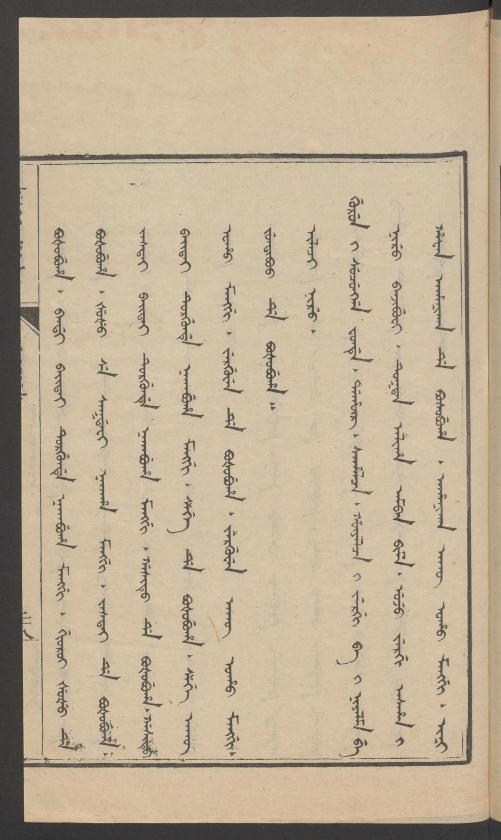
EnglishMonggoro was appointed (to inherit the post). After he was promoted to the jianggiyūn of Mukden, Belge was appointed. Belhe, having grown old, resigned; Umbu was appointed. Umbu, due to a matter, was dismissed; Inju was appointed. Due to a matter of Linju, (s/he) was dismissed; Guyan was appointed. Guyan, due to a matter, was dismissed; Tesin was appointed. Also, the Gahasi that split off from the first niru: at the time when Ahado was leading the niru, a niru was established, and his son Dono was appointed (to it). Dono, due to a matter, was dismissed; Hūwanggai was appointed. Hūwanggai, due to a matter, was dismissed; Bandi ...
逐詞解析 · word-by-word(79 詞)
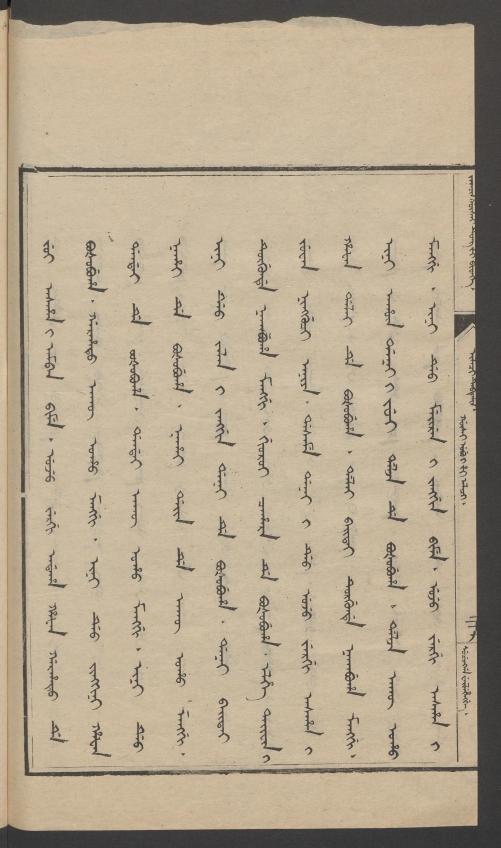
班弟承襲,因班弟事革退後,令覺羅舒舒承襲。舒舒年老辭退後,令札斯泰承襲。因噶西圖、巴斯泰事革退後,令西格承襲。西格亡故後,令哲爾古文承襲。哲爾古文亡故後,令屯泰保承襲。第三佐領,國初將達斡爾、薩哈爾察、卦爾察等處地方之人編爲佐領,初任大臣兼頭等侍衛銜,令阿哈尼堪承襲;阿哈納喀亡故後,其……
EnglishBandi was made to inherit; after being dismissed because of the Bandi affair, Gioroi Šušu was made to inherit. After Šušu, being old, resigned, Jasitai was made to inherit. After being dismissed because of the Gasitu and Basitai affair, Syge was made to inherit. After Syge died, Jerguwen was made to inherit. After Jerguwen died, Juntiboo was made to inherit. The Third Company: at the beginning of the dynasty, the people from places such as the Dahūr, Sahalja, and Gūyalca were organized into a company. The one who initially held it as a minister with the title of first-rank aide was succeeded by Ahanikan; after Aganaka died, his ...
逐詞解析 · word-by-word(112 詞)
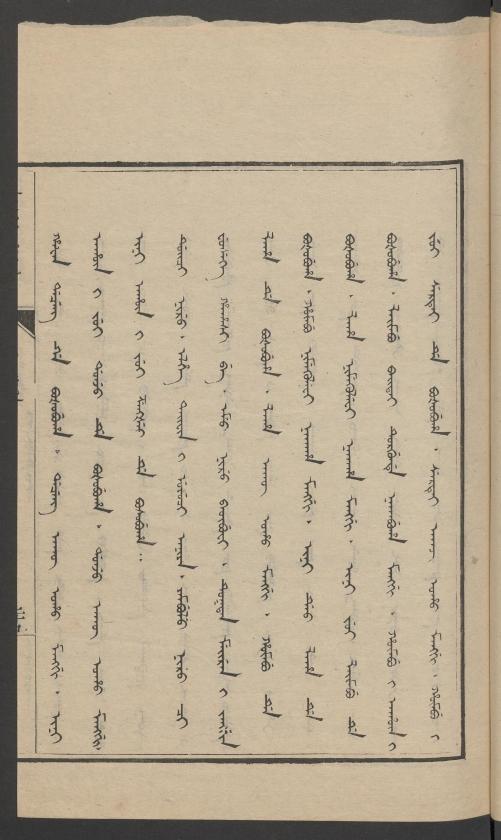
子,侍郎兼頭等阿達哈哈番噶哈圖承襲。噶哈圖卒後,其弟子爵譚泰承襲。譚泰卒後,其弟納海承襲。納海陣亡後,其弟甲喇章京達奈承襲。達奈因事革退後,以覺羅燦哈喇承襲。康熙十六年,復以達奈之弟頭等男爵達賴承襲。達賴因事革退後,以其兄達奈之子達爾佳承襲。達爾佳卒後,其弟副都統兼頭等男
EnglishIt was inherited by his son, Gahatu, a Vice Minister concurrent with First-class Light Chariot Commander. After Gahatu died, it was inherited by his younger brother, Dandai, a viscount. After Dandai died, it was inherited by his younger brother, Nahai. After Nahai died in battle, it was inherited by his younger brother, Danai, a Regimental Commander. After Danai was dismissed due to an incident, it was inherited by Gioroi Canhara. In the 16th year of Kangxi, it was again inherited by Danai's younger brother, Dalai, a first-class baron. After Dalai was dismissed due to an incident, it was inherited by the son of his elder brother Danai, Dalja. After Dalja died, it was inherited by his younger brother, a Vice Commander-in-chief concurrent with first-class baron
逐詞解析 · word-by-word(99 詞)
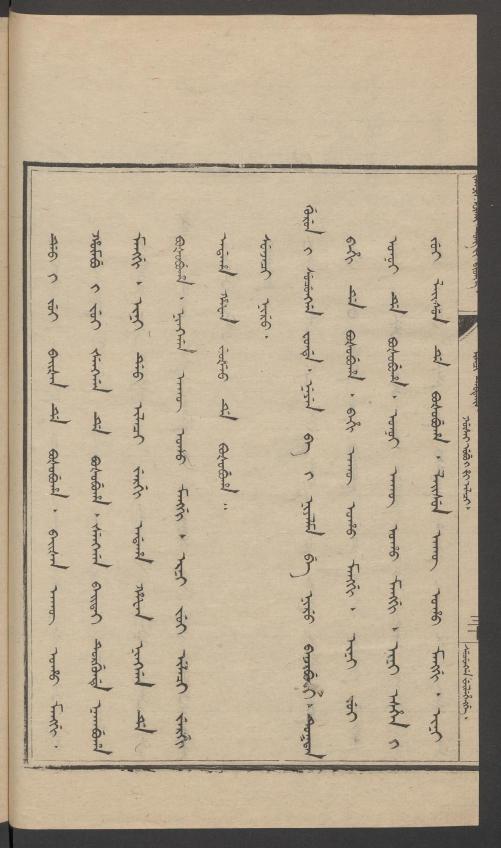
〔上承〕讓頭等侍衛達成承襲。達成亡故後,令其兄之子敦珠承襲。敦珠亡故後,令其兄之子曾色承襲。第四牛錄,康熙 URUCI 年,將牙木布魯牛錄餘丁編為一牛錄,初令副都統拉哈承襲。拉哈亡故後,令洪布承襲。洪布患病休致後,令其弟拉哈承襲。拉哈患病休致後,令其子來布承襲。來布因事革退後,令霍安額布之兄之子瑟爾泰承襲。瑟里亡故後,令哈法努之
EnglishDaceng, an Imperial Guard of the First Rank, was made to inherit. After Daceng died, his elder brother's son Donju was made to inherit. After Donju died, his elder brother's son Dzengsel was made to inherit. For the Fourth Niru, in the Uruci year of Kangxi, the remaining males from the Yambulu Niru were collected to form one niru. At first, Laha, a deputy commander, was made to inherit. After Laha died, Hūmbu was made to inherit. After Hūmbu fell ill and retired, his younger brother Laha was made to inherit. After Laha fell ill and retired, his son Laimbu was made to inherit. After Laimbu was dismissed due to a matter, the son of Howan Ebu's elder brother, Sertei, was made to inherit. After Seri died, Hafanu's
逐詞解析 · word-by-word(94 詞)
白山承襲。白山亡故後,由祜木布之子升嘎承襲。升嘎因事被革退後,令其弟三等輕車都尉寧干承襲。寧干亡故後,由其子三等輕車都尉烏費奧承襲。第五佐領,係國初將訥殷地方人丁編為佐領,起初由巴希承襲。巴希亡故後,由其子鄂諾伊承襲。鄂諾伊亡故後,由其叔父之子萊孫承襲。萊孫亡故後,其……
EnglishIt was inherited by Baishan. After Baishan passed away, it was inherited by Šenggan, son of Hūmbu. After Šenggan was dismissed due to an incident, it was inherited by his younger brother, the Third Class Light Chariot Commander Ninggan. After Ninggan passed away, it was inherited by his son, the Third Class Light Chariot Commander Ufeo. The Fifth Company: In the beginning of the dynasty, the people of the Neyen region were formed into a company, and initially it was inherited by Bahi. After Bahi passed away, it was inherited by his son Onoi. After Onoi passed away, it was inherited by his uncle's son Laisun. After Laisun passed away, his...
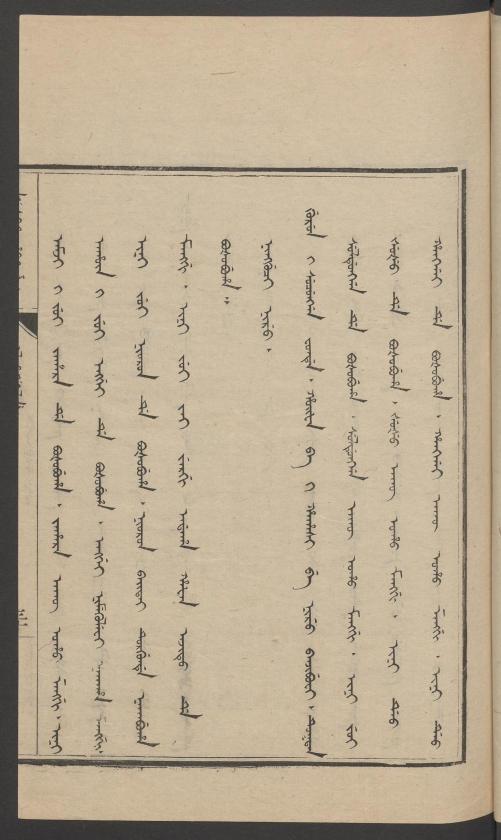
逐詞解析 · word-by-word(87 詞)
以(其)伯父之子扎哈拉承襲。扎哈拉卒,以昂吉兄之子恩圭承襲。恩圭患病卒,昂吉以其子尼諾隆承襲。尼諾隆因事革退後,以其子二等輕車都尉阿吉圖承襲。 第六牛錄:國初將輝發地方丁壯編設牛錄,初以蘇爾東嘎承襲。蘇爾東嘎卒,以其子舒舒承襲。舒瓦烏卒,以其弟杭愛承襲。杭愛卒,以其弟……
English(his) uncle’s son Jahara inherited. After Jahara died, Anggi’s older brother’s son Enggei inherited. Enggei fell ill and died; Anggi had his son Ninoron inherit. After Ninoron was dismissed due to a (certain) matter, his son, the Second-class Light Chariot Commander Ajitu, inherited. The Sixth Niru: In the founding period of the state, the able-bodied men of Hoifa were organized into a niru, and initially it was given to Suldungga to inherit. After Suldungga died, his son Šušu inherited. After Šuwau died, his younger brother Hanggai inherited. After Hanggai died, his younger brother...
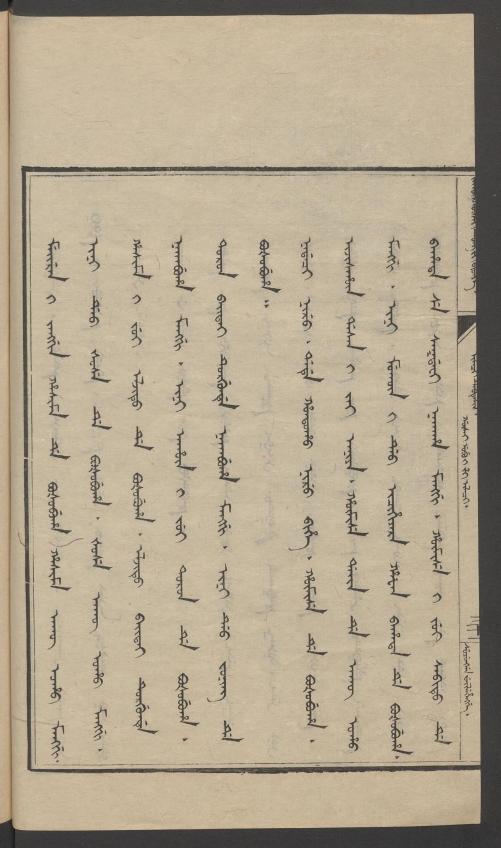
逐詞解析 · word-by-word(93 詞)
副都統由哈什梅承襲,哈什恩亡故後,由其弟沙色承襲。沙色亡故後,由哈什恩之子額爾吉圖承襲。額爾吉圖因事被革退後,由其兄之子托倫承襲。托倫因事被革退後,由其弟卓康承襲。第七牛錄,原為半個牛錄,由胡米色承襲。順治二年,胡米色陣亡後,由同族弟郎中把哈塔承襲。把哈塔年老告退後,由胡米色之子薩比圖〔
EnglishThe vice-commander-in-chief was inherited by Hasime. After Hasimn died, it was inherited by his younger brother Šase. After Šose died, it was inherited by Hasimn's son Eljitu. After Eljitu was dismissed due to an affair, it was inherited by his older brother's son Toron. After Toron was dismissed due to an affair, it was inherited by his younger brother Jokang. The seventh niru, originally a half-niru, was inherited by Hūmise. In the second year of Ijishūn Dasan (Shunzhi), after Hūmise died in battle, it was inherited by his clan's younger brother, the Icihiyara Hafan (Director) Bataha. After Bataha resigned due to old age, by Hūmise's son Sabitu 〔
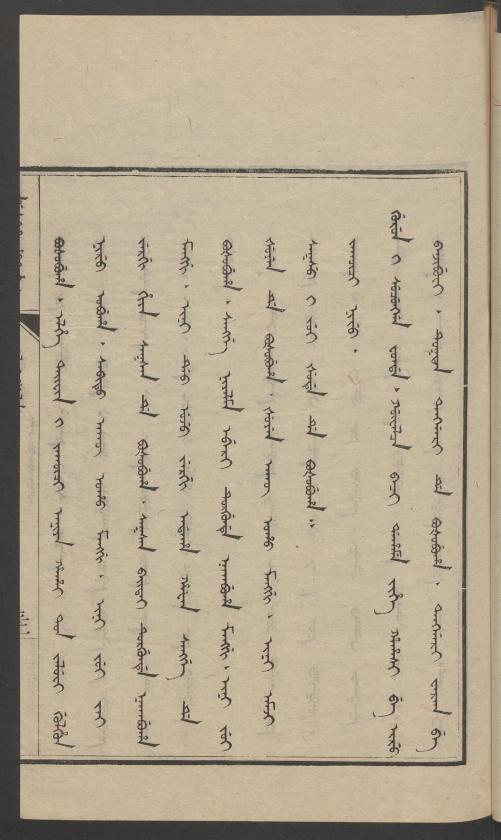
逐詞解析 · word-by-word(89 詞)
(由薩比圖)承襲。康熙八年,壯丁數足,編為整佐領。薩比圖亡故後,由其子二等侍衛噶薩克散承襲。薩克散因事革退後,其弟頭等輕車都尉桑格承襲。桑格因人才庸劣被革退後,其子舒延承襲。舒延亡故後,其伯父薩克蘇之子舒德承襲。第八佐領,係國初由噶伊瓦爾察處來投之男丁所編之佐領,由圖克通·唐加里承襲。
English(It was) inherited by Sabitu. In the eighth year of Kangxi, when the number of male adults became full, it was made a complete niru. After Sabitu passed away, it was inherited by his son, the second-class guard Giya Saksan. After Saksan was dismissed due to a matter, it was inherited by his younger brother, the first-class light chariot commander Sangge. After Sangge was dismissed because of his incompetence, it was inherited by his son Šuyen. After Šuyen passed away, it was inherited by his uncle Saksu's son Šude. The eighth niru: at the beginning of the dynasty, the men who came to submit from Gaiwalca were organized into a niru, and it was inherited by Tuktun Tanggari.
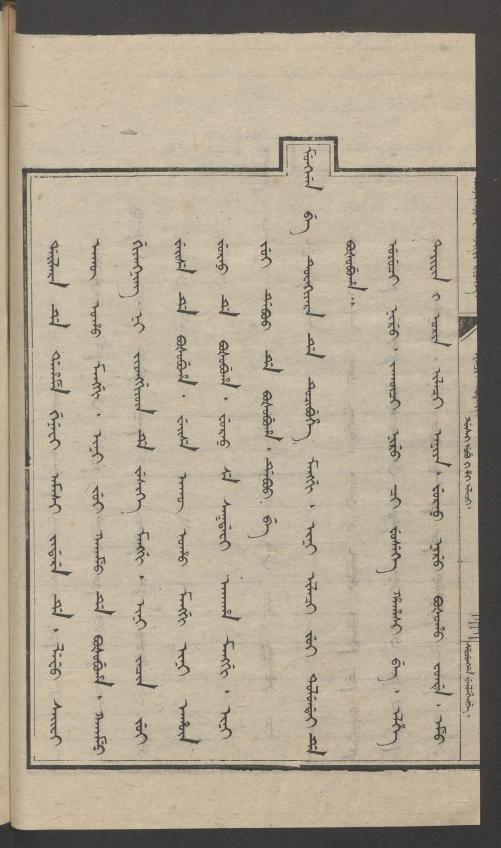
逐詞解析 · word-by-word(86 詞)
征討時隨行,回程途中勒福薩伊身故,遂以其子喀喀穆承襲。喀喀穆陞江寧將軍後,以其次子韋色承襲。韋色亡故後,以其兄珠琳承襲。富拉諾年邁憂傷後,以其子德寶承襲。德寶被派守陵後,以其第三子托勒克岱承襲。第九、第八牛录滋生之男丁……康熙二十三年,富拉諾督催牛录時,一……
EnglishWhen (they) had followed on campaign and were returning, Lefu Saifi died, and thereupon his son Kakamu inherited. After Kakamu was promoted to General of Jiangning, his second son Weise inherited. After Weise died, his elder brother Jurin inherited. After Furano grew old and grieved, his son Deboo inherited. After Deboo was sent to guard the mausoleum, his third son Tolecdai inherited. The males who were surplus from the 9th and 8th companies... In the 23rd year of Kangxi, when Furano was driving the company, one...
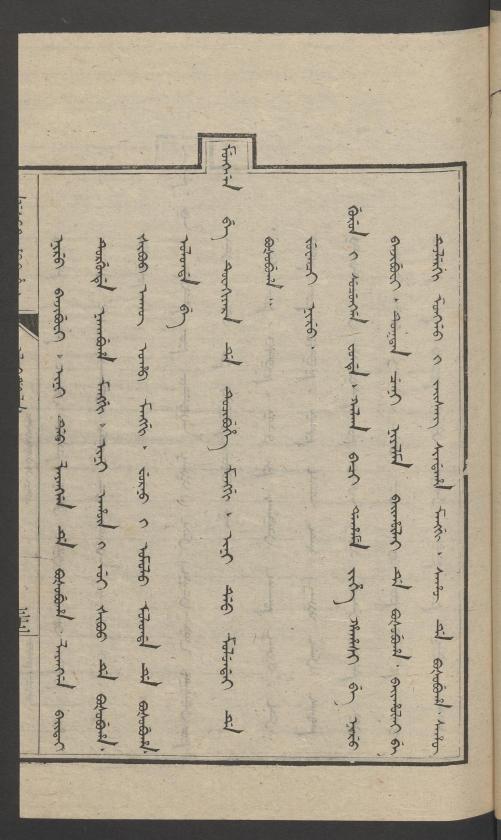
逐詞解析 · word-by-word(76 詞)
編立佐領,以弟 Layangga 承襲。因 Layangga 事被罷免,繼以兄子 Šiboo 承襲。Šiboo 亡故後,以 Jurin 之孫 Molonda 承襲。將 Oloonda 派去看守陵墓,其後以弟 Molcundai 承襲。第二佐領,乃國初從喀爾喀來投之衆男,編為佐領。初以其人拜瑚賴承襲,拜瑚賴被委為〔TELERGI ONGGO?〕之宰桑,後以 Sahū 承襲。Sahū
EnglishA company was established and given to his younger brother Layangga to inherit. Due to some affair of Layangga, he was dismissed, whereupon it was inherited by Šiboo, the son of his elder brother. After Šiboo passed away, it was inherited by Molonda, the grandson of Jurin. Oloonda was assigned to guard the tomb, after which it was inherited by his younger brother Molcundai. The second company, in the early days of the state, was formed from men who came to submit from the Kalka region. Initially, it was inherited by their man Baishūlai. Baishūlai was appointed as the jaisang of 〔TELERGI ONGGO?〕, after which it was inherited by Sahū. Sahū
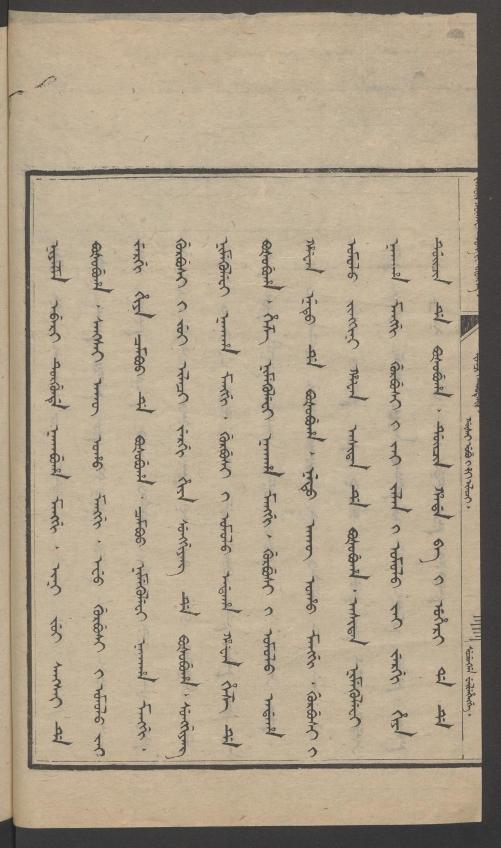
逐詞解析 · word-by-word(106 詞)
因人丁稀少之故被停止後,由其子桑賽承襲。桑賽亡故後,由額駙顧爾布斯之孫、二等侍衛查木博承襲。查木博患病休致後,由顧爾布斯之子、三等侍衛松江承襲。松江患病休致後,由顧爾布斯之孫、輕車都尉赫德承襲。赫德患病休致後,由顧爾布斯之孫、輕車都尉訥圖承襲。訥圖亡故後,由顧爾布斯之孫、子爵艾塔承襲。艾塔患病休致後,由顧爾布斯之曾孫、二等侍衛兌齊承襲,兌齊時為哈達地方總管。
EnglishBecause of a shortage of personnel, [the post] was suspended, and thereafter it was inherited by his son Sangsai. After Sangsai died, it was inherited by the grandson of the imperial son-in-law Gurbusi, Junior Bodyguard of the Second Rank Camboo. After Camboo fell ill and retired, it was inherited by Gurbusi’s son, Junior Bodyguard of the Third Rank Sunggiyang. After Sunggiyang fell ill and retired, it was inherited by Gurbusi’s grandson, Light Chariot Commander Hedz. After Hedz fell ill and retired, it was inherited by Gurbusi’s grandson, Light Chariot Commander Netu. After Netu died, it was inherited by Gurbusi’s grandson, Viscount Aita. After Aita fell ill and retired, it was inherited by Gurbusi’s great-grandson, Junior Bodyguard of the Second Rank Duici, who was then the Commandant of Hada.
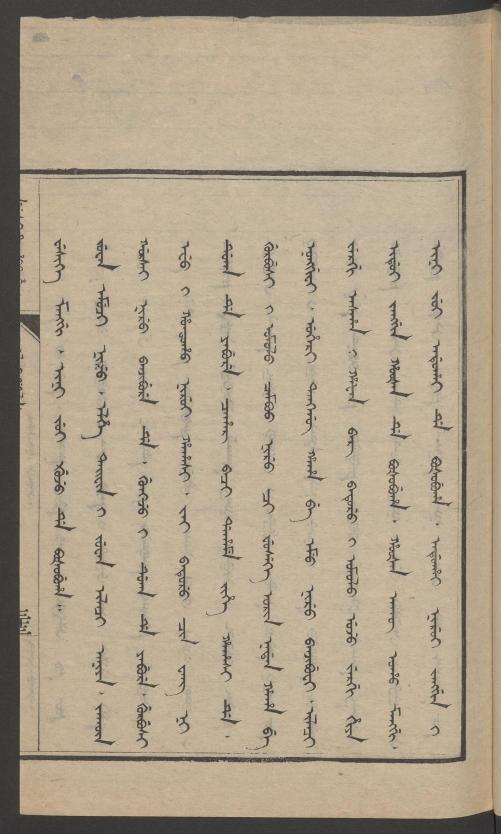
逐詞解析 · word-by-word(103 詞)
(其人)陞遷後,其子古柱承襲。第十一佐領:康熙十三年,八旗編設佐領時,將行走於公主門之古爾布什額駙半個佐領之男丁,及行走於英親王門、自察哈爾來歸之男丁,並古爾布什之孫常保佐領下孳生之二十七名壯丁增入,合共一百名壯丁,編爲一佐領,由三等阿散官巴爾巴圖魯之孫、頭等侍衛班領浩善承襲。浩善亡故後,其子阿都蓋承襲。恩都海之佐領──
EnglishAfter (s)he was promoted, his son Guju inherited. The 11th Company: In the 13th year of Kangxi, when companies were being organized among the Eight Banners, the men of Gurbusi Ef u's half company serving at the Princess's Gate, and the men who had submitted from the Chakhar and were serving at the Prince Ying's Gate, together with 27 men who had multiplied from the company of Gurbusi's grandson Camboo, were added, making a total of 100 men, and a company was formed. It was inherited by Hoosan, grandson of the Third-class Asan Official Bar Baturu and Head of the Guard & Platoon Commander. After Hoosan passed away, his son Adugai inherited. Enduhai's company commander...
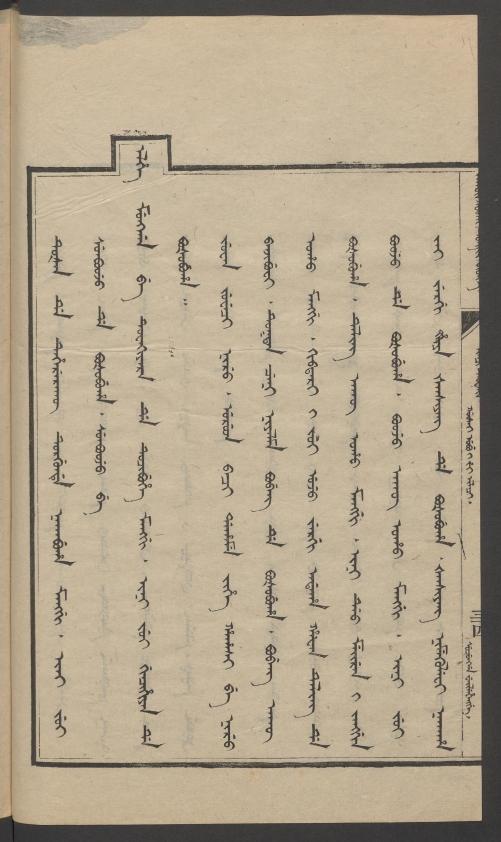
逐詞解析 · word-by-word(92 詞)
因不稱於職任被革退後,其子孫博柱承襲;孫博柱被派往守護泰陵後,其子金奇賢承襲。第十二牛錄:將自烏嚕特地方來投誠之眾丁編為牛錄,初以其人博本承襲;博本亡故後,以奇卜塔里之子頭等輕車都尉德令承襲;德令亡故後,以其弟副都統寶柱承襲;寶柱亡故後,以其子二等侍衛善祥承襲;善祥患病辭退。
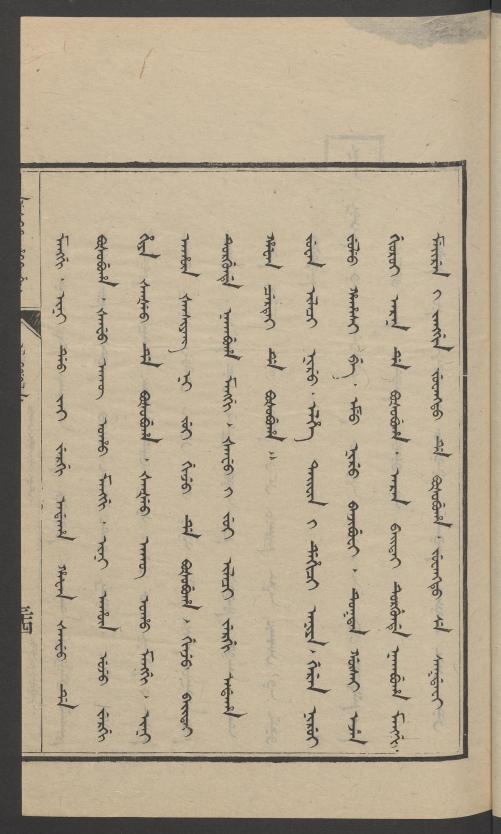
EnglishAfter being dismissed from the post because he was not fit, his son Sunboju inherited. After Sunboju was sent to guard the Tai Mausoleum, his son Gincihiyan inherited. For the twelfth company: the men who came to submit from the Urud place were organized into a company. Initially, their own man Bobeng inherited. After Bobeng died, Deling, son of Kibtari and a first-class light chariot commander, inherited. After Deling died, his younger brother Booju, a deputy general, inherited. After Booju died, his son Šansiyang, a second-class imperial bodyguard, inherited. Šansiyang fell ill and resigned.
逐詞解析 · word-by-word(95 詞)
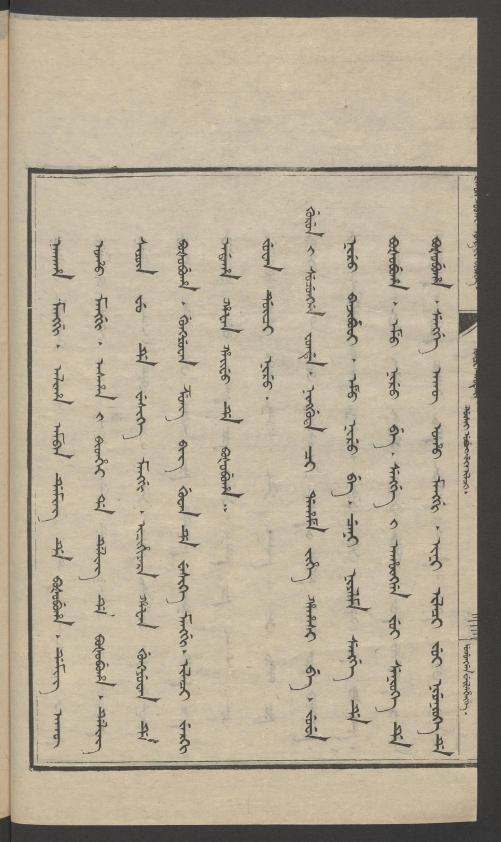
嗣後,以其弟二等輕車都尉善福承襲。善福亡故後,以其兄頭等侍衛善壽承襲。善壽亡故後,以其兄善祥之子金柱承襲。金柱因事革退後,以善福之子三等輕車都尉策爾特依承襲。第十三個牛錄:康熙四十年,將各牛錄之多餘壯丁編成一個牛錄。初以旗主覺羅阿爾納承襲。阿爾納因事革退後,以副都統莊圖承襲。莊圖年老
EnglishAfterwards, his younger brother, the Second-Class Light-Chariot Commander Šanfu, was made to inherit. When Šanfu had passed away, his elder brother, the First-Class Imperial Guard Šanseo, was made to inherit. When Šanseo had passed away, the son of his elder brother Šansiyang, Ginju, was made to inherit. When Ginju was dismissed due to a matter, the son of Šanfu, the Third-Class Light-Chariot Commander Certei, was made to inherit. The thirteenth niru: In the 40th year of Elhe Taifin, the surplus men of the various nirus were formed into one niru. At first, the Banner Master Gioroi Arna was made to inherit. When Arna was dismissed due to a matter, the Deputy Lieutenant-General Juwangtu was made to inherit. Juwangtu, [having grown] aged,
逐詞解析 · word-by-word(95 詞)
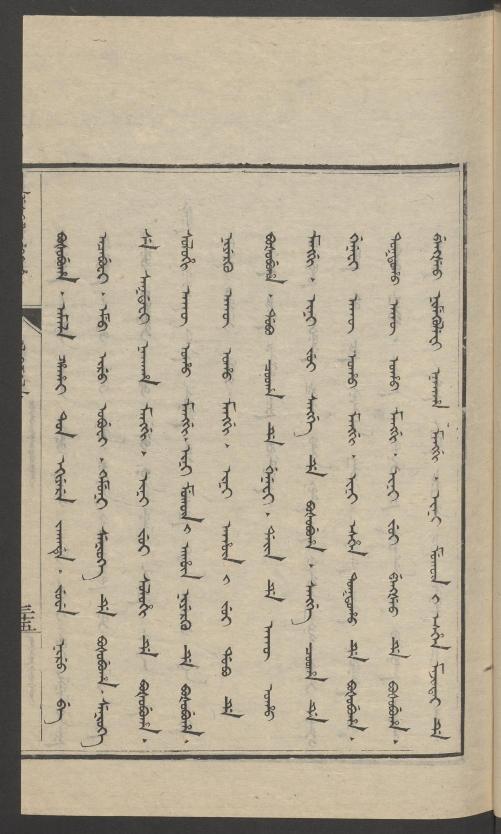
朱旺圖年老,傷感之後,傳襲與尚書德明。德明亡故後,傳襲與學士德令。德令升任四川府後,傳襲與郎中公全。公全升任總兵官後,傳襲與三等輕車都尉海福。 第十四佐領:國初,自寧古塔來投之衆男丁編爲二佐領,一佐領以其人僧格承襲,一佐領以僧格長子色紐克承襲。僧格亡故後,以其第三子紐岳克
EnglishAfter Juwangtu, being grieved, (the niru) was inherited by the president of a board Deming. After Deming died, it was inherited by the academician Deling. After Deling was promoted to Sichuan fu, it was inherited by the director of a bureau Gungjuwan. After Gungjuwan was promoted to the regional commander, it was inherited by the third-class light chariot commander Haifu. The fourteenth niru: At the beginning of the dynasty, the men who came to surrender from Ningguta were organized into two niru. One niru was inherited by their man Sengge; one niru was inherited by Sengge’s eldest son Senioke. After Sengge died, (the niru) to his third son Nionioke
逐詞解析 · word-by-word(99 詞)
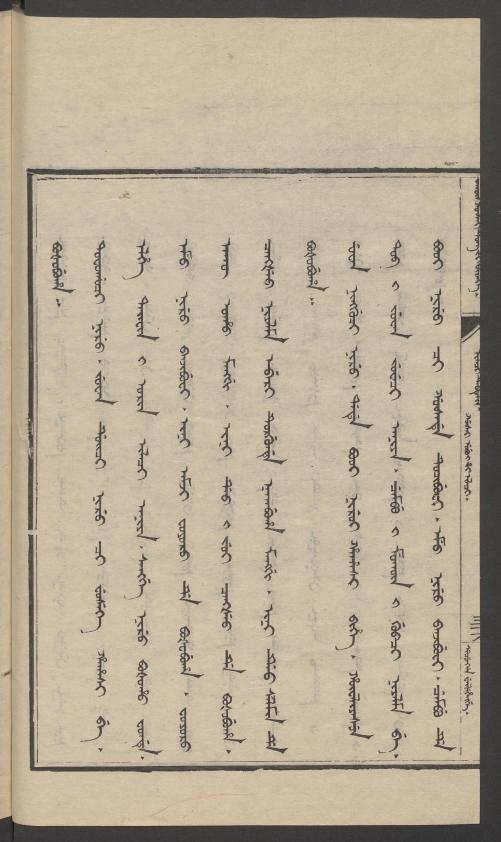
承襲後,因人丁減少,遂合兩牛錄為一佐領,仍以森鄂克承襲。森鄂克年老辭退後,以其子索羅希承襲。索羅希亡故後,以其族兄尼爾庫承襲。尼爾庫亡故後,以其兄之子道承襲。道從征陣沒後,以其子桑格承襲。桑格從征沒後,以其叔托克托霍承襲。托克托霍亡故後,以其子本科多承襲。本科多患病辭退後,以其族叔瑪吉費
EnglishAfter the inheritance, because the number of males decreased, the two companies were combined into one company, and it was still inherited by Seioke. After Senioke, having grown old, resigned, it was inherited by his son Solohi. After Solohi died, it was inherited by his clan elder brother Niyerku. After Niyerku died, it was inherited by his elder brother’s son Doo. After Doo went on campaign and died in battle, it was inherited by his son Sangge. After Sangge went on campaign and died, it was inherited by his uncle Toktoho. After Toktoho died, it was inherited by his son Bengšedo. After Bengšo fell ill and resigned, to his clan uncle Majifi
逐詞解析 · word-by-word(85 詞)
承襲:係由第十五佐領、第十四佐領滋生之丁,康熙二十三年,桑格管佐領時,編爲一佐領,令其伯父佛岳羅承襲。佛岳羅亡故後,令其姪常壽承襲。常壽因人才軟弱被革退後,令其弟色勒米亞承襲。烏丸第六佐領,原本係內府佐領之丁。雍正十二年,將禪布族中全體人丁由內府佐領撥出,編爲一佐領,予禪布之〔下接〕
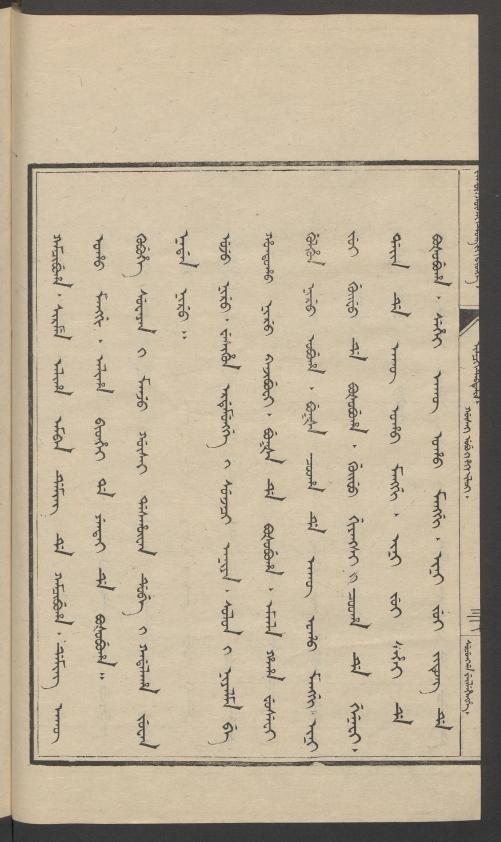
EnglishInherited: From the fifteenth niru and the fourteenth niru, the proliferated male population. In the twenty-third year of Elhe Taifin, when Sangge was managing the niru, a niru was formed and assigned to his uncle Foyoro to inherit. After Foyoro died, it was assigned to his younger brother’s son Cangšo to inherit. After Cangšo was dismissed due to his personal weakness, it was assigned to his younger brother Selmia to inherit. The sixth Uwan niru originally consisted of men from the booi niru. In the twelfth year of Hūwaliyasun Tob, the entire male population of the Cembu clan was extracted from the booi niru and formed into one niru, given to Cambu… [continued below]
逐詞解析 · word-by-word(94 詞)
隨後令尚書德明兼管。德明歿後,令大學士延泰承襲。此係鑲黃旗滿洲旗左翼末甲喇所轄十七牛錄之第一牛錄。崇德五年,將索倫人編為半個牛錄,令布克沙承襲。後因丁口繁滋,布克沙於古魯布哈雅兵陣亡,其子貴福承襲。貴福往江西軍前,陣亡,其子舍依承襲。舍依歿後,其子濟通承襲。
EnglishThereafter it was attached to Deming, the President of the Board. After Deming died, it was inherited by the Grand Secretary Yentai. This is the first company of the seventeen companies under the command of the left-wing rear regiment of the Bordered Yellow Manchu Banner. In the fifth year of Chongde, half a company was formed from Solon people and was inherited by Bukša. Later, the male population having increased, Bukša died in the Gulu Buhaya army, and his son Guifu inherited. Guifu went to the Jiangxi army and died in battle, and his son Shei inherited. After Shei died, his son Jitung inherited.
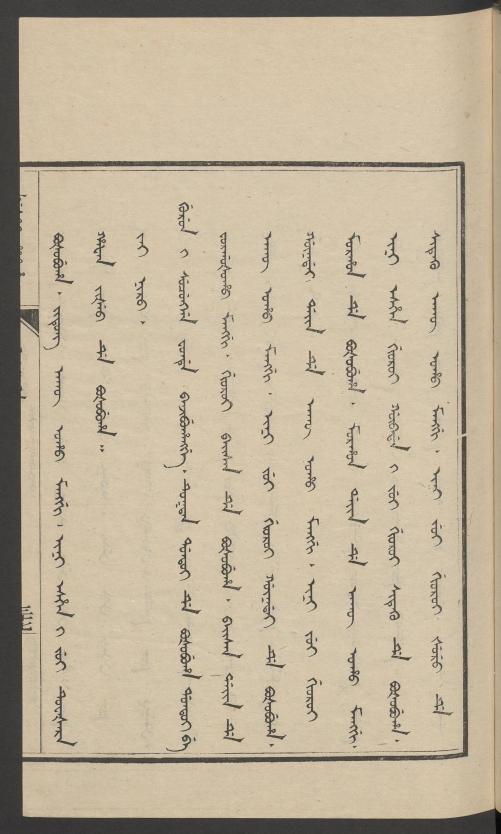
逐詞解析 · word-by-word(89 詞)
當襲擠桶沒後,以其叔父之子雲騎尉吉碩承襲。 再,第二佐領係國初編設,初以敦泰承襲。敦泰調任後,以覺羅拜三承襲。拜三陣亡後,以其子覺羅袞岱承襲。袞岱陣亡後,以其子覺羅莫爾琿承襲。莫爾琿陣亡後,以其叔父覺羅袞威之子覺羅西特庫承襲。西特庫亡故後,以其子覺羅舒魯承襲。
EnglishAfter Jitung, who had inherited, died, the position was inherited by Jišeo, the Cloud Cavalry Commander (Tuwašara Hafan), son of his uncle. Next, the second niru, established at the beginning of the dynasty, was initially inherited by Dontoi. After Dontoi was transferred, it was inherited by Gioroi Baisan. When Baisan died in battle, his son, Gioroi Gūndai, inherited. When Gūndai died in battle, his son, Gioroi Morhon, inherited. When Morhon died in battle, it was inherited by Gioroi Siteku, son of his uncle Gioroi Gūn Wei. When Siteku died, it was inherited by his son, Gioroi Šuru.
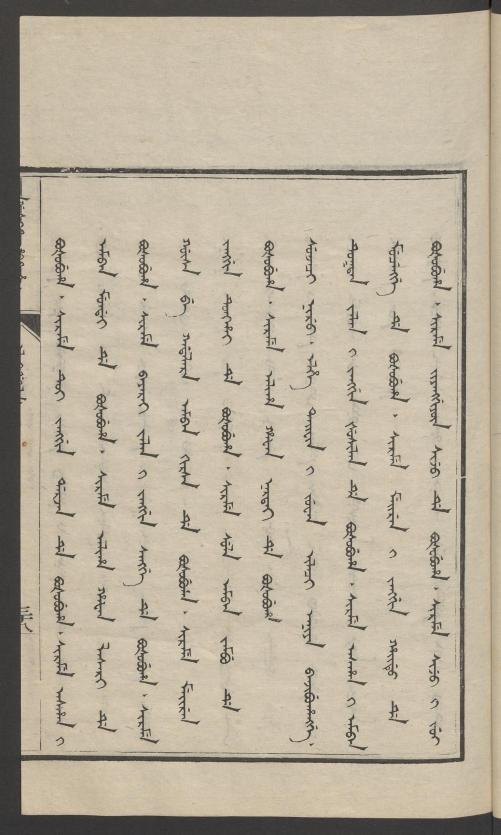
逐詞解析 · word-by-word(104 詞)
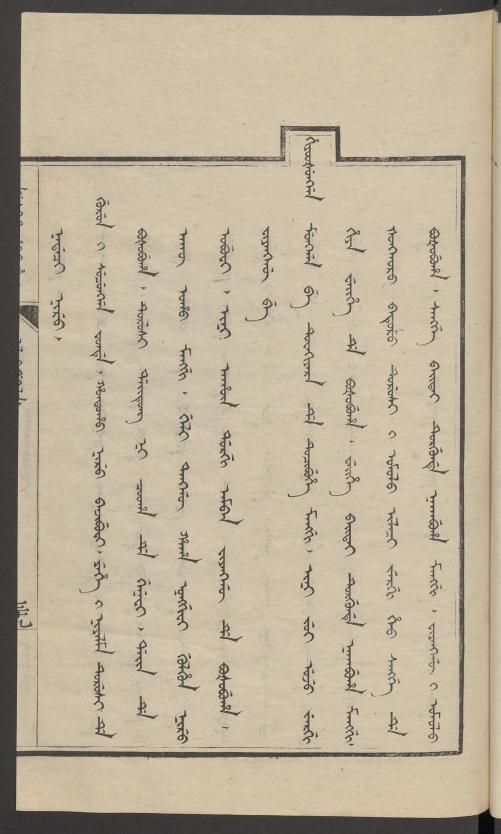
承襲後,繼於護軍統領達爾占處承襲,繼於侍郎穆丹處承襲,繼於正卿拉色里處承襲,繼於護軍參領桑格處承襲,繼於都統吉爾薩處承襲,繼於副都統通海處承襲,繼於散秩大臣扎姆布處承襲,繼於正卿納爾泰處承襲。 蘇佳齊牛錄,康熙十三年編設,初於參領舒錫蘭處承襲,繼於侍郎穆成格處承襲,繼於副都統海都處承襲,繼於將軍席柱處承襲,席柱之子
EnglishIt was inherited successively: it was inherited by the Tui Janggin (Captain-General) Darjan, then inherited by the Ashan-i Amban (Vice Minister) Mundai, then inherited by the Aliha Hafan (Chief Minister) Lasari, then inherited by the Bayarai Jalan-i Janggin (Lieutenant-Colonel of the Imperial Bodyguard) Sangge, then inherited by the Gūsa-be Kadalara Amban (Banner Commander) Kirsa, then inherited by the Meiren Janggin (Vice Commander) Tunghai, then inherited by the Sula Amban (Chamberlain of Imperial Bodyguard) Jambu, then inherited by the Aliha Hafan Nartai. The Sujaci Niru (company) was established in the 13th year of Elhe Taifin (Kangxi); initially inherited by the Jalan-i Janggin (Colonel) Šusilan, then inherited by the Ashan-i Amban Mucengge, then inherited by the Meiren-i Janggin Haidu, then inherited by the Jiyanggiyūn (General) Siju, Siju’s son
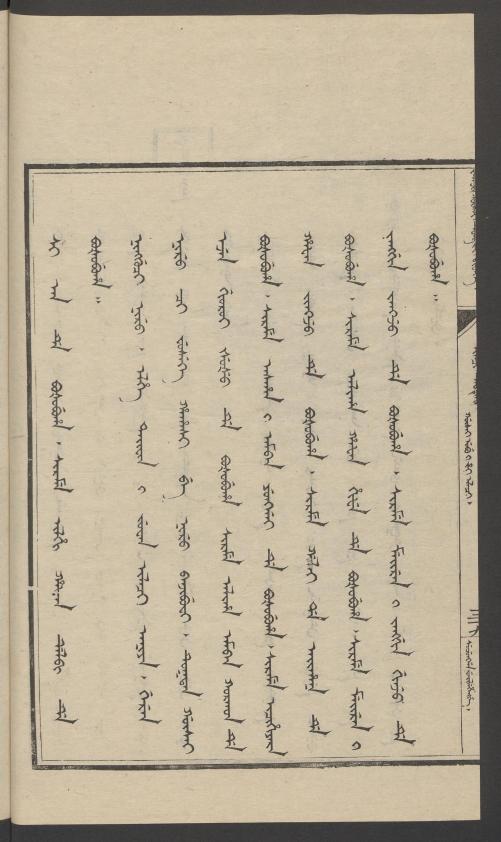
逐詞解析 · word-by-word(86 詞)
西安承襲,續由伊爾希哈拉納德爾弼承襲。第六佐領,康熙十三年,自各佐領分出滋生壯丁,編設為佐領,初以都統覺羅舒舒承襲,續由尚書科爾坤承襲,續由侍郎永噶承襲,續由郎中金柱承襲,續由翼長愛哈納承襲,續由正卿希福承襲,續由副都統章柱承襲,續由副都統金柱承襲。
EnglishInherited by Xi'an, then inherited by Ilhi Halana Delbi. The Sixth Niru, in the thirteenth year of Elhe Taifin, was created by assembling surplus men from various niru, and was first inherited by the Gūsai Ejen Gioro Šušu, then inherited by Aliha Amban Korkon, then inherited by Ashan i Amban Yunggai, then inherited by Icifiyara Hafan Jingju, then inherited by Galai Da Aihana, then inherited by Aliha Hafan Hife, then inherited by Meiren i Janggin Jangju, then inherited by Meiren i Janggin Ginju.
逐詞解析 · word-by-word(85 詞)
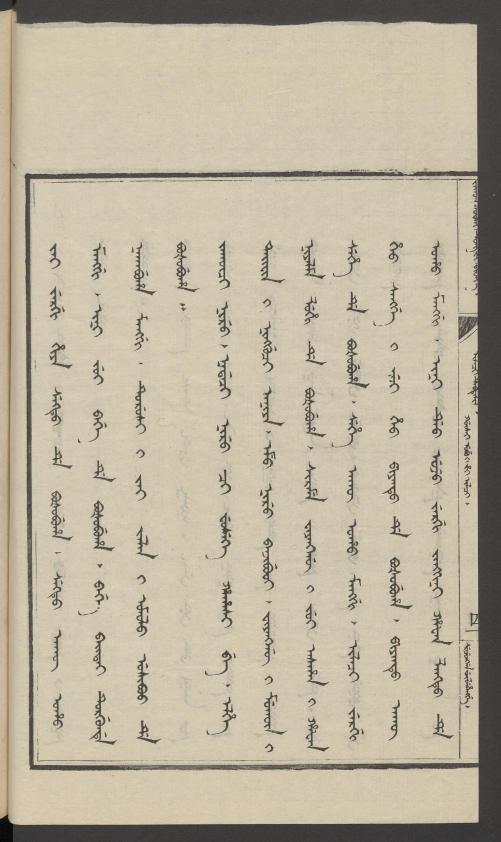
第七佐領,國初時編設半個佐領,令葉赫人圖魯什管理。圖魯什往岱通軍前陣亡後,又添百名壯丁,編為整佐領,令其兄內大臣費揚古管理。將費揚古派往看守昭陵後,令其子頭等侍衛魏赫管理。魏赫因事革退後,令孔科羅巴圖魯圖魯什之孫三等侯桑哥管理。桑哥因事革退後,方古之孫……
EnglishThe seventh company, at the beginning of the dynasty, a half company was created and was placed under the command of the Yehe man Turusi. After Turusi went to the Daitung army and died in battle, a further hundred men were added, making a full company, and it was placed under the command of his elder brother, the Interior Minister Fiyanggū. After Fiyanggū was dispatched to guard the Giyoošungga Dungga, it was placed under the command of his son, the Senior Bodyguard Weihe. After Weihe was dismissed because of some matter, it was placed under the command of Kongkoro Baturu Turusi’s grandson, the Third-class Marquis Sangge. After Sangge was dismissed because of some matter, Fanggu’s grandson...
逐詞解析 · word-by-word(98 詞)
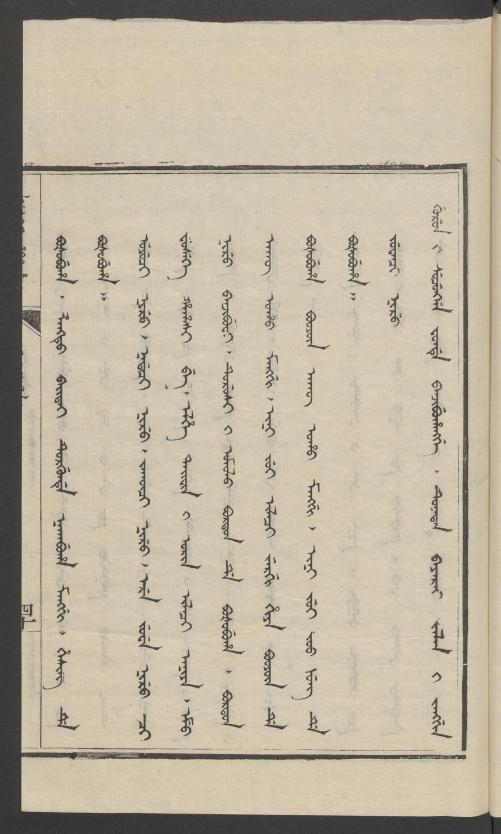
(此段承襲紀錄)令二等侍衛塞克圖承襲。塞克圖亡故後,令其子巴格承襲。巴格因事革退後,令圖魯什之曾孫烏西保承襲。第八牛录、第七牛录所孳生之男丁,於康熙六年編為一牛录,令費揚古族人盧希承襲。隨後,令費揚古子男爵色赫承襲。色赫亡故後,令三等侯三格之子侯偏圖承襲。偏圖亡故後,令其弟頭等章京郎圖承襲。
EnglishIt was made to be inherited by the Second-Rank Imperial Bodyguard Sektu. After Sektu passed away, it was inherited by his son Bage. After Bage was dismissed due to an incident, it was inherited by Turusi’s great-grandson Usiboo. The men who had multiplied from the Eighth Niru and the Seventh Niru were organized into one Niru in the sixth year of Elhe Taifin (Kangxi), and it was inherited by Luhi, a person of Fiyanggū’s clan. Subsequently, it was inherited by Fiyanggū’s son, Baron Sehe. After Sehe passed away, it was inherited by Marquis Piyantu, son of Third-Rank Marquis Sange. After Piyantu passed away, to his younger brother, First-Rank Jangkin Langtu, (it was inherited…).
逐詞解析 · word-by-word(75 詞)
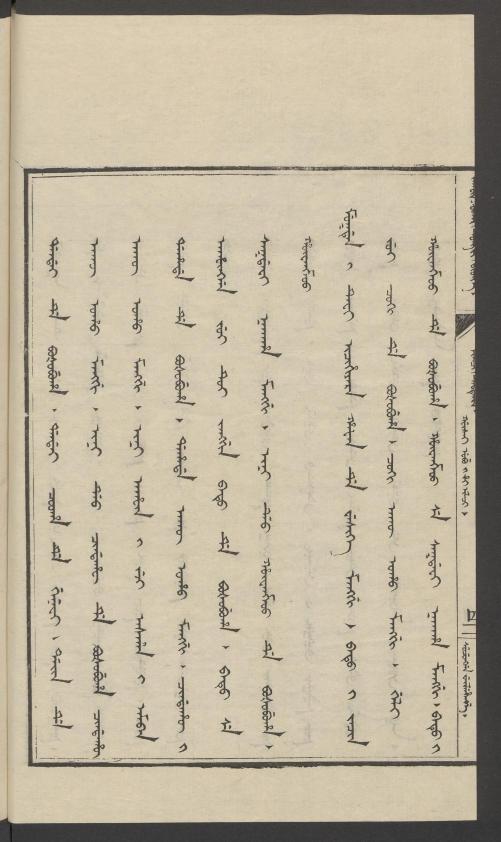
榔圖承襲。榔圖因事被革退後,赫興承襲。第九、第七、第八,此二牛录所孳生之人丁,於康熙四十三年合編為一牛录,令圖魯西之孫博托承襲。博托亡故後,令其子三等侍衛博雲承襲。博約林亡故後,令其子趙鍾承襲。第十牛录,乃開國之初所編設。初以護軍參領
EnglishLangtu inherited. After Langtu was dismissed on account of a matter, Hesing inherited. The persons proliferated from these two companies, the ninth, the seventh, and the eighth, were formed into one company in the forty-third year of the Kangxi era, and Boton, grandson of Turusi, was made to inherit. After Boton passed away, his son, the third-rank imperial guard Boyūn, was made to inherit. After Bojorin passed away, his son Joo Jung was made to inherit. The tenth company was formed in the initial period of the nation. At first, the captain of the guards' regiment in a camp
逐詞解析 · word-by-word(93 詞)
由譚泰承襲。譚泰從軍陣亡後,由其弟欽達瑚承襲。欽達瑚亡故後,由其兄之子侍郎達哈達承襲。達哈達亡故後,由欽達瑚之兄子護軍統領巴圖承襲。巴圖年老辭退後,由其弟卦茂承襲。琿多楚在馬克墩之理事官任上升遷後,由巴圖之次子綽奇承襲。綽奇亡故後,又由洪果承襲。華格蘇年老辭退後,巴圖之
EnglishIt was inherited by Dandai. After Dandai went to the army and died in battle, it was inherited by his younger brother Cindahū. After Cindahū died, it was inherited by his elder brother's son, the Vice Minister Dahada. After Dahada died, it was inherited by Cindahū's elder brother's son, the Captain-General of the Guards Batu. After Batu retired due to old age, it was inherited by his younger brother Gūwamoo. After Hūwandguco was promoted from the position of managing director in Makden, it was inherited by Batu's second son Coki. After Coki died, it was then inherited by Hūnggoo. After Hūwagsoo retired due to old age, Batu's
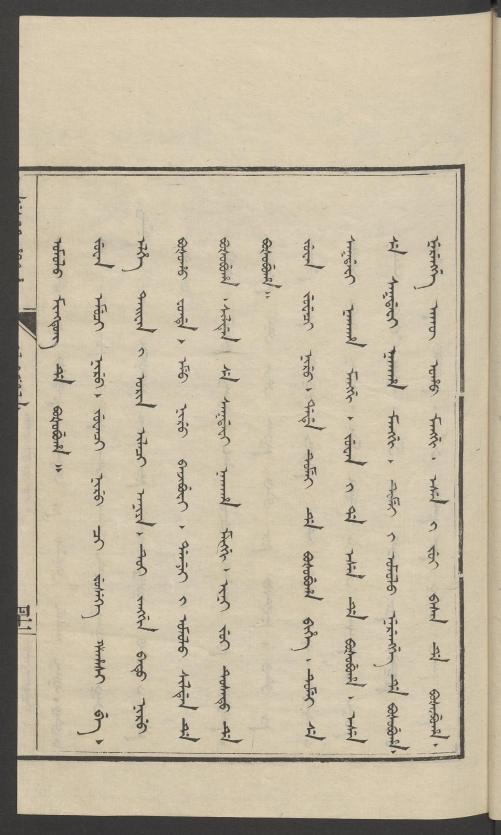
逐詞解析 · word-by-word(87 詞)
第十一牛录,係自第十牛录分出之人丁,於康熙二十三年护军统领巴图编立牛录时,编设一牛录,令岱之孙西尔登承袭。西尔登年老辞退,敏央吉以其子图萨图承袭。第十二牛录,原由图梅承袭。图梅年老辞退后,由护军校额森承袭。额森年老辞退后,由特梅之孙呢稜额承袭。呢稜额身故后,由额森之子巴三承袭。
EnglishThe 11th company, composed of men separated from the 10th company, was established in the 23rd year of Elhe Taifin when Captain-General Batu organized the companies; one company was formed and given to Dai's grandson Silden to inherit. Silden, being old, retired, and Miyanggi had his son Tusatu inherit it. The 12th company was originally inherited by Tumei. After Tumei, being old, retired, it was inherited by the lieutenant Esen. After Esen, being old, retired, it was inherited by Temei's grandson Nerengge. After Nerengge passed away, it was inherited by Esen's son Basan.
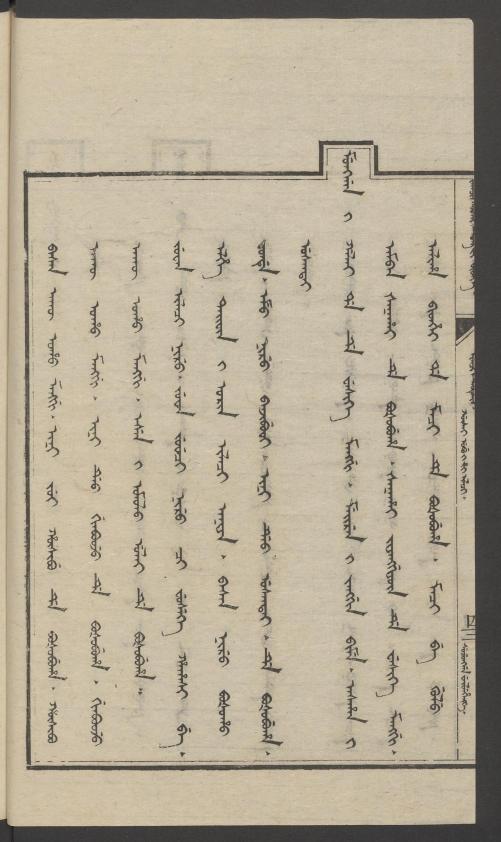
逐詞解析 · word-by-word(96 詞)
巴山亡故後,由其子瑚錫布承襲。 瑚錫布亡故後,由其弟京博珠承襲。 京博珠亡故後,由額色之孫烏賴承襲。 第十三牛錄,自第十二牛錄孳生之人丁,於康熙二十三年巴山管牛錄時,編立一牛錄,令其弟烏三泰承襲。 烏三泰陞陵寢翼長後,由副都統兼侍郎沙納海承襲。 沙納海陞將軍後,由大學士馬齊承襲。 將馬齊編入正…〔下闕〕
EnglishAfter Basan died, (it) was inherited by his son Hūsibu. After Hūsibu died, (it) was inherited by his younger brother Gingboju. After Gingboju died, (it) was inherited by Esen's grandson Ulai. The 13th company: from the men proliferated from the 12th company(?), in the 23rd year of Kangxi when Basan was in charge of the company, a company was created and given to his younger brother Usantai to inherit. After Usantai was promoted to wing commander of the imperial mausoleum, (it) was inherited by Šanahai, who was a deputy lieutenant-general and concurrently an assistant minister. After Šanahai was promoted to general, (it) was inherited by Grand Secretary Maci. Maci was placed into the Plain... 〔incomplete〕
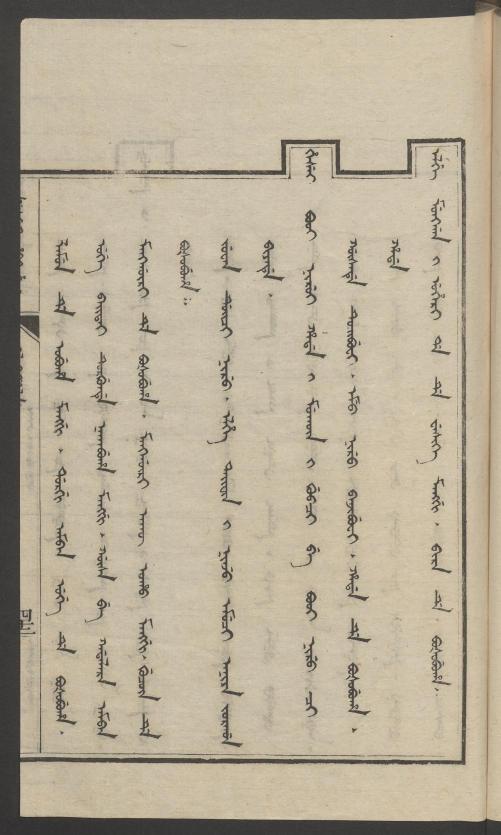
逐詞解析 · word-by-word(77 詞)
〔承上〕授為正藍旗後,由內大臣五格承襲。五格因事革退後,由都統莽鵠立承襲。莽鵠立亡故後,由固春承襲。 第十四佐領,康熙六十一年十二月,奉旨將包衣佐領哈達氏族之布卜齊,從包衣佐領拔出於旗分,編設一佐領,由哈達承襲。哈達額勒格陞陵寢總管後,由畢拉承襲。
EnglishAfter (he) was made into the Plain Blue Banner, the dorgi amban Uge inherited it. Uge, on account of a case, was dismissed, whereupon the gūsa be kadalara amban Manggūri inherited it. After Manggūri passed away, Gucūn inherited it. The fourteenth niru: in the twelfth month of the sixty-first year of Elhe Taifin, by decree, Bubci of the Hada clan of the booi niru was taken out from the booi niru and assigned to the gūsa; a niru was created and Hada was made to inherit it. After Hada Elge was promoted to munggan i uheri da, Bira inherited it.
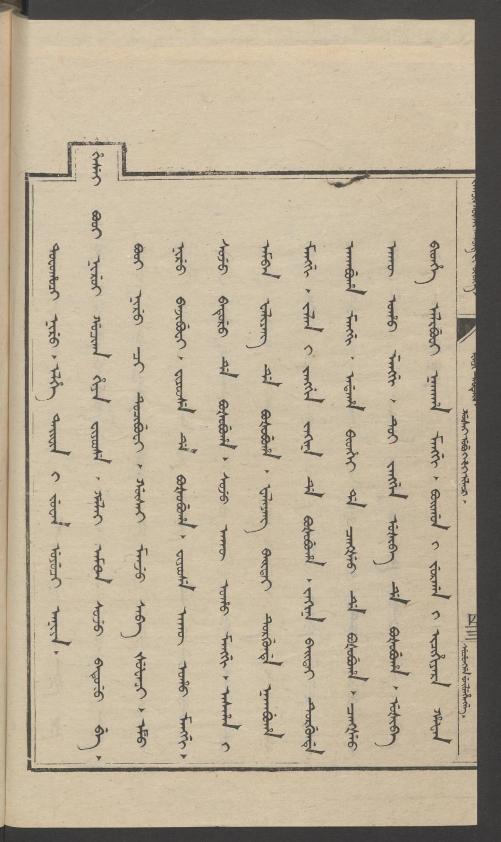
逐詞解析 · word-by-word(101 詞)
第十五牛錄,康熙十九年,奉旨將內府佐領下御前侍衛佛約瑟、前鋒統領索柱巴圖魯自內府佐領撥出,於旗滿洲撒八舒瓦齊處編設一牛錄,令佛約瑟管理。佛約瑟故,令索柱巴圖魯承襲。索柱故,令侍郎法禮揚承襲。法禮揚因事革退,令甲喇章京扎基那承襲。扎基那因事受譴,令阿達哈筆帖式達長壽承襲。長壽故,令纛章京伍什巴承襲。伍什巴呈文卸任後,由戶部郎中……
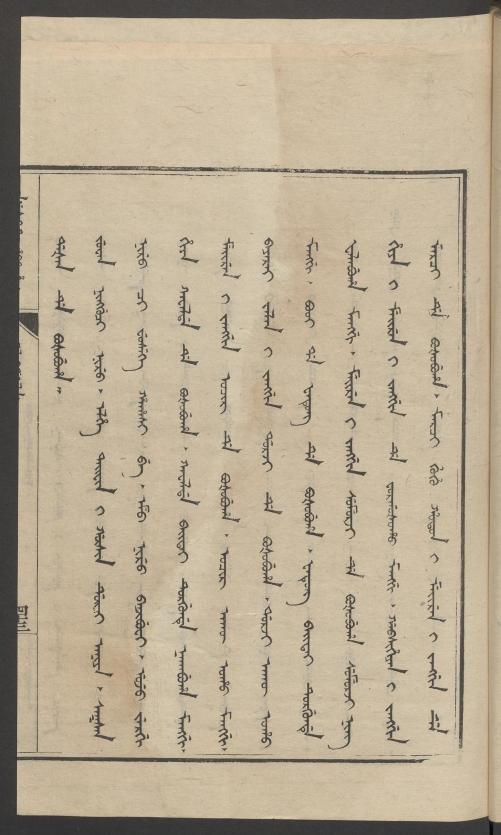
EnglishThe 15th Niru: In the 19th year of Elhe Taifin (Kangxi), by decree, the Imperial Bodyguard Fiyoose and the Vanguard Commander Soju Baturu, who were under the Imperial Household Niru, were taken out from the Imperial Household Niru; one niru was established in the Manchu Saba Šuwaci of the Banner, and Fiyoose was put in charge. After Fiyoose died, Soju Baturu was put in charge. After Soju died, the Vice Minister Faliyang was put in charge. After Faliyang was dismissed because of a case, the Jalani Janggin Jakina was put in charge. After Jakina was punished because of a case, the Adaha Bithei Da Cangšeo was put in charge. After Cangšeo died, the Tui Janggin Ušiba was put in charge. After Ušiba submitted a document and was relieved of duty, the Director (icihiyara hafan) of the Ministry of Revenue…
逐詞解析 · word-by-word(104 詞)
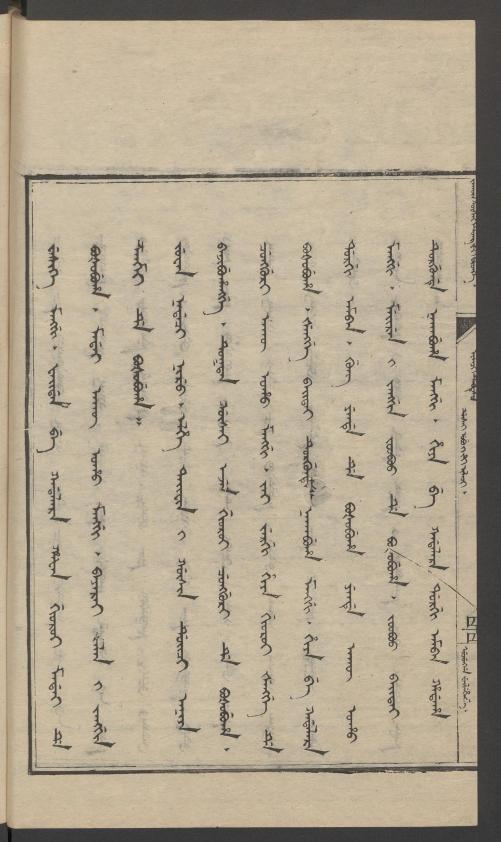
第十六佐領,康熙三十四年,自薩克三佐領滋生丁口,編為一佐領,交由頭等侍衛卡法爾達承襲。卡法爾達因事革退後,交由副都統敖奇爾承襲。敖奇爾亡故後,交由護軍參領多爾濟承襲。多爾濟亡故後,交由內管領法通承襲。法通因事流放後,交由副都統蘇默爾濟承襲。蘇默爾濟轉任領侍衛副都統後,交由前鋒參領阿爾奇承襲。瑪奇固古屯之副都統……
EnglishThe 16th Niru: In the 34th year of Kangxi, the augmented men from the Saksan Niru were formed into one niru, and it was assigned to First Class Imperial Guard Kafalda to inherit. After Kafalda was dismissed due to a matter, it was assigned to Deputy Commander Ocir to inherit. After Ocir passed away, it was assigned to Imperial Guard Regiment Colonel Dorji to inherit. After Dorji passed away, it was assigned to Palace Steward Fatung to inherit. After Fatung was exiled due to a matter, it was assigned to Deputy Commander Sumorji to inherit. After Sumorji was transferred to Deputy Commander of the Imperial Guard, it was assigned to Vanguard Colonel Arci to inherit. ... the Deputy Commander of Majici Gugu Gūtun ...
逐詞解析 · word-by-word(93 詞)
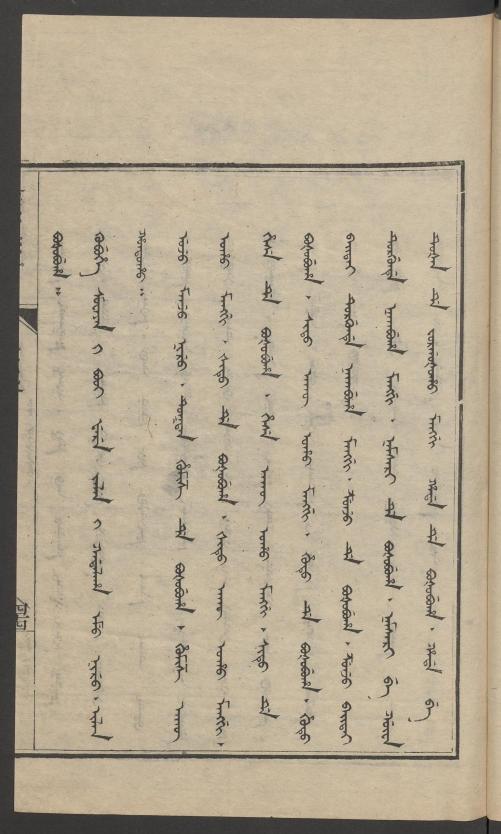
升任後,冠軍使覺羅瑪代承襲。瑪代亡故後,護軍甲肩章京黨密承襲。第十七牛錄,乃康熙三十四年編設。初,都統覺羅崇古里承襲。崇古里亡故後,二等街麂盛格承襲。盛格因事革退後,管街內大臣公音德承襲。音德亡故後,副都統卓博承襲。卓博因事革退後,管侍衛內大臣哈達哈……
EnglishAfter being promoted, it was succeeded by the faidan be kadalara hafan (officer of the ceremonial guard) Gioroi Madai. After Madai passed away, it was succeeded by the bayara alan i janggin Dangmi. The seventeenth niru was originally instituted in the 34th year of Kangxi. Initially, it was succeeded by the gūsai ejen Gioroi Cungguri. After Cungguri passed away, it was succeeded by the second-rank giya Giroi Šengge. After Šengge was dismissed due to a legal case, it was succeeded by the minister of the interior in charge of the streets, Duke Yende. After Yende passed away, it was succeeded by the meiren i janggin Jobo. After Jobo was dismissed due to a legal case, the minister of the interior in charge of the imperial guardsmen, Hadaha...
逐詞解析 · word-by-word(82 詞)
(原任侍衛統領內大臣哈達哈)所襲之鑲黃旗包衣頭甲喇管轄下一佐領三管領首滿洲佐領,初由呼密業承襲,呼密業亡故後,由希圖承襲;希圖亡故後,由赫舍承襲;赫舍亡故後,由西圖承襲;西圖亡故後,由胡圖承襲;胡圖因事革退後,由尊珠承襲;尊珠因事革退後,由納瑪薩理承襲;納瑪薩理調任他職後,由哈達承襲,哈達——
English(The position formerly inherited by Hada, the Interior Minister Supervising the Imperial Bodyguard,) namely the command of the First Manchu Company comprising one niru and three hontoho under the first jalan of the bondservant contingent of the Bordered Yellow Banner, was initially inherited by Humiye. After Humiye died, it was inherited by Šitu. After Šitu died, it was inherited by Heše. After Heše died, it was inherited by Situ. After Situ died, it was inherited by Hutu. After Hutu was dismissed due to a case, it was inherited by Dzunju. After Dzunju was dismissed due to a case, it was inherited by Namasari. After Namasari was transferred to another post, it was inherited by Hada, Hada—
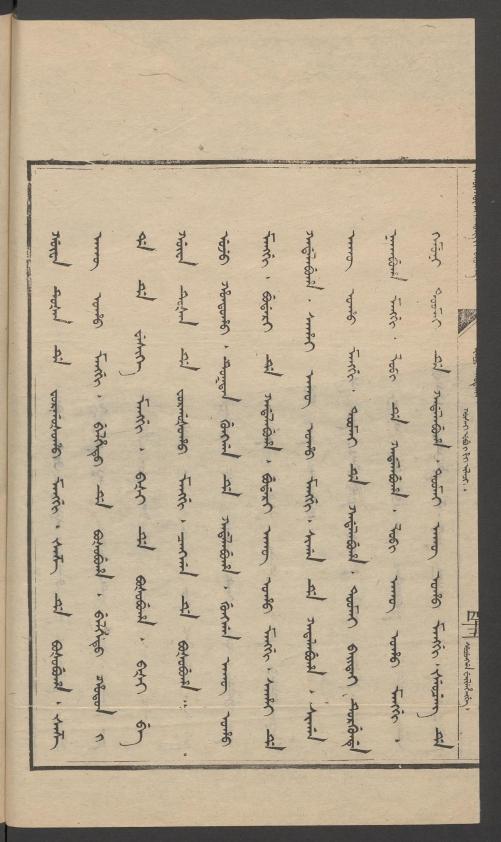
逐詞解析 · word-by-word(98 詞)
將哈達調任他職後,使承襲沙達;沙達撤銷後,使承襲伯勒赫圖;伯勒赫圖升任城守尉後,使承襲巴思;將巴思調任他職後,使承襲昌干;第一管領,初令管貢干;貢干撤銷後,令管布達里;布達里撤銷後,令管薩海;薩海撤銷後,令管錫干;錫干撤銷後,令管托邁;托邁因事革退;令管昂吉烏濟;洛比撤銷後,令管克姆尼;托邁撤銷後,派往碩岑
EnglishAfter Hada was transferred to another post, (s)he was made to succeed Shada; after Shada was abolished, (s)he was made to succeed Belhetu; after Belhetu was promoted to Hoton i da, (s)he was made to succeed Basi; after Basi was transferred to another post, (s)he was made to succeed Changgan; the first company, initially (s)he was put in charge of Gunggan; after Gunggan was abolished, (s)he was put in charge of Budari; after Budari was abolished, (s)he was put in charge of Sahai; after Sahai was abolished, (s)he was put in charge of Sigan; after Sigan was abolished, (s)he was put in charge of Toomai; Toomai was dismissed on account of a case; (s)he was put in charge of Anggi Uji; after Lobi was abolished, (s)he was put in charge of Kemni; after Toomai was abolished, to Sheoceng
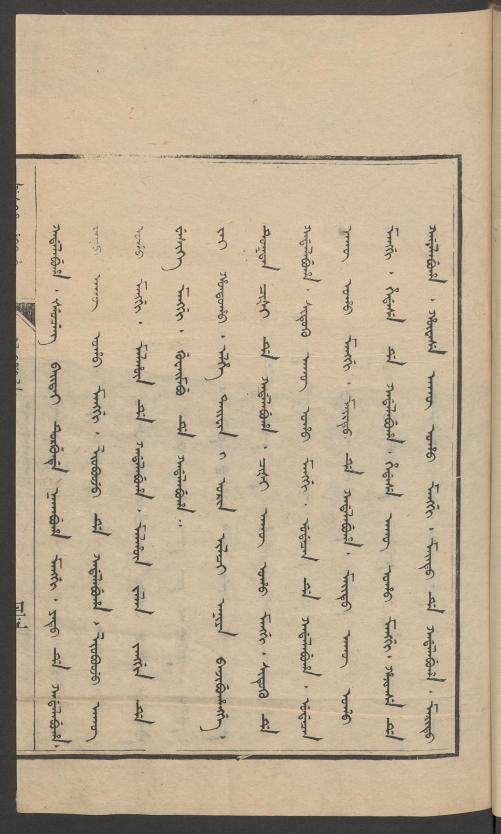
逐詞解析 · word-by-word(92 詞)
派管舒成,因事被罷後,派管雅圖;既而派管六妞;六妞故後,派管馬爾渾;馬爾渾陞甲喇章京後,派管乖布。另一管領康熙二十三年出生者,初派管奇西;七十故後,派管錫圖庫;錫圖庫故後,派管烏達禪;烏達禪故後,派管邁圖;邁圖故後,派管哈達色;哈達色故後,派管哈雅色;花色故後,派管邁圖;瑪里圖
EnglishBeing assigned to manage Šeceng, after being dismissed due to affairs, assigned to manage Yatu; thereafter assigned to manage Liobonju; after Liobonju passed away, assigned to manage Malhūn; after Malhūn was promoted to jalan janggin, assigned to manage Guaimbu. As for the one born in the 23rd year of Elhe Taifin in the other company, initially assigned to manage Cisi; after Cisi passed away, assigned to manage Situku; after Situku passed away, assigned to manage Udacan; after Udacan passed away, assigned to manage Maitu; after Maitu passed away, assigned to manage Hadase; after Hadase passed away, assigned to manage Hayase; after Hūwase passed away, assigned to manage Maitu; Maritu
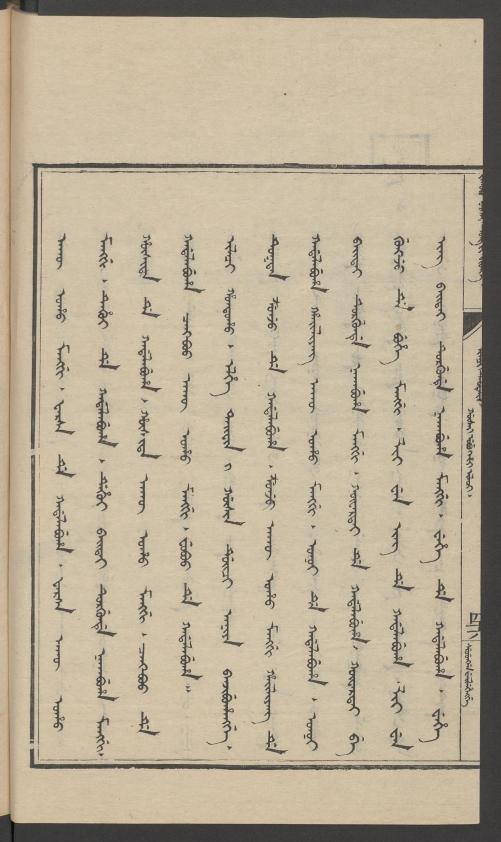
逐詞解析 · word-by-word(99 詞)
卒後,改由 FARSA 管轄;FARSA 卒後,由 TEHUI 管轄;DEHUI 因事革退後,由 HŪSITA 管轄;HŪSITA 卒後,由 CANGBOO 管轄;CANGBOO 卒後,由 FUBOO 管轄。第三管領,康熙三十四年編設,初由 DZUNJU 管轄;TONJU 卒後,由 HAILIYANG 管轄,GAJILIYANG 卒後,由 ONOI 管轄;ONOI 因事革退後,由 GŪNRTAI 管轄;將 KŪWARTAI 給與 GUNGGJU 後,由 LII WEN ING 管轄;LII WEN ING 因事革退後,由 WEHE 管轄。
EnglishAfter (the former) passed away, it was administered by FARSA; after FARSA passed away, it was administered by TEHUI; after DEHUI was dismissed due to a case, it was administered by HŪSITA; after HŪSITA passed away, it was administered by CANGBOO; after CANGBOO passed away, it was administered by FUBOO. The Third Company was established in the 34th year of Kangxi, and was initially administered by DZUNJU; after TONJU passed away, while HAILIYANG was administering, after GAJILIYANG passed away, it was administered by ONOI; after ONOI was dismissed due to a case, it was administered by GŪNRTAI; after KŪWARTAI was given to GUNGGJU, it was administered by LII WEN ING; after LII WEN ING was dismissed due to a case, it was administered by WEHE.
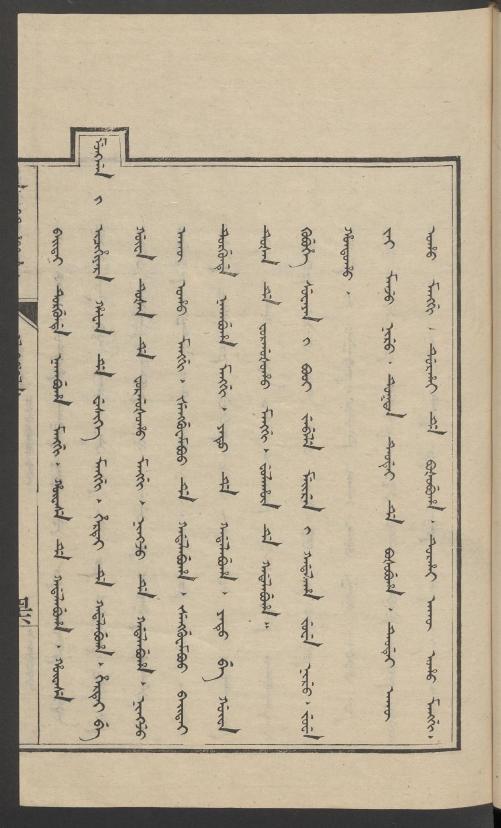
逐詞解析 · word-by-word(89 詞)
因事革退後,令花色管轄。花色陞任 DMUNGGAN 郎中後,令赫特依管轄。赫特依調任他職後,令寧珠管轄。寧珠亡故後,令盛官保(Šengguwamboo)管轄。盛官保因事革退後,令雅圖管轄。雅圖調任他職後,令富拉渾管轄。所管為鑲黃旗包衣二甲喇所屬之二牛錄、二管領,及滿洲牛錄圖克圖特訥德日承襲。特訥德日亡故後,東海承襲。圖海不在後,〔……〕
EnglishAfter being dismissed due to an affair, (s)he was placed under the administration of Hūwase. After Hūwase was promoted to director (icihiyara hafan) of Dmunggan, (s)he was placed under the administration of Hetei. After Hetei was transferred to another post, (s)he was placed under the administration of Ningju. After Ningju passed away, (s)he was placed under the administration of Šengguwamboo. After Šengguwamboo was dismissed due to an affair, (s)he was placed under the administration of Yatu. After Yatu was transferred to another post, (s)he was placed under the administration of Fulahūn. The two niru and two hontoho under the jurisdiction of the Bordered Yellow Banner's booi jebele meiren, along with the Manchu niru, were inherited by Tuktan Teodei. After Tendai passed away, it was inherited by Dunghai. After Tuhai was no more, [...]
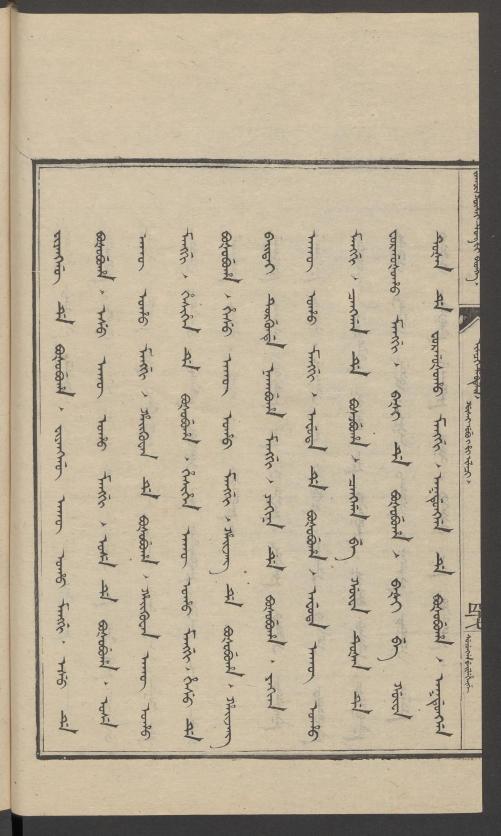
逐詞解析 · word-by-word(88 詞)
令費揚古承襲,費揚古故後,令額蘇承襲;額蘇故後,令額利寬承襲;改寬故後,令赫思根承襲;赫思仁故後,令赫蘇承襲;赫蘇故後,令海江承襲;改江因事革退後,令雅奇那承襲;雅奇那故後,雅欽故後,令阿福塔承襲;阿福塔故後,令常阿承襲;將常安調任他職後,令巴什承襲;將巴什調任他職後,令阿克敦阿承襲,阿克敦阿……
EnglishFiyanggū was appointed to inherit. After Fiyanggū died, Esu was appointed to inherit; after Esu died, Elikuwan was appointed to inherit; after Gaikuwan died, Hesigen was appointed to inherit; after Hesiren died, Hesu was appointed to inherit; after Hesu died, Haijang was appointed to inherit; after Gaijang was dismissed because of a matter, Yakina was appointed to inherit; after Yakina died, Yakin died, and Afuta was appointed to inherit; after Afuta died, Cangga was appointed to inherit; after Canggan was transferred to another post, Baši was appointed to inherit; after Baši was transferred to another post, Akdungga was appointed to inherit, Akdungga ...
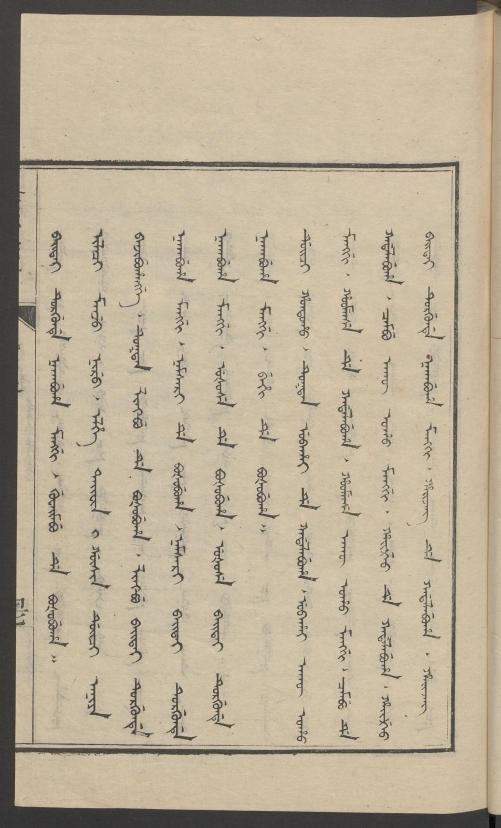
逐詞解析 · word-by-word(75 詞)
因事革退後,派往瓜伊木布。該員屬第三滿洲佐領,康熙三十四年編設。初派往令布。令布緣事革退後,派往納木薩里。納木薩里緣事革退後,派往烏碩色。烏碩色緣事革退後,派往伯希。第四管領:初令吳巴海管轄。吳巴海身故後,令郭瓦瑪色管轄。古拉木無碓窩〔?〕後,令查木布管轄。查木布因哈依爾事革退,令瑪吉管轄黑齊納
EnglishAfter being dismissed due to a case, (s)he was assigned to Guwaimbu. This person belonged to the Third Manchu Niru, which was established in the 34th year of Kangxi. Initially (s)he was assigned to Lingbu. After Lingbu was dismissed due to a case, (s)he was assigned to Namsari. After Namsari was dismissed due to a case, (s)he was assigned to Ušose. After Ušose was dismissed due to a case, (s)he was assigned to Behi. The Fourth Hontoho: initially placed under the administration of Ubahai. After Ubahai passed away, placed under the administration of Gowamase. After Gūlamn was without a mortise〔?〕, placed under the administration of Cambu. After Cambu was dismissed because of the Hairakū case, Magi was appointed to administer, Heicina
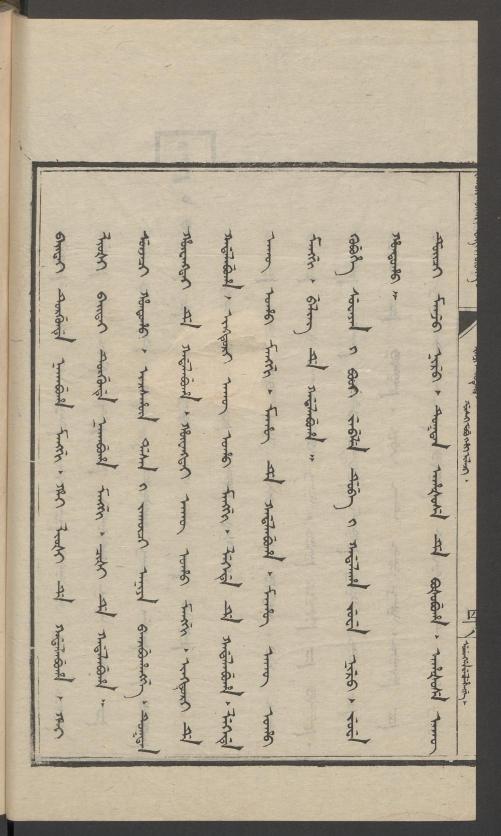
逐詞解析 · word-by-word(84 詞)
因事革退後,令管海六十;海六十因事革退後,令管七十。第五管領、順治八年出生者,初令管皇臺;皇臺故後,令管英圖里;英圖里故後,令管勒克德;勒克德故後,令管馬虎;馬虎故後,令管伯靈。鑲黃旗包衣三甲喇所轄之二牛錄、二管領中第四滿洲牛錄,初由阿舒色承襲;阿舒色故〔,…〕
EnglishAfter being dismissed because of a case, (s)he was assigned to administer Hailioši; after Hailioši was dismissed because of a case, assigned to administer Ciši. (The person) of the Fifth Company, born in the eighth year of Shunzhi, was initially assigned to administer Hūwangtai; after Hūwangtai died, assigned to administer Ingturi; after Ingturi died, assigned to administer Lekede; after Lekede died, assigned to administer Mahū; after Mahū died, assigned to administer Beling. The fourth Manju Niru of the two Niru and two Hontoho administered by the Bordered Yellow Banner Bondservant Third Jalan was initially inherited by Ahšose; Ahšose died ...
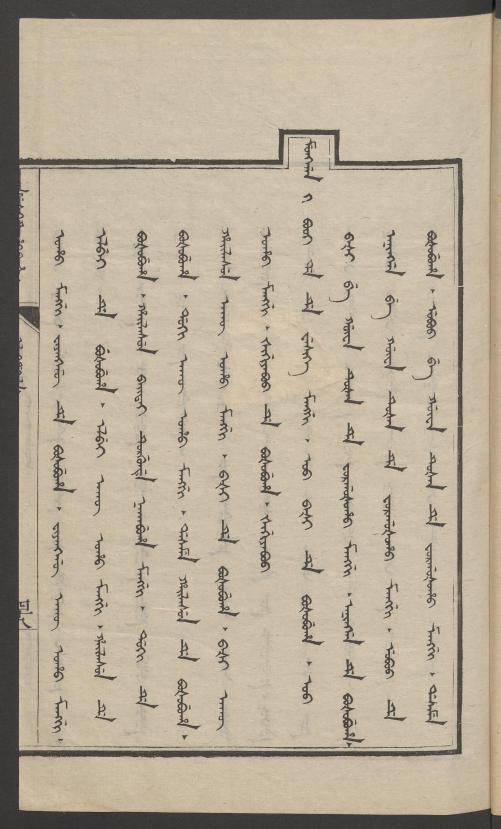
逐詞解析 · word-by-word(85 詞)
AHŠOSE 歿後,令 FIYANGGŪ 承襲;FIYANGGŪ 歿後,令 ELBEI 承襲;ELBEI 歿後,令 HAILASUN 承襲;HAILASUN 因事被革退後,令 DOKI 承襲;DOKI 歿後,復令 HAILASUN 承襲;HAILASUN 歿後,令 BAŠI 承襲;BAŠI 歿後,令 ŠIGIYABOO 承襲;ŠIGIYABOO 陞陵寢包衣之 ZE〔?〕後,令 OO BAŠI 承襲;將 OO BAŠI 調任他職後,令 ENINGGA 承襲;將 UBOO 調任他職後,〔此處接〕DAMN……
EnglishAfter AHŠOSE passed away, Fiyanggū was made to inherit; after Fiyanggū passed away, Elbei was made to inherit; after Elbei passed away, Hailasun was made to inherit; after Hailasun was dismissed for cause, Doki was made to inherit; after Doki passed away, Hailasun was again made to inherit; after Hailasun passed away, Baši was made to inherit; after Baši passed away, Šigiyaboo was made to inherit; after Šigiyaboo was promoted to ZE〔?〕of the Imperial Mausoleum bondservants, Oo Baši was made to inherit; after Oo Baši was transferred to another post, Eningga was made to inherit; after Uboo was transferred to another post, [followed by] DAMN...
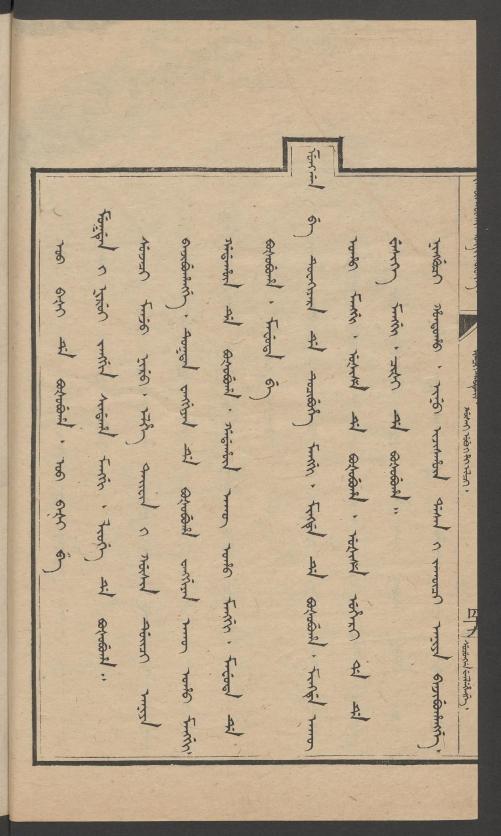
逐詞解析 · word-by-word(87 詞)
將鄂巴什承襲,鄂巴什被授爲盛京佐領後,承襲予留格。第五滿洲佐領,係康熙三十四年編立。初承襲予完顏,完顏故後,承襲予喀達珲,喀達珲故後,承襲予瑪富塔,瑪富塔被派往看守陵寢後,承襲予明德,明德故後,承襲予烏什遜,烏什遜陞任總管後,承襲予七十。第六管領,亦係順治八年編立。
EnglishSuccession was given to OO Baši, and after OO Baši was appointed as company commander of Mukden, succession was given to Lioge. The Fifth Manchu Company was established in the 34th year of Kangxi. Initially succession was given to Wanggiyan; after Wanggiyan died, it was given to Kadahūn; after Kadahūn died, it was given to Mafuta; after Mafuta was dispatched to guard the mausolea, it was given to Mingde; after Mingde died, it was given to Ušisun; after Ušisun was promoted to commandant (uheri da), it was given to Ciši. The Sixth Half-Company was also established in the 8th year of Shunzhi.
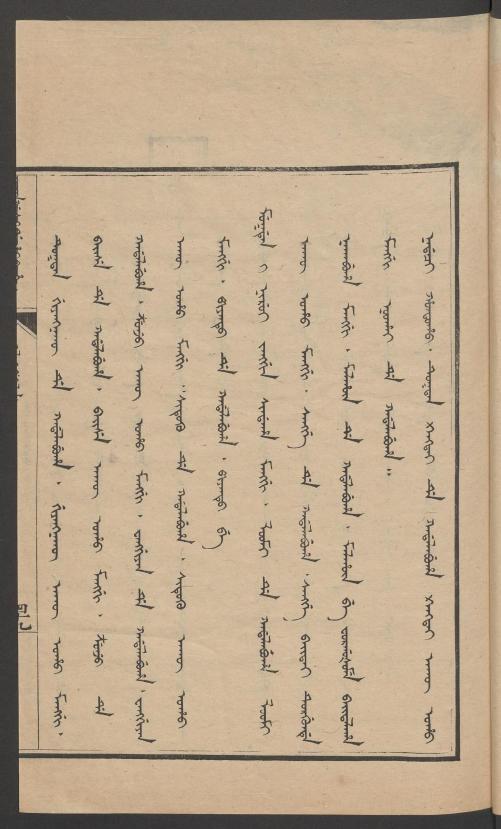
逐詞解析 · word-by-word(94 詞)
初令其轄強嘴人;強嘴人故後,令轄白菜;白菜故後,令轄雲珠;敦珠故後,令轄完顏;完顏故後,令轄錫圖庫;錫圖庫故後,令轄鞭屠;將鞭屠授盛京佐領後,令轄老密;老密故後,令轄桑哥;桑哥因事革退後,令轄馬爾渾;馬爾渾調遣他用後,令轄諾海;揚吉故後。第七亂來,初令轄康泰;康泰故後,
EnglishAt first, (s)he was appointed to oversee the Stubborn One; after the Stubborn One passed away, appointed to oversee Cabbage; after Cabbage passed away, appointed to oversee Cloud-bead; after Dun-bead passed away, appointed to oversee Wanggiyan; after Wanggiyan passed away, appointed to oversee Situku; after Situku passed away, appointed to oversee Biyantu; after Biyantu was assigned as company commander of Mukden, appointed to oversee Loomi; after Loomi passed away, appointed to oversee Sangge; after Sangge was dismissed due to an incident, appointed to oversee Malhūn; after Malhūn was transferred and reassigned, appointed to oversee Noohai; after Yanggi passed away. The seventh, the disorderly one, was at first appointed to oversee K'ngtai; after Kagatai passed away,
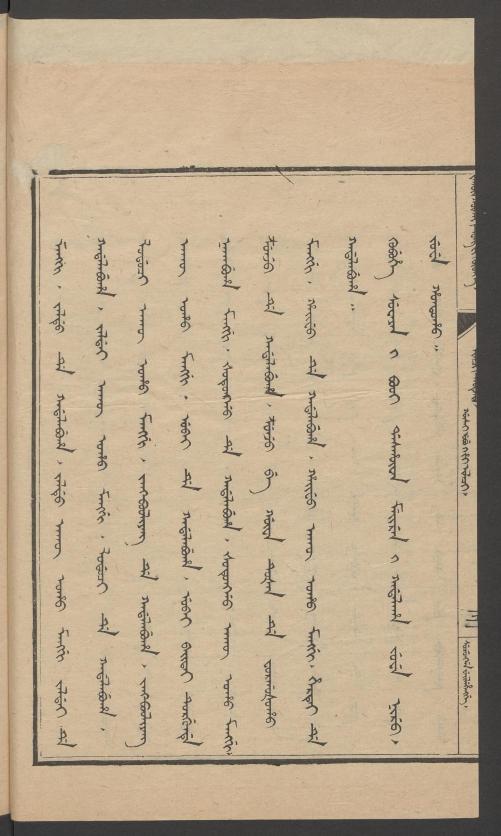
逐詞解析 · word-by-word(75 詞)
其後,隸扎勒都管;扎勒都故後,隸扎勒岱管;扎勒岱故後,隸張伯良管;張伯良故後,隸吳拜管;吳拜因事革退,遂隸碩通果管;碩通果故後,隸春柱管;春柱調任他職,隨隸海福管;海福故後,隸赫爾泰管,所轄爲鑲黃旗包衣達順梅林下之二牛錄二管領。
EnglishAfter that, (s)he was placed under the jurisdiction of Jaldu. After Jaldu died, under that of Jaldai. After Jaldai died, under that of Jangboliyang. After Jangboliyang died, under that of Ubai. After Ubai was dismissed due to an incident, under that of Šotunggo. After Šotunggo died, under that of Cunjū. After Cunjū was transferred to another post, under that of Haifu. After Haifu died, under that of Hertei, with the assignment being the two niru and two hontoho under the jurisdiction of the booi dashūn meiren of the Bordered Yellow Banner.
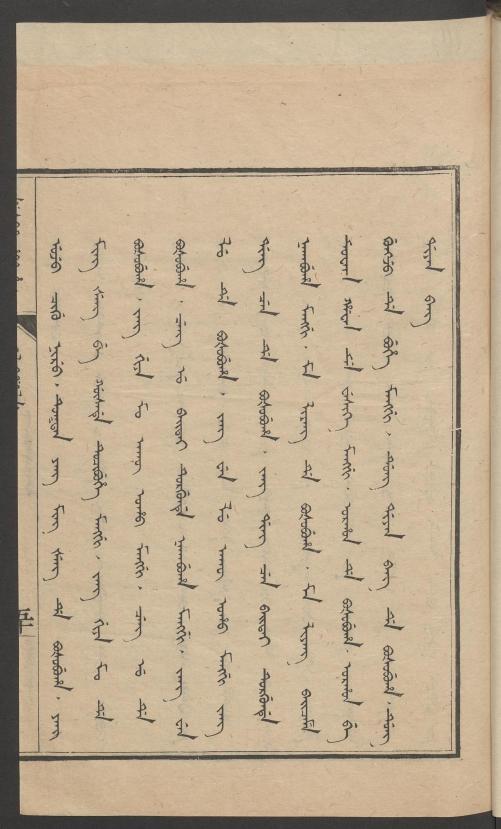
逐詞解析 · word-by-word(92 詞)
頭旗鼓佐領,初由楊明陞承襲;楊明陞奉調出旗後,由張嘉謨承襲;張嘉謨亡故後,由成武承襲;成武因事革退後,由張文祿承襲;張文祿亡故後,由張鼎臣承襲;張鼎臣因事革退後,由馬良承襲;馬良陞任查勘官後,由鄂爾渾承襲;鄂爾渾尚公主後,由董殿邦承襲。董殿邦
EnglishThe First Cigu Niru: Initially it was inherited by Yang Mingsheng. After Yang Mingsheng was transferred out to the Gūsa, it was inherited by Jang Giyamo. After Jang Giyamo died, it was inherited by Ceng U. After Ceng U was dismissed due to a case, it was inherited by Jang Wenlu. After Jang Wenlu died, it was inherited by Jang Dingcen. After Jang Dingcen was dismissed due to a case, it was inherited by Ma Liyang. After Ma Liyang was promoted to the position of Investigating Officer, it was inherited by Orhon. After Orhon was given to the Princess, it was inherited by Dung Diyanbang. Dung Diyanbang
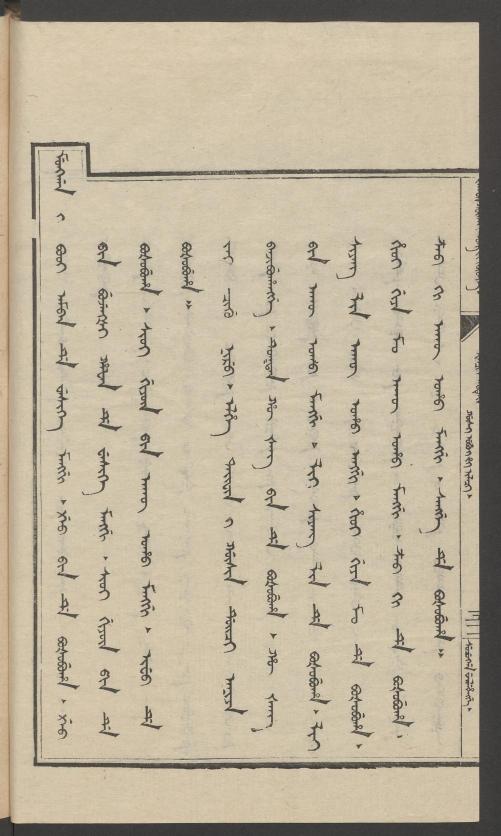
逐詞解析 · word-by-word(96 詞)
升任陵寢內務府總管後,以高斌承襲。高斌陞布政司官後,以徐鈞嬪承襲。徐鈞嬪亡故後,以伊福承襲。又,旗鼓佐領,康熙三十四年所編設者,初以胡尚賓承襲。胡尚賓亡故後,以李相林承襲。李相林亡故後,以昂吉會佳漠承襲。昂吉會佳漠亡故後,以曹奇承襲。曹奇亡故後,以桑格承襲。
EnglishAfter (someone) had been promoted to the Grand Minister of the Imperial Mausoleum, Gao Bin was made to inherit (the post). After Gao Bin had been promoted to the official of the Provincial Administration Commission, Xu Junpin was made to inherit. After Xu Junpin had died, Yifu was made to inherit. Moreover, the Cigu Niru (Chinese Bannerman Company under the Imperial Household Department), which was established in the 34th year of the Kangxi reign, was initially made to be inherited by Hu Shangbin. After Hu Shangbin had died, Li Xianglin was made to inherit. After Li Xianglin had died, Anggi Huijiamo was made to inherit. After Anggi Huijiamo had died, Cao Qi was made to inherit. After Cao Qi had died, Sangge was made to inherit.
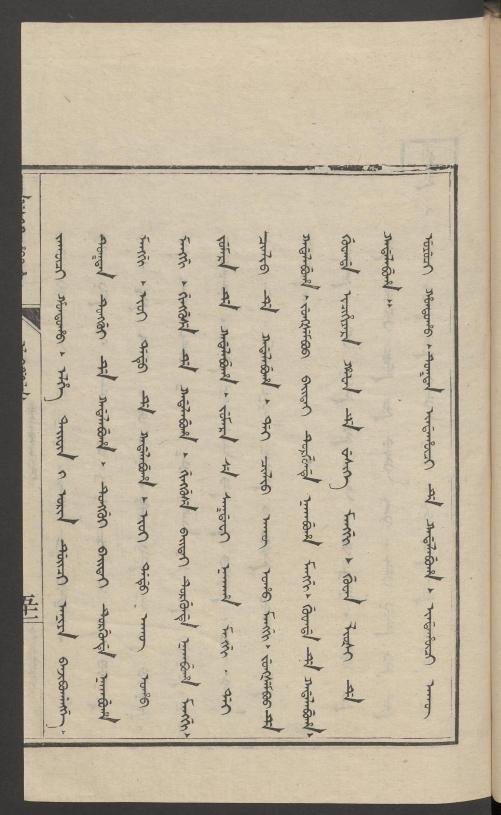
逐詞解析 · word-by-word(85 詞)
第八半分(管領),康熙二十四年編設,初以Tunggi管理。Tunggi因事被革,繼以Ioi Dadu管理。Ioi Dadu亡故,以Ginggus管理。Gingguse因事被革,以Jumara管理。Jumara年老告退,以Dai Cilio管理。Dai Cilio亡故,以Jungšembio管理。Jungšembio因事被革,以Guwang管理。Guwang陞郎中,以Guwan Lioši管理。第九半分,初以Indahūci管理,Indahūci亡故。
EnglishThe eighth half-company, established in the twenty-fourth year of Kangxi, was initially administered by Tunggi. After Tunggi was dismissed due to an official case, it was administered by Ioi Dadu. After Ioi Dadu died, it was administered by Ginggus. After Gingguse was dismissed due to an official case, it was administered by Jumara. After Jumara retired due to old age, it was administered by Dai Cilio. After Dai Cilio died, it was administered by Jungšembio. After Jungšembio was dismissed due to an official case, it was administered by Guwang. After Guwang was promoted to department director (icihiyara hafan), it was administered by Guwan Lioši. The ninth half-company was initially administered by Indahūci; Indahūci died.
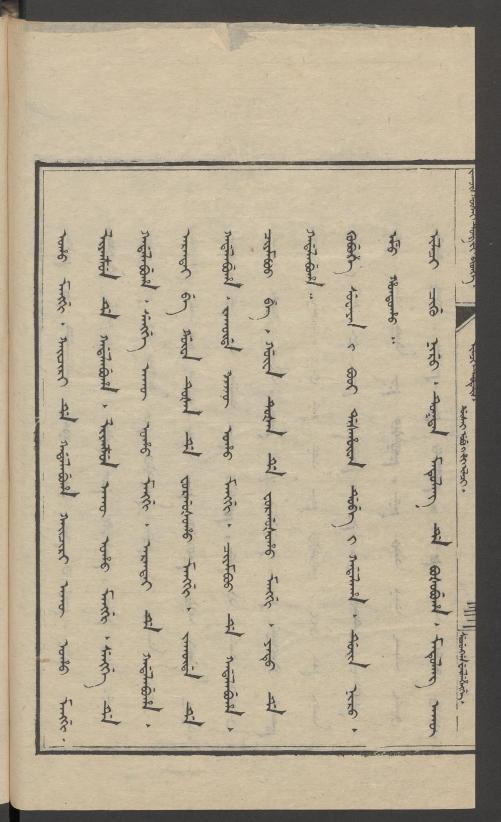
逐詞解析 · word-by-word(82 詞)
英達胡齊故後,以奇齊里管理;奇齊里故後,以李延俊管理;李延俊故後,以僧格管理;僧格故後,以阿蘭泰管理;阿蘭泰調任他職後,以扎庫達管理;扎庫達故後,以錢寶管理;錢寶調任他職後,以雅圖管理。此爲鑲黃旗包衣五甲喇所轄四佐領中,一管領下第三旗鼓佐領,初以馬圖朗承襲,馬圖朗故。
EnglishWhen Indahūci died, it was administered by Kiciri. When Kiciri died, it was administered by Liyansun. When Liyansun died, it was administered by Sengge. When Sengge died, it was administered by Arantai. After Arantai was transferred to another post, it was administered by Jakūda. When Jakūda died, it was administered by Ciyamboo. After Ciyamboo was transferred to another post, it was administered by Yatu. This is the third Cigu niru within one hontoho, among the four niru under the jurisdiction of the fifth jalan of the Bordered Yellow Banner bondservant division. At first, it was inherited by Matulang; Matulang died.
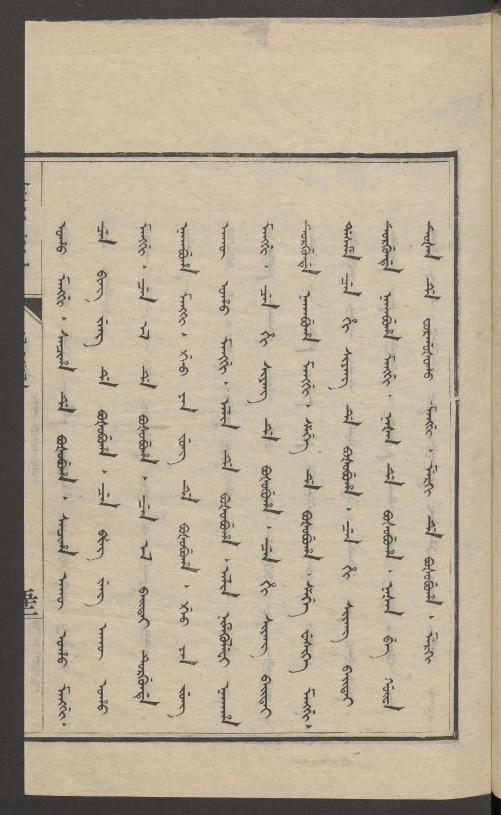
逐詞解析 · word-by-word(96 詞)
(承襲記錄)桑齊哈亡故後,以陳秉正補放。陳秉正亡故後,以陳額爾補放。陳額爾因事革退後,以高延忠補放。高延忠亡故後,以阿林補放。阿林因病告退後,以陳希祥補放。陳希祥因喜慶事革退後,以司格補放。司格陞遷後,復以陳希祥補放。陳希祥因事革退後,以納善補放。納善調任他職後,以墨爾齊補放。墨爾齊〔……〕
English(Record of succession) After Sanciha died, Cen Bing Jeng was appointed to the post. After Cen Bing Jeng died, Cen El was appointed. After Cen El was dismissed due to an affair, G'ao Yan Jung was appointed. After G'ao Yan Jung died, Alin was appointed. After Alin resigned due to illness, Cen Hi Siyang was appointed. After Cen Hi Siyang was dismissed on account of a celebratory matter/joyous occasion, Syge was appointed. After Syge was promoted, Cen Hi Siyang was again appointed. After Cen Hi Siyang was dismissed due to an affair, Našan was appointed. After Našan was transferred to another post, Merki was appointed. Merki...
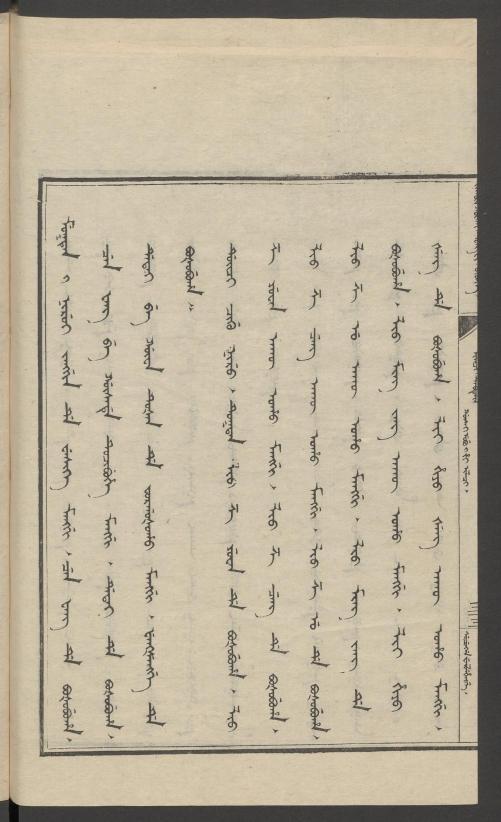
逐詞解析 · word-by-word(94 詞)
盛京佐領升任後,由陳芳承襲。 將陳芳出旗後,由德依承襲。 將德愛調任他職後,由豐生額承襲。 第四旗鼓佐領,最初由劉子元承襲。 劉子元亡故後,由劉子成承襲。 劉子成亡故後,由劉子武承襲。 劉祖亡故後,由劉明章承襲。 劉明章亡故〔?〕後,由李九升承襲。 李孝升亡故後。
EnglishWhen the Mukden nirui janggin was promoted, (the post) was taken over by Cen Fang. After Cen Fang was removed from the banner, (the post) was taken over by Deoi. After Deai was transferred to another post, (the post) was taken over by Fengsengge. The fourth Cigu Niru, initially taken over by Lio Dzi Yuwan. After Lio Dzi Yuwan died, (the post) was taken over by Lio Dzi Ceng. After Lio Dzi Ceng died, (the post) was taken over by Lio Dzi U. After Lio Dzu died, (the post) was taken over by Lio Ming Jang. After Lio Ming Jang died [?], (the post) was taken over by Lii Giyo Šeng. After Lii Hiyo Šeng died,
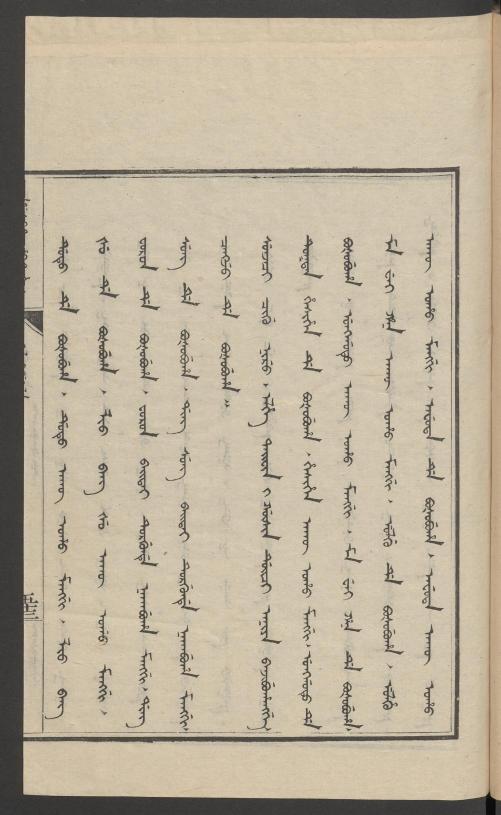
逐詞解析 · word-by-word(89 詞)
襲與聾子,聾子亡故後,襲與劉榜書,劉榜書榫眼〔?〕後,襲與髮旋,髮旋因事革退後,襲與丁宋,丁宋因事革退後,襲與殘促。第五旗鼓佐領,康熙三十四年編設,初襲與和什和,和什和亡故後,襲與翁果圖,翁果圖亡故後,襲與馬維哈納,烏盧馬歪汗亡故後,襲與額駙,額駙亡故。
EnglishIt was inherited by the Deaf One. After the Deaf One passed away, it was inherited by Liu Bangshu. After Liu Bangshu's ogo〔?〕, it was inherited by the Hair Whorl. After the Hair Whorl was dismissed due to an incident, it was inherited by Ding Song. After Ding Song was dismissed due to an incident, it was inherited by Can Cu. The Fifth Cigu Niru, established in the 34th year of Kangxi, was initially inherited by Heshen. After Heshen passed away, it was inherited by Unggotu. After Unggotu passed away, it was inherited by Ma Weihana. After Ulu Ma Wai Han passed away, it was inherited by the Son-in-law. After the Son-in-law passed away.
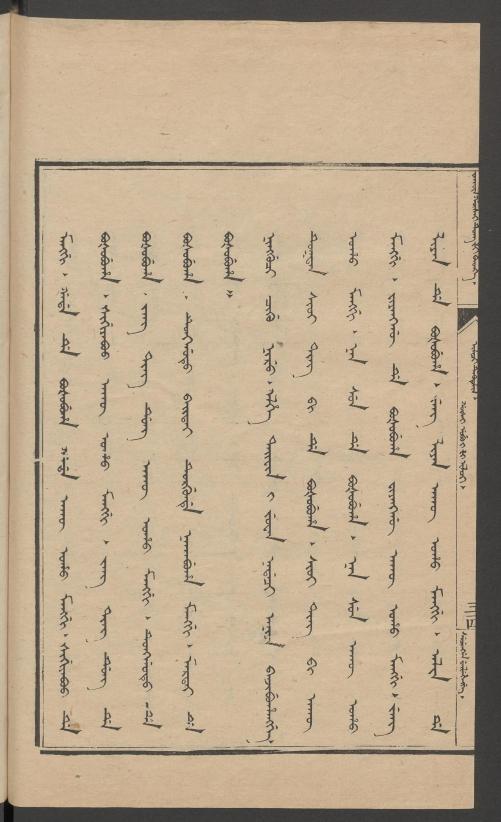
逐詞解析 · word-by-word(94 詞)
嘎達承襲,嘎達亡故後,施家保承襲。施家保亡故後,章廷棟承襲。章廷棟亡故後,通鄂圖承襲。通鄂圖因事被革退後,馬爾泰承襲。第六旗鼓佐領,康熙十七年編設,最初由徐廷弼承襲。徐廷弼亡故後,楠遜承襲。楠遜亡故後,費揚古承襲。費揚古亡故後,正廉承襲。正廉亡故後,阿林……
EnglishGada inherited. After Gada passed away, Šigiyaboo inherited. After Šigiyaboo passed away, Jang Ting Dung inherited. After Jang Ting Dung passed away, Tunggotu inherited. After Tunggotu was dismissed due to a matter, Martai inherited. The Sixth Cigu Niru, established in the 17th year of Kangxi, was first inherited by Sioi Ting Bi. After Sioi Ting Bi passed away, Nan Sun inherited. After Nan Sun passed away, Fiyanggū inherited. After Fiyanggū passed away, Jeng Liyan inherited. After Jeng Liyan passed away, Alin...
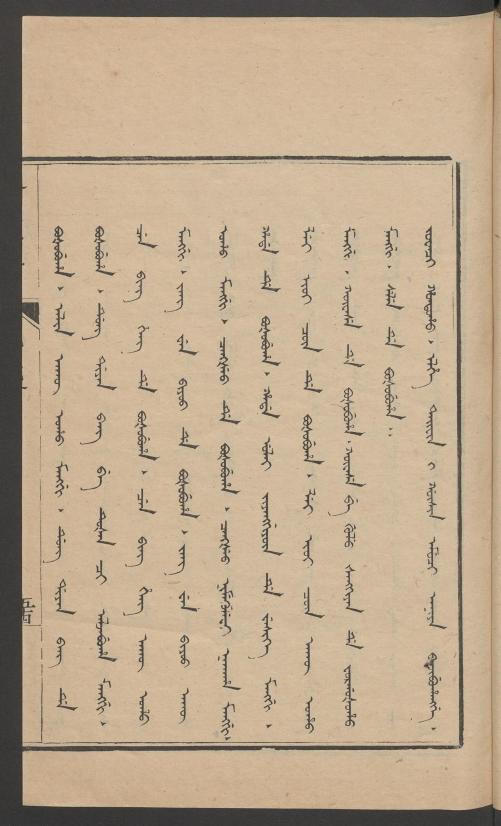
逐詞解析 · word-by-word(92 詞)
阿林承襲,阿林亡故後,棟殿邦承襲;棟殿邦被罷免後,陳炳庚承襲;陳炳庚亡故後,張文彪承襲;張文彪亡故後,長壽承襲;長壽因病辭退後,哈達承襲;哈達被烏拉將軍侵沒後,勒尼于椿承襲;勒尼于椿亡故後,卡爾瓦色承襲;卡爾瓦色被調換正白旗後,色勒承襲。此第十管領,康熙三十九年編。
EnglishIt was inherited by Alin. After Alin passed away, it was inherited by Dung Diyan Bang. After Dung Diyan Bang was dismissed from office, it was inherited by Cen Bing Geng. After Cen Bing Geng passed away, it was inherited by Jang Wen Biyoo. After Jang Wen Biyoo passed away, it was inherited by Cangšeo. After Cangšeo resigned due to illness, it was inherited by Hada. After Hada was taken over by the Ula general, it was inherited by Leni Ioi Cūn. After Leni Ioi Cūn passed away, it was inherited by Karwase. After Karwase was transferred to the Plain White Banner, it was inherited by Sele. This was the Tenth Company, recorded in the 39th year of Kangxi.