滿文大藏經 · 第21函
Sure i cargi dalin de akūnaha nomun — Prajñāpāramitā Sūtra, Assembly IV, “Wondrous Practice”
四語逐句對照 —— 本函與漢文玄奘譯、藏文德格版、84000 英譯的逐句對勘, 另附滿譯術語溯源(哪些隨藏、哪些隨漢、哪些經蒙古傳入):進入對照頁 →
這是本站第一份朱印經折裝材料。紅墨在標準灰度裡被 R 通道拉亮、墨紙對比只有 157,改取 G 通道對比升到 172,紅墨於是表現得像正常黑墨,既有為黑墨調的閾值可直接復用。一葉約 30 列橫幅,整頁送模型必跑飛(只吐 95 詞),故按自相關估出的列距切 3 塊帶重疊再拼回。
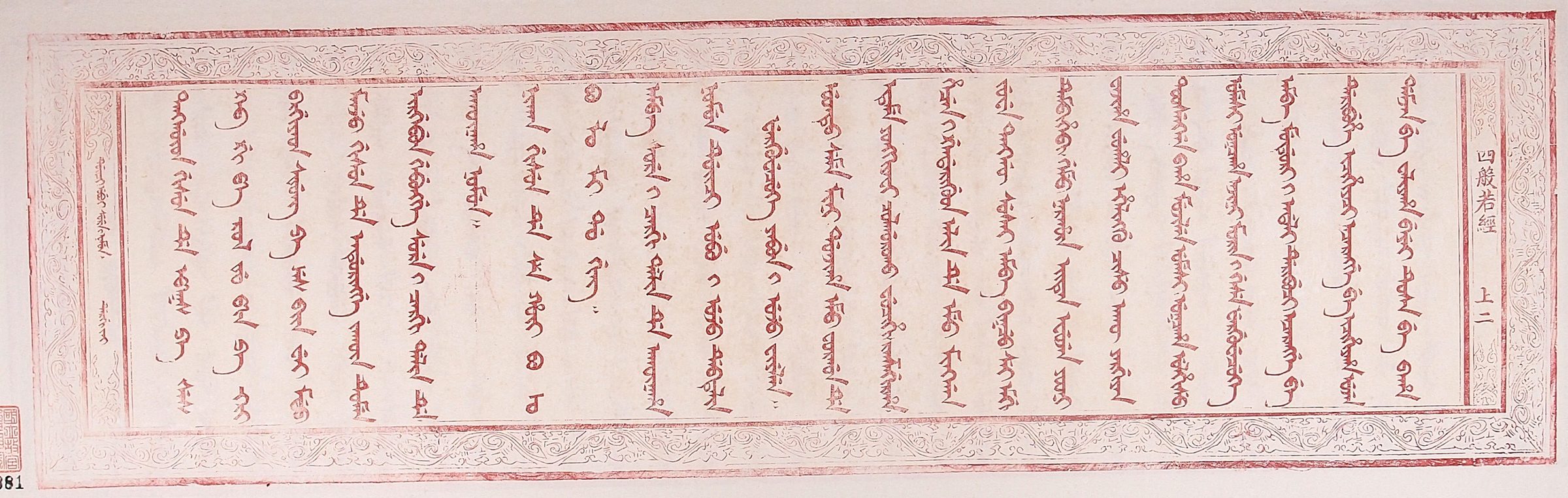 橫幅原圖 · 可左右捲動 · 點擊看大圖
三家原始輸出 · raw predictions(medoid 逐塊選骨架:nougat/res50/nougat,可自行複核)
逐詞解析 · word-by-word(126 單元 · 覆蓋 90.5%)
百語中:赦、麂、柷、萍、憤、嬪、微、鱘、畝、某。滿語中:《聖八紘詩》名為「聰慧彼岸經」。漢語中:《四十二章經》第四分第一卷〈奇行〉第一章。如是我聞:一時,佛在勝全超絕之城乾達羅山,與一千二百五十大比丘眾俱。皆細行,一切煩惱悉盡,全無庸劣私心,實得道果,心極解脫,慧極解脫,如鱣魚之迅疾,似大龍之奇偉。應起者起,應辦者辦,棄重擔,得己利。
EnglishIn the hundred languages: “pardon,” “muntjac,” “zhu (percussion instrument),” “duckweed,” “anger,” “imperial concubine,” “subtle,” “sturgeon,” “mu (land measure),” “certain.” In the Manchu language: the Sacred Eight Tümen Odes, called “The Sutra of the Wise Far Shore.” In the Chinese language: the Sutra in Forty-Two Sections, fourth part, first fascicle, “Wondrous Deeds,” first chapter. Thus have I heard: at one time, the Buddha was dwelling on Mount Gandhara in the city of the Supremely Complete and Transcendent Buddha, together with one thousand two hundred and fifty great bhikṣus. All were of subtle conduct; every defilement was utterly exhausted; with no mean selfishness at all, truly attaining the fruit of the Way, the mind was greatly liberated, the wisdom was greatly liberated, like the sturgeon-horse, like a wondrous great dragon. What ought to be begun was begun; what ought to be managed was managed; the heavy burden was cast aside; benefit for oneself was obtained.
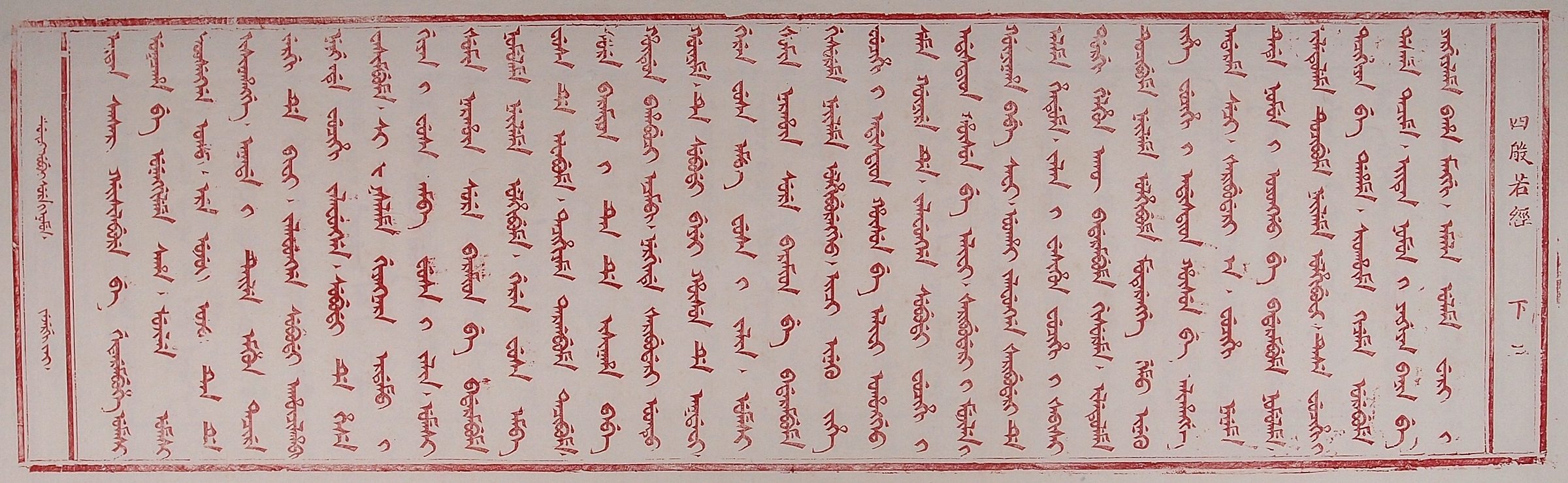 橫幅原圖 · 可左右捲動 · 點擊看大圖
三家原始輸出 · raw predictions(medoid 逐塊選骨架:res50/donut/donut,可自行複核)
逐詞解析 · word-by-word(209 單元 · 覆蓋 84.2%)
一切被牽累、被牽奪者,皆已脫離,誠知畋獵之事,其患極甚。今此首要至極之處,唯獨自學之階,有壽福之須菩提居長。佛向壽福須菩提降旨曰:「汝以講論之德,理應為諸菩薩、大菩薩,於極精微至極之處,速令得之。」時,舍利弗如是思惟:「今須菩提依自身之力,為諸菩薩、大菩薩,廣說甚深般若波羅密多,開示曉諭,此亦承如來佛之加持力,以為至要。」壽福須菩提承佛加持力,知舍利弗心中所思,即告壽舍利弗曰:「世尊佛之弟子中,敢於廣說、顯出、開示、曉諭者,皆亦承如來佛之加持力。何謂?舍利弗,佛先為彼廣說經中要義,開示曉諭,彼等既隨佛之教,專心勤習,修練復學,一切經之行性既得驗實之後,再傳於人。」
EnglishAll that were entangled and ensnared have been freed; having truly known the hunting, the harm is extremely great. Now, having reached this foremost and ultimate point, only in the stage of solitary learning did the long-lived Subhūti take the lead. The Buddha issued a decree to the long-lived Subhūti, saying: “By your virtue of expounding, for the sake of the bodhisattvas and great bodhisattvas, you should quickly cause them to attain the place that has reached the utmost subtlety.” At that time, Śāriputra thought thus: “Now Subhūti, relying on his own strength, for the sake of all bodhisattvas and great bodhisattvas, extensively expounds, reveals, and explains the profound Prajñāpāramitā. This too is by receiving the blessing-power of the Tathāgata Buddha, and is deemed essential.” The long-lived Subhūti, receiving the Buddha’s blessing-power, knew what Śāriputra had thought in his mind, and immediately said to the long-lived Śāriputra: “Among the exalted Buddha’s disciples, those who dare to expound extensively, reveal, and explain—all of them likewise receive the blessing-power of the Tathāgata Buddha. How so? Śāriputra, the Buddha first extensively expounded to them the essential points of the scripture, revealing and explaining; they, following the Buddha’s teaching, diligently and single-mindedly striving, training and learning again, after having truly verified the conduct and nature of all scriptures, afterward transmit them to others.”
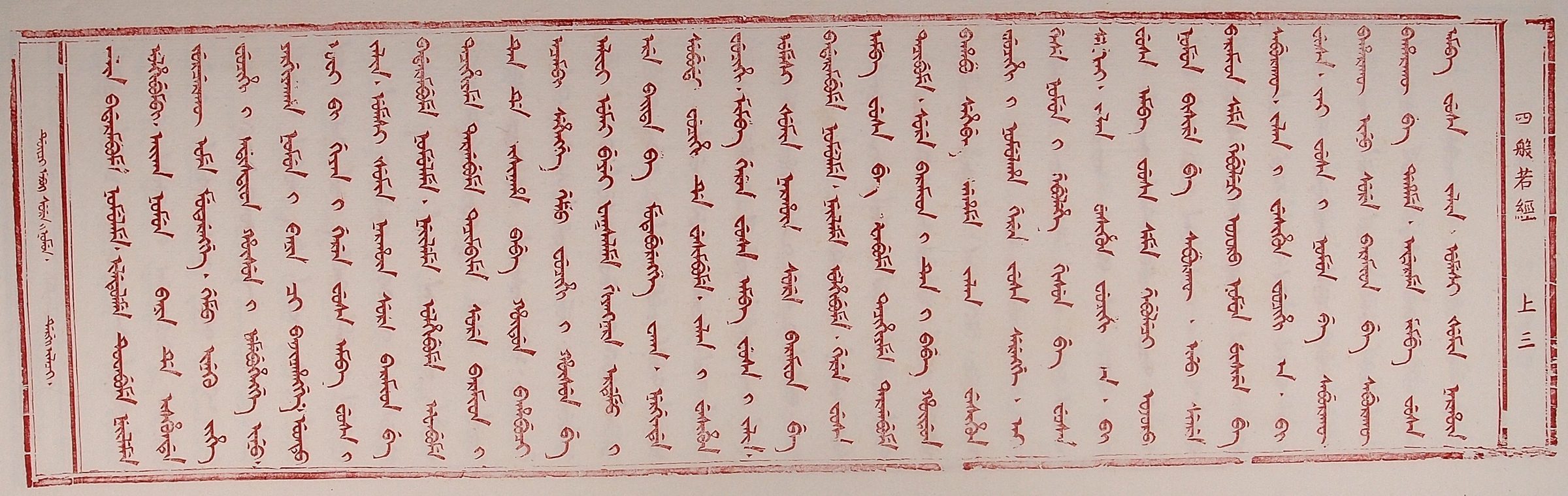 橫幅原圖 · 可左右捲動 · 點擊看大圖
三家原始輸出 · raw predictions(medoid 逐塊選骨架:res50/donut/donut,可自行複核)
逐詞解析 · word-by-word(210 單元 · 覆蓋 91.0%)
第四。誠然,般若經第三品中,廣為宣說、開示、闡明:凡能與經之體性不相違者,皆由如來佛之加持所滋養,亦實由經之體性所生。因此,我理應為諸菩薩、大菩薩,將甚深微妙般若波羅蜜多,廣為宣說、開示、闡明,付囑教誨,承受加持,並非以自身分別講說之才能所能成辦此事。其時,蘇布達啟白佛言:世尊,佛令我為諸菩薩、大菩薩,將甚深微妙般若波羅蜜多,廣為宣說、開示、闡明,付囑教誨、警戒、訓導諸菩薩、大菩薩,速令獲得般若波羅蜜多究竟之處。聞此,世尊以經所說,諸菩薩者,同一經中所稱名之言,名為菩薩。再者,世尊,佛若見有法可名為菩薩、大菩薩,則不見有法可名為般若波羅蜜多。世尊,我既不見菩薩,亦不見、不得菩薩之法,亦不見、不得般若波羅蜜多,既然如此,〔?〕令我為諸菩薩、大菩薩,將甚深微妙〔?〕
EnglishFourth. Indeed, in the third chapter of the Prajñāpāramitā Sūtra, it is extensively proclaimed, revealed, and elucidated: whatsoever is able not to be in contradiction with the nature of the sūtra, all of it is nourished by the blessing of the Tathāgata Buddha, and is also truly born from the nature of the sūtra. Therefore, I ought, for the sake of all bodhisattvas and great bodhisattvas, to extensively proclaim, reveal, and elucidate the extremely profound and subtle prajñāpāramitā, to entrust and instruct it, to receive the blessing; it is not by the skill of explaining through one's own discrimination that this matter can be accomplished. At that time, Subhūti addressed the Buddha, saying: World-Honored One, the Buddha has commanded me, for the sake of all bodhisattvas and great bodhisattvas, to extensively proclaim, reveal, and elucidate the extremely profound and subtle prajñāpāramitā, to entrust, instruct, admonish, and train all bodhisattvas and great bodhisattvas, and to cause them speedily to attain the ultimate point of prajñāpāramitā. Hearing this, the World-Honored One, by what is spoken in the sūtra: those called bodhisattvas are named bodhisattvas by the same term used in the sūtra. Furthermore, World-Honored One, if the Buddha sees any dharma that may be named bodhisattva or great bodhisattva, then no dharma is seen that may be named prajñāpāramitā. World-Honored One, since I neither see bodhisattvas, nor see or obtain the dharma of bodhisattvas, nor see or obtain prajñāpāramitā, therefore 〔?〕 for me, for the sake of all bodhisattvas and great bodhisattvas, the extremely profound and subtle 〔?〕
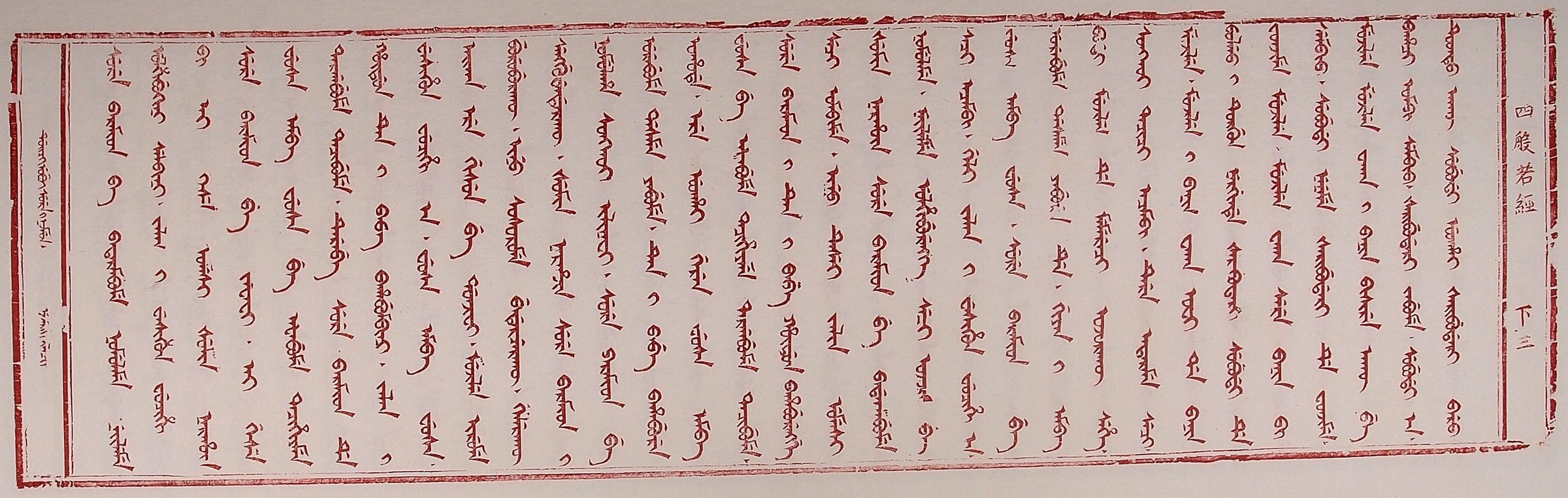 橫幅原圖 · 可左右捲動 · 點擊看大圖
三家原始輸出 · raw predictions(medoid 逐塊選骨架:donut/donut/res50,可自行複核)
逐詞解析 · word-by-word(222 單元 · 覆蓋 84.2%)
般若波羅蜜多,〔?〕〔?〕〔?〕〔?〕,廣為宣說、開示,令得曉悟。〔?〕世尊佛,我〔?〕甚深般若波羅蜜多,〔?〕如諸菩薩、大菩薩,付囑教誡,令彼得於般若波羅蜜多,速疾至極之地。世尊佛,諸菩薩、大菩薩,若聞是語,心不沉沒、不退縮、不離去、不怖畏,依甚深般若波羅蜜多所說而住,修習般若波羅蜜多,得現在地者,此即可謂付囑教誡諸菩薩、大菩薩,令速得般若波羅蜜多至極之地;亦應知是為彼等廣宣甚深般若波羅蜜多,開示令悟。又,世尊佛,諸子、大菩薩修習般若波羅蜜多時,理應如所說「於大菩提心不可執著」而學。彼何故?心非心之性故,本性清淨故。爾時,〔?〕問須菩提:「有心非心之性否?」須菩提先問〔?〕:「可得心非心之性有無否?」〔?〕答曰:「須菩提,不然。」須菩提即向〔?〕。
EnglishThe Perfection of Wisdom, 〔?〕〔?〕〔?〕〔?〕, being widely preached and revealed, may it cause understanding. 〔?〕 World-Honored Buddha, I 〔?〕, seizing the most profound Perfection of Wisdom, like all bodhisattvas and great bodhisattvas, being entrusted, taught, and admonished, cause them to attain swiftly the utmost stage in the Perfection of Wisdom. World-Honored Buddha, if all bodhisattvas and great bodhisattvas, hearing these words, do not sink in mind, do not shrink back, do not depart, do not fear, and abide according to what is preached in the most profound Perfection of Wisdom, cultivating and practicing the Perfection of Wisdom, and attain the present stage, this may be said to be the entrusting, teaching, and admonishing of all bodhisattvas and great bodhisattvas, causing them swiftly to attain the utmost stage of the Perfection of Wisdom; and it should also be known as the wide preaching of the most profound Perfection of Wisdom for their sake, revealing and causing understanding. Again, World-Honored Buddha, when the sons and great bodhisattvas cultivate and practice the Perfection of Wisdom, they ought to study according to the saying that one must not cling to the great bodhi-mind. Why is that? Because the mind is not of the nature of mind; because the original nature is pure. At that time, 〔?〕 asked Subhūti: “Is there a nature that is mind yet not mind?” Subhūti first asked 〔?〕: “Can one obtain the existence or non-existence of the nature of mind that is not mind?” 〔?〕 answered: “Subhūti, it is not so.” Subhūti then turned toward 〔?〕.
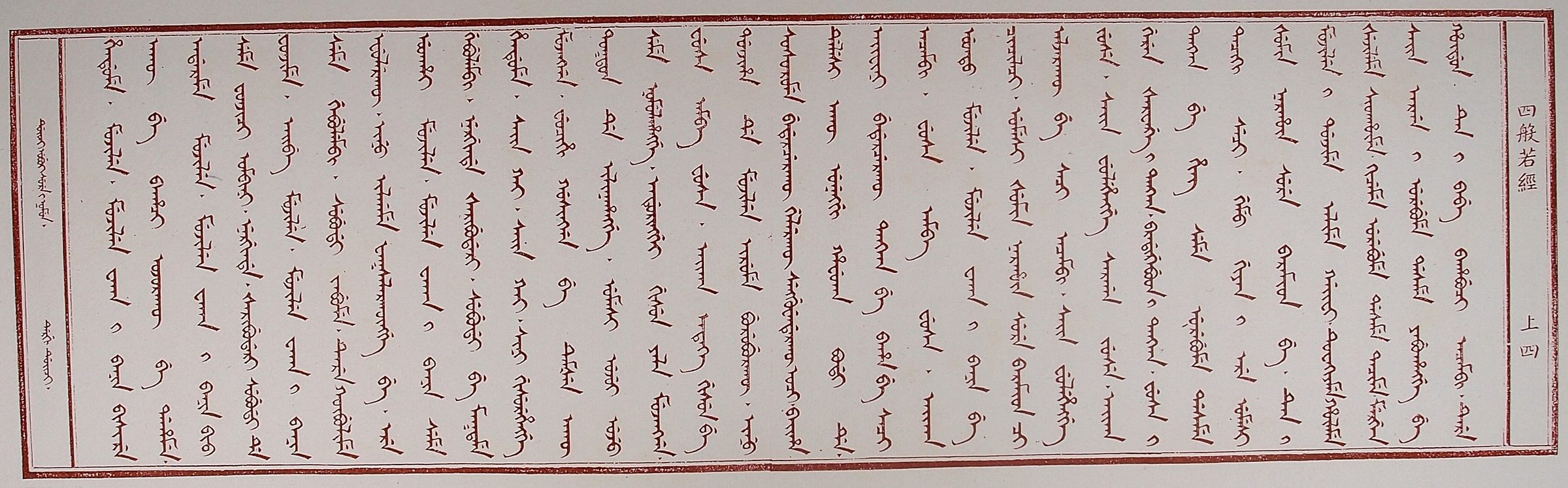 橫幅原圖 · 可左右捲動 · 點擊看大圖
三家原始輸出 · raw predictions(medoid 逐塊選骨架:nougat/res50/res50,可自行複核)
逐詞解析 · word-by-word(215 單元 · 覆蓋 95.3%)
〔問曰:〕「心非心之性,有無俱不可得,既如此,如何可言『心非心之性』耶?」爾時,舍利弗問須菩提:「何者名為『心非心之性』?」須菩提答曰:「彼不變不壞、亦不分別者,此即名為『心非心之性』。」爾時,舍利弗讚須菩提曰:「善哉!善哉!汝所言者誠然。佛之仁者,無諍定中所立者,最為第一。所說乃聖者之言,誠然真實。菩薩、大菩薩,若聞如是之言,心不沉沒、不消失,亦不退縮、不迴避,不恐懼、不畏憚者,則所求無有更上,已通真實菩提者,當知早已不退轉,已得震動〔?〕。菩薩、大菩薩,若能如是觀察『心非心之性』,當知於甚深微妙般若波羅蜜多不相離。善男子、善女人,若欲懇切修習一切聲聞之震動〔?〕、辟支佛之震動〔?〕、菩薩之震動〔?〕,皆理應以此甚深微妙般若波羅蜜多,以至極之心聽聞、領受、守持、讀誦,專精勤修;以善巧方便修習而行者,當令速得至極之地。」彼〔?〕
English〔Someone asked:〕 “Since the nature of mind is not mind, and since existence and non-existence cannot be grasped, how can one say ‘the nature of mind is not mind’?” At that time, Śāriputra asked Subhūti: “What is called ‘the nature of mind is not mind’?” Subhūti answered: “That which does not change and is not destroyed, and which does not discriminate or distinguish — this is called ‘the nature of mind is not mind’.” At that time, Śāriputra praised Subhūti, saying: “Good! Good! What you have said is true. The Buddha’s compassionate one, established in the samādhi of non-contention, is foremost of the foremost. What has been preached is the word of the sage, truly real. If a bodhisattva, a great bodhisattva, upon hearing such words, does not sink in mind, does not vanish, does not shrink back, does not retreat, does not fear, and does not tremble, then there is nothing higher to be sought; having truly penetrated bodhi, (s)he should be known as one who has long since not turned back, and has attained the tremor〔?〕. A bodhisattva, a great bodhisattva, if (s)he thus contemplates ‘the nature of mind is not mind’, should be known as not separated from the extremely profound and subtle prajñāpāramitā. Good sons and good daughters, if they wish to sincerely cultivate and practice all the tremor〔?〕 of the śrāvakas, the tremor〔?〕 of the pratyekabuddhas, and the tremor〔?〕 of the bodhisattvas, all should accordingly take this extremely profound and subtle prajñāpāramitā, hear it with the utmost mind, receive it, uphold it, recite it, and strive with single-minded diligence; those who cultivate and practice it by skillful means should be made to quickly attain the ultimate ground.” That〔?〕
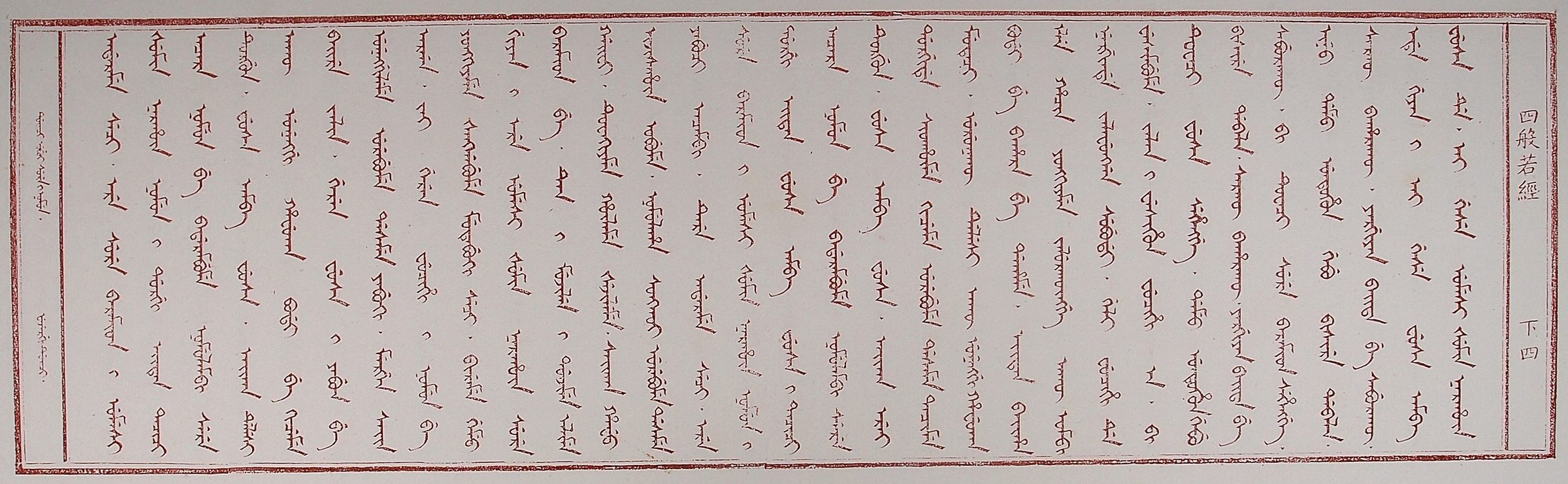 橫幅原圖 · 可左右捲動 · 點擊看大圖
三家原始輸出 · raw predictions(medoid 逐塊選骨架:res50/res50/donut,可自行複核)
逐詞解析 · word-by-word(209 單元 · 覆蓋 92.8%)
何謂此般若波羅蜜多甚深細經中,一切應學之經皆廣為宣說之故?菩薩大菩薩若欲精勤求得無上眞實通達之菩提,欲誠心修習諸菩薩行而復行之,欲以善巧方便及諸餘經圓滿成就,則一切皆應以極心聽受此甚深細般若波羅蜜多,守持讀誦,善為割斷,使成順遂,依所宣說而修習復行。彼何謂此般若波羅蜜多甚深細經中,一切菩薩大菩薩應學之經皆廣為宣說之故?菩薩大菩薩若能於此中專勤修習學成,則必定得無上眞實通達之菩提,故一切皆可求得。時,長壽須菩提復白佛言:世尊,我觀所謂菩薩者,但有虛名而已,未見未知眞實之事;我觀所謂般若波羅蜜多者,亦但有虛名而已,未見未知眞實之事。理應如何於菩薩大菩薩、如何於甚深細〔般若波羅蜜多〕……
EnglishWhat is meant by “within this extremely profound and subtle Prajñāpāramitā sūtra, all sūtras that should be studied are extensively expounded”? If bodhisattva-mahāsattvas wish to strive and seek the supreme, truly penetrating bodhi; if they wish to sincerely train in and again practice the conduct of all bodhisattvas; if they wish by wise and good means and by the remaining sūtras to complete and perfect [their practice] — then in all cases, in accordance with principle, they should with utmost mind hear and receive this extremely profound and subtle Prajñāpāramitā, guard it, recite it, properly cut off [defilements], make [the mind] compliant, and train and practice again according to what has been expounded. What is meant by “within this extremely profound and subtle Prajñāpāramitā sūtra, all sūtras that bodhisattva-mahāsattvas should study are extensively expounded”? If bodhisattva-mahāsattvas are able to devote themselves diligently within this [sūtra], training, practicing, and learning, they will certainly obtain the supreme, truly penetrating bodhi; therefore all can be sought. At that time, long-lived Subhūti again addressed the Buddha, saying: World-Honored One, as I observe it, that which is called “bodhisattva” is merely an empty name; the real fact is not seen, not known. As I observe it, that which is called “Prajñāpāramitā” is also merely an empty name; the real fact is not seen, not known. Therefore, in what manner should [one proceed] with regard to bodhisattva-mahāsattvas, and in what manner with regard to the extremely profound and subtle 〔Prajñāpāramitā〕…
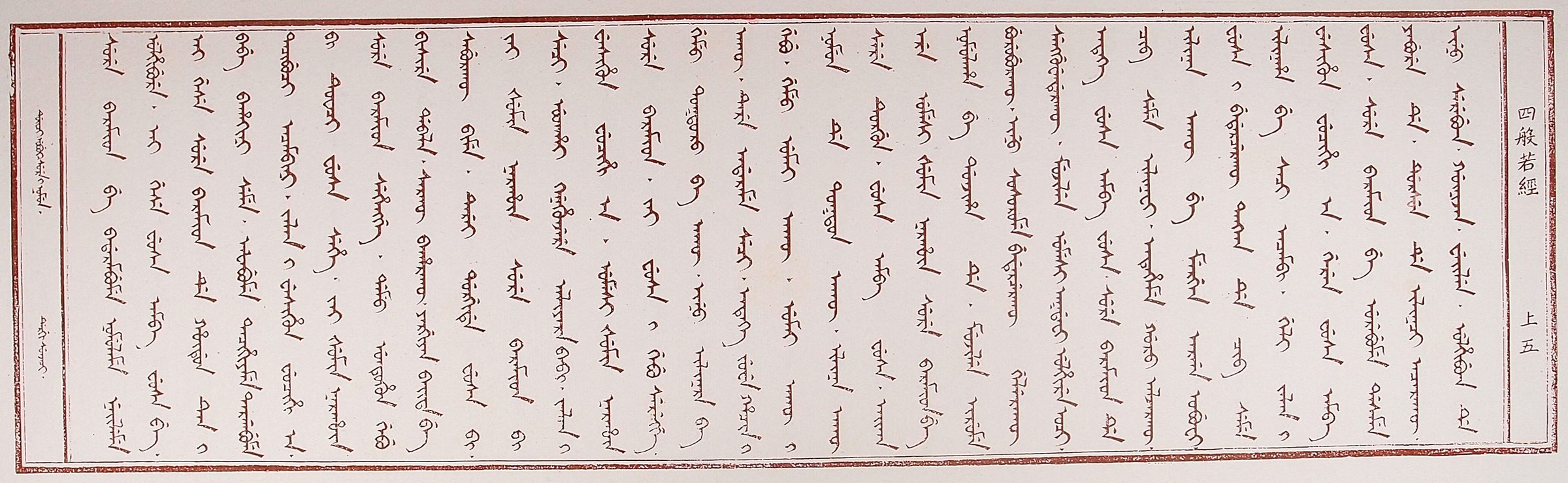 橫幅原圖 · 可左右捲動 · 點擊看大圖
三家原始輸出 · raw predictions(medoid 逐塊選骨架:nougat/nougat/donut,可自行複核)
逐詞解析 · word-by-word(217 單元 · 覆蓋 97.7%)
般若波羅蜜多,廣宣開示,猶如菩薩、大菩薩於般若波羅蜜多速得究竟之處,付囑教誡,應如是教。世尊,我觀菩薩及甚深般若波羅蜜多,但有虛名而已,不知不得,不見實事,而其中若有菩薩及甚深般若波羅蜜多,則有疑惑、等待之處。世尊,甚深般若波羅蜜多及菩薩之名,皆無定處,亦無住處。何以故?如是二種名皆無所有,無所有故,於經中不定不住。菩薩、大菩薩若聞此甚深般若波羅蜜多宣說時,心不沉沒、不退縮、不畏懼、不恐怖,心極信解,則如是菩薩、大菩薩於般若波羅蜜多寂然而住,以永離不住為妙計,應知菩薩不退轉之證相。又,世尊,諸菩薩、大菩薩修習般若波羅蜜多時,不應住於相,亦應知覺、想、行、識之相。
EnglishPrajñāpāramitā, being expanded, preached, opened, and made understood—like bodhisattvas and great bodhisattvas, in order that they may quickly attain the ultimate point in Prajñāpāramitā, it should be taught, admonished, and instructed by entrusting (it to them). O World-Honored One, as I observe, that which is called “bodhisattva” and also “profound and subtle Prajñāpāramitā” is merely an empty name; (they) do not know, do not obtain, and do not see the real matter. And if within that there were a bodhisattva and also a profound and subtle Prajñāpāramitā, then there would be a point of doubt and waiting. O World-Honored One, the name “profound and subtle Prajñāpāramitā” and also “bodhisattva” both have no fixed place, and also have no abiding place. Why is that? Because these two kinds of names are entirely non-existent; because (they are) entirely non-existent, in the sutra (they are) not fixed and do not abide. If bodhisattvas and great bodhisattvas, upon hearing this profound and subtle Prajñāpāramitā preached, have minds that do not sink, do not shrink back, do not fear, and do not tremble, and with minds fully trusting and understanding, then such bodhisattvas and great bodhisattvas abide silently in Prajñāpāramitā, and taking eternal non-separation and non-abiding as a skillful device, it should be known that (they) have silently established (themselves) in the irreversible stage of the bodhisattva. Again, O World-Honored One, when the many bodhisattvas and great bodhisattvas cultivate and practice Prajñāpāramitā, (they) should not abide in form, and also (should not abide in) the marks of sensation, perception, formations, and consciousness.
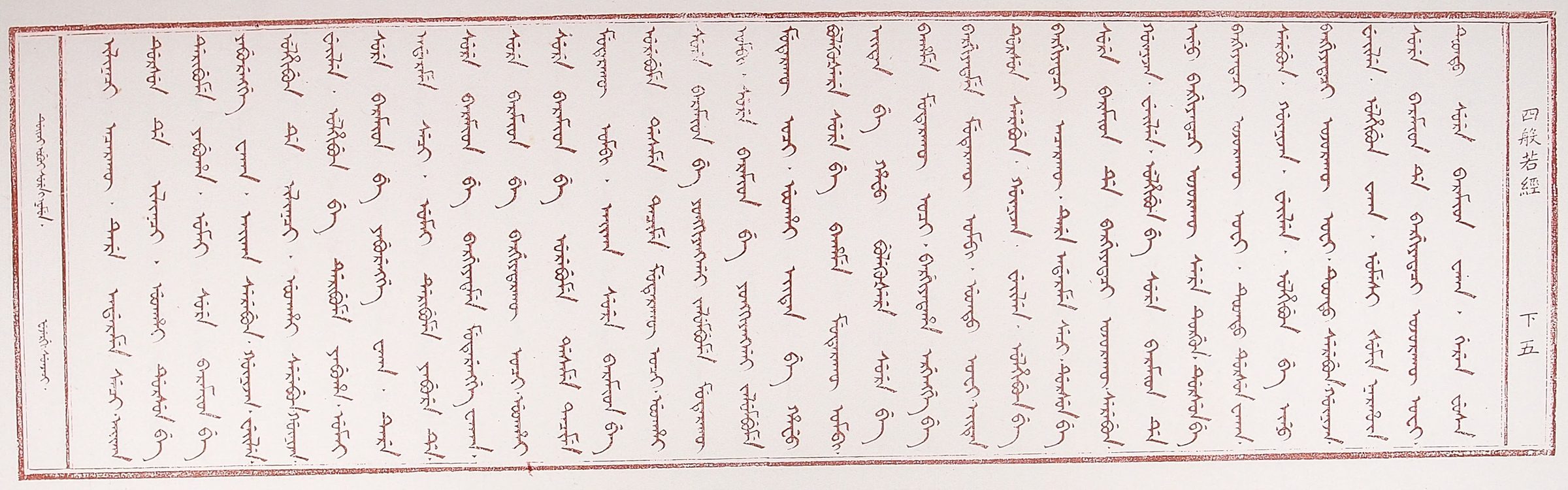 橫幅原圖 · 可左右捲動 · 點擊看大圖
三家原始輸出 · raw predictions(medoid 逐塊選骨架:donut/res50/nougat,可自行複核)
逐詞解析 · word-by-word(206 單元 · 覆蓋 94.7%)
第四,下筋、外甥、下緞之止,不應止於彼。何謂?若止於相,即已起於相而行,全然非行般若波羅蜜多。若止於覺、想、作、解,即已起於覺、想、作、解而行,全然非行般若波羅蜜多。何謂?於無所起之行中,不能攝般若波羅蜜多;若不攝般若波羅蜜多,即不能修習般若波羅蜜多;若不能修習般若波羅蜜多,即不能圓滿汝等波羅蜜多;若不能圓滿般若波羅蜜多,即不能得通達一切之慧;若不能得通達一切之慧,即不能攝受所攝之眾生。故一切相、覺、想、作、解皆不應攝。何謂?相不可攝於般若波羅蜜多,覺、想、作、解亦不可攝於般若波羅蜜多。所以然者,相不可攝,故相非〔實〕;覺、想、作、解亦不可攝,故覺、想、作、解非〔實〕;於甚深精微之般若波羅蜜多不可攝,故般若波羅蜜多亦非〔實〕。諸菩薩〔?〕
EnglishFourth, stopping at sinews, nephews, lower silk — one should not stop at these. What does this mean? If one stops at form, then one has already begun to act from form; this is by no means practicing prajñāpāramitā. If one stops at perception, thought, action, or understanding, then one has already begun to act from perception, thought, action, or understanding; this is by no means practicing prajñāpāramitā. What does this mean? In acting without any beginning, prajñāpāramitā cannot be gathered in. If prajñāpāramitā is not gathered in, then prajñāpāramitā cannot be trained and cultivated. If prajñāpāramitā cannot be trained and cultivated, then the pāramitās cannot be brought to complete fullness. If prajñāpāramitā cannot be brought to complete fullness, then the wisdom that penetrates and discerns all things cannot be obtained. If the wisdom that penetrates and discerns all things cannot be obtained, then the sentient beings who have been gathered cannot be gathered in. Therefore, all form, perception, thought, action, and understanding should not be gathered in. What does this mean? Form cannot be gathered into prajñāpāramitā; perception, thought, action, and understanding also cannot be gathered into prajñāpāramitā. The reason is this: because form cannot be gathered in, form is not 〔real〕; because perception, thought, action, and understanding also cannot be gathered in, perception, thought, action, and understanding are not 〔real〕; because they cannot be gathered into the extremely deep and subtle prajñāpāramitā, prajñāpāramitā too is not 〔real〕. The many bodhisattvas〔?〕
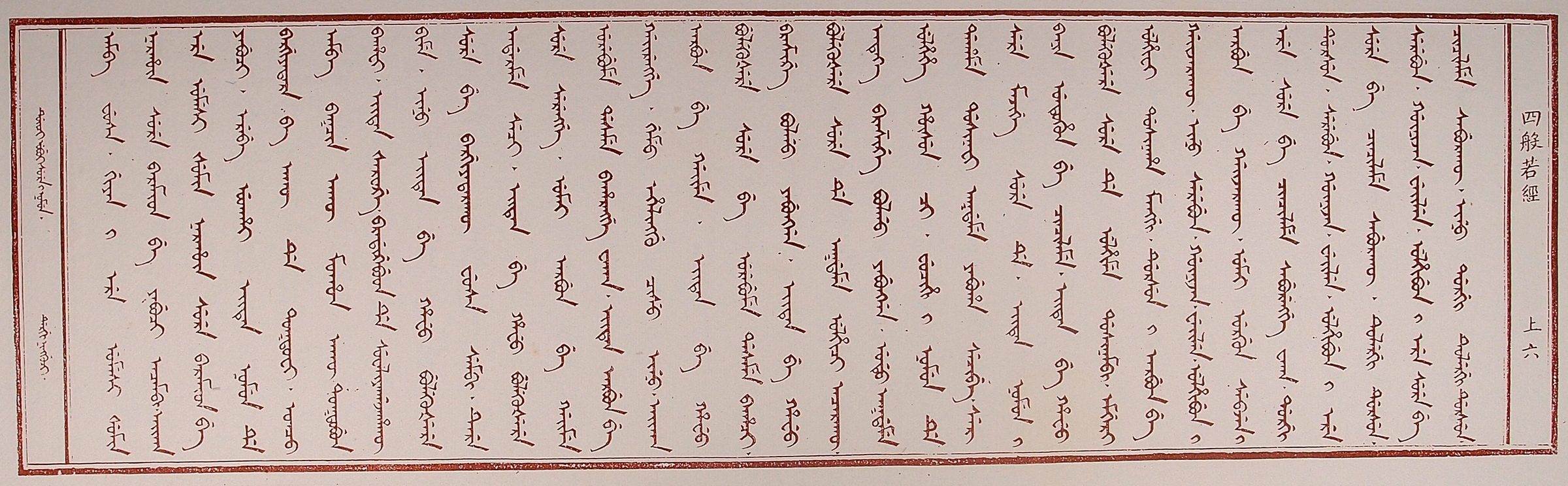 橫幅原圖 · 可左右捲動 · 點擊看大圖
三家原始輸出 · raw predictions(medoid 逐塊選骨架:donut/donut/res50,可自行複核)
逐詞解析 · word-by-word(233 單元 · 覆蓋 92.3%)
第四分。此經云:大菩薩理宜行此甚深微妙般若波羅蜜多。若行此甚深微妙般若波羅蜜多,則於一切經中無所攝持,得決定、廣大、無敵、無盡之定,於一切所斷煩惱亦不相雜,亦能洞鑑一切。不攝持此般若者,名為菩薩。何謂也?洞鑑一切之般若者,非取相而修習、整治所能得也。凡取相者,皆庸劣自私。若取相而能修習、整治洞鑑一切之般若,則清淨有行之士,不應依洞鑑一切之般若而解悟。如此清淨有行之士,縱依解悟,由乳經入佛經而依行,然以些微之智,觀察一切經之性空,乃於洞鑑一切之般若中解入。既解入已,不取體之相,亦不取知覺、思惟、罪業、誥示之相。並非以喜悅觀察此般若而見之也。內之體、知覺、思惟、罪業、誥示,不觀察此般若而見之;外之體、知覺、思惟、罪業、誥示,不觀察此般若而見之;亦見內外體相十相之相,而為之首。
EnglishThe fourth division. This sutra says: A great bodhisattva ought to practice this extremely profound and subtle prajñāpāramitā. If (s)he practices this extremely profound and subtle prajñāpāramitā, then, without any grasping in all sutras, (s)he attains a fixed, vast, peerless, and endless certainty, and while not being mixed with all the afflictions to be eliminated, (s)he also thoroughly illuminates all. The one who does not grasp this prajñā is called a bodhisattva. What does that mean? The prajñā that thoroughly illuminates all is not something obtained by taking hold of appearances and training and correcting [them]. All those who take hold of appearances are inferior and selfish. If by taking hold of appearances one could train and correct the prajñā that thoroughly illuminates all, then a pure and well-conducted person should not rely on the prajñā that thoroughly illuminates all in order to understand. Even if such a pure and well-conducted person relies on understanding, and having entered the Buddha's sutra from milk, practices in reliance, yet with slight wisdom (s)he observes the emptiness of the nature of all sutras, and enters into understanding in the prajñā that thoroughly illuminates all. Once (s)he has understood and entered, (s)he does not take the appearance of form, nor the appearance of perception, thought, karma, or instruction. It is not that (s)he sees by observing this prajñā with joy. Inwardly, form, perception, thought, karma, and instruction are not seen by observing this prajñā; outwardly, form, perception, thought, karma, and instruction are not seen by observing this prajñā; and the ten appearances of inner and outer form are seen as appearances, and are led.
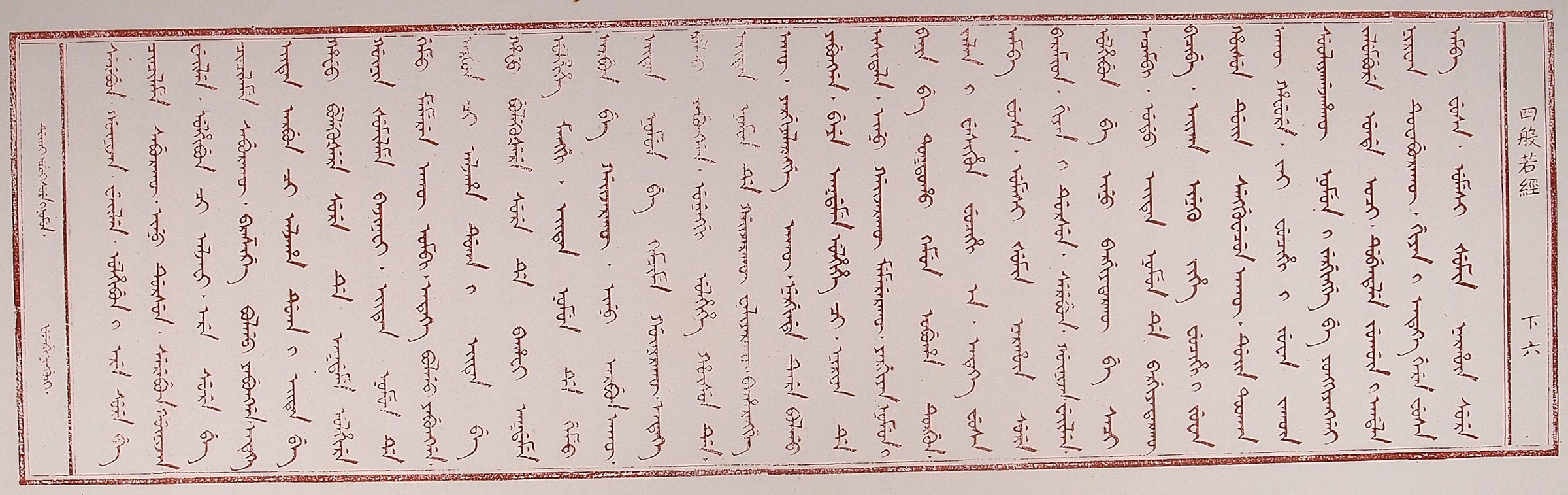 橫幅原圖 · 可左右捲動 · 點擊看大圖
三家原始輸出 · raw predictions(medoid 逐塊選骨架:donut/nougat/res50,可自行複核)
逐詞解析 · word-by-word(209 單元 · 覆蓋 93.8%)
知覺、剜取、罪、誥之此般若,觀察而不見,亦體相。離知覺、剜取、罪、誥,觀察而不見此般若。潔淨有行,離如是諸相,通達一切門,鑑照此般若。依此般若而悟,自然生成,於一切經皆無凝滯。如是潔淨有行,離爭鬥,通達一切門,鑑照此般若。既得此般若而依之,於一切經皆不取差失,亦無為。不思索無為之法,以永恆眞悟之力,於贄禮不取不捨,無所不有。臨時,彼約定有行之身,自依悟以至於細微,亦不取不執。以眞經之性定為限制,緣世之尊佛,如是菩薩、大菩薩,極深細般若波羅蜜多之理。亦應知知覺、思量、造作、誥之不收攝。雖於一切經不收攝,若尚未圓滿如來佛之十力、四無畏、四無礙,及如來佛之十八不共法之類,則終不示現如路之涅槃。理宜如是諸菩薩、大菩薩,極深細般若。
EnglishPerception, gouging, offense, and proclamation—this wisdom is observed yet not seen; such is also its form. Apart from perception, gouging, offense, and proclamation, this wisdom is observed yet not seen. Pure and upright in conduct, separated from all such appearances, penetrating every gate, (s)he examines this wisdom. Relying on this wisdom and understanding, it arises naturally, and in all scriptures there is no obstruction. Such pure and upright conduct, separated from conflict, penetrating every gate, (s)he examines this wisdom. Having attained this wisdom and relying on it, in all scriptures nothing is taken amiss, and there is also no action. Without pondering the dharma of non-action, by the power of eternal true understanding, at the time of offering nothing is taken or discarded, and nothing is lacking. At that moment, that body of disciplined conduct, from reliance on understanding down to the finest point, neither takes nor clings. Having established the nature of the true dharma as the fixed standard, for the sake of the world-honored Buddha, such bodhisattvas and great bodhisattvas [comprehend] the extremely profound and subtle principle of prajñāpāramitā. It should also be known that perception, thought, fabrication, and proclamation are not gathered in. Although nothing is gathered in among all scriptures, if the ten powers of the Tathāgata Buddha, the four fearlessnesses, the four unobstructed [knowledges], and the eighteen unshared dharmas of the Buddha have not yet been fully perfected, then ultimately the path-like nirvāṇa is not revealed. Accordingly, such bodhisattvas and great bodhisattvas [dwell in] extremely profound and subtle wisdom.
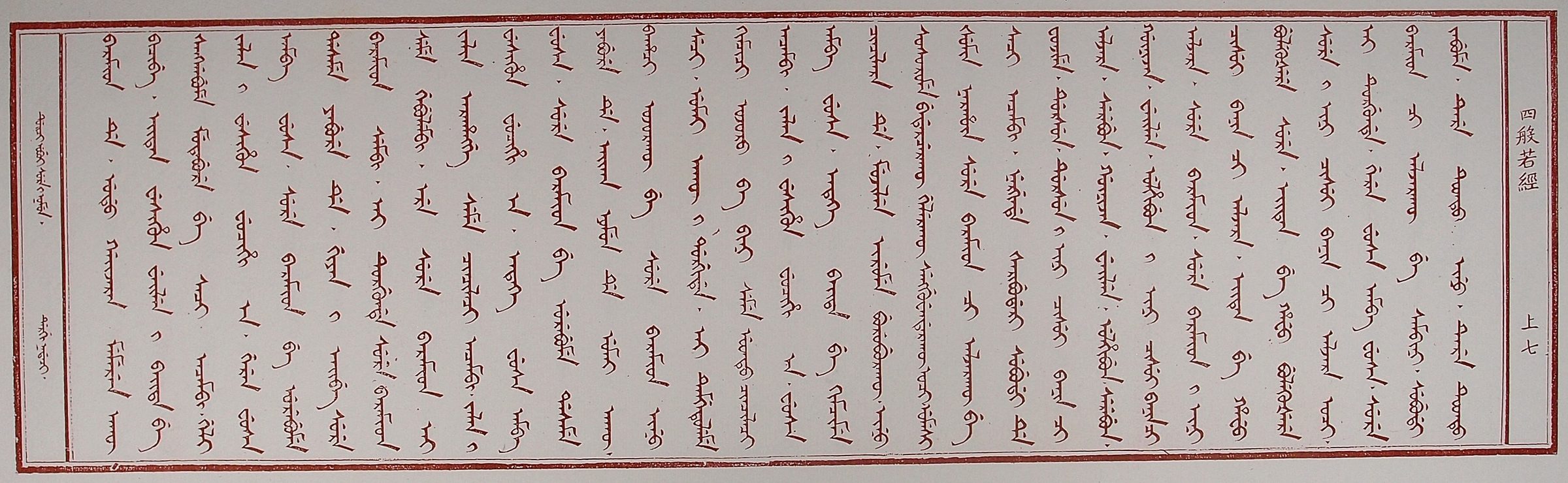 橫幅原圖 · 可左右捲動 · 點擊看大圖
三家原始輸出 · raw predictions(medoid 逐塊選骨架:nougat/res50/donut,可自行複核)
逐詞解析 · word-by-word(219 單元 · 覆蓋 96.3%)
般若波羅蜜多雖無所取、無所執,然應知一切勝業之事皆能成辦。又,世尊佛與諸菩薩、大菩薩修習般若波羅蜜多時,理應思惟:何為般若波羅蜜多?因何名為般若波羅蜜多?此般若波羅蜜多因何而作?世尊佛與如是菩薩、大菩薩修習般若波羅蜜多時,若於經中一無所得,則般若波羅蜜多亦無所得;既無所得,其中有何可標記、可觀察之處?故應如是觀察。世尊佛與諸菩薩、大菩薩觀察如是事時,心不沉沒、不消失,亦不退縮、不畏懼、不驚怖,則應知不離甚深微細般若波羅蜜多。爾時,舍利弗問須菩提:「種種相狀自其本性而離,知覺、相、業、曉諭——知覺、相、業、曉諭自其本性而離,般若波羅蜜多自其本性而離,通達一切。此般若通達一切,若自其本性而離,因何諸菩薩、大菩薩不離般若波羅蜜多?」須菩提答言:「如是,如是。」
EnglishAlthough in the paramita there is nothing to be taken and nothing to be clung to, it should be known that all exalted deeds and matters can be brought to completion. Furthermore, when the World-Honored Buddha and the many bodhisattvas and great bodhisattvas train in and practice the wisdom-paramita, it is fitting to examine: what is called the wisdom-paramita? For what reason is it named the wisdom-paramita? For what purpose was this wisdom-paramita composed? When the World-Honored Buddha and such bodhisattvas and great bodhisattvas train in and practice the wisdom-paramita, if in the sutra nothing at all is obtained, then the wisdom-paramita too is nothing obtained; within nothing obtained, what is there that can be marked and examined? Therefore it should be examined in this way. When the World-Honored Buddha and these bodhisattvas and great bodhisattvas examine such matters, if the mind does not sink, does not vanish, and does not shrink back, and is not afraid or terrified, then it should be known that they are not separated from the extremely profound and subtle wisdom-paramita. At that time, Sariputra asked Subhuti: “Forms and appearances are by their own nature separated; perception, appearance, action, and instruction—perception, appearance, action, and instruction are by their own nature separated; the wisdom-paramita is by its own nature separated; all is thoroughly penetrated. If this wisdom thoroughly penetrates all and is by its own nature separated, for what reason are the many bodhisattvas and great bodhisattvas not separated from the wisdom-paramita?” Subhuti answered: “So it is, so it is.”
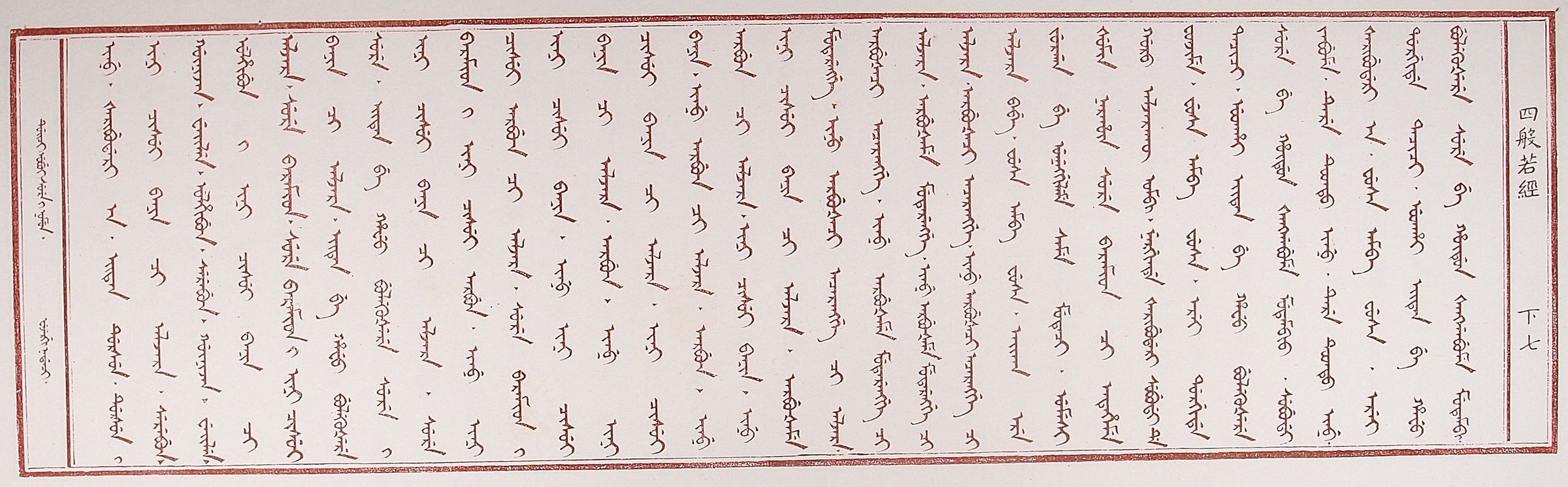 橫幅原圖 · 可左右捲動 · 點擊看大圖
三家原始輸出 · raw predictions(medoid 逐塊選骨架:nougat/res50/res50,可自行複核)
逐詞解析 · word-by-word(222 單元 · 覆蓋 97.7%)
是舍利弗!一切相,相自性離,覺、想、行、識,覺、想、行、識自性離,般若波羅蜜多自性離,一切通達智自性離,般若波羅蜜多自相亦自相離,般若波羅蜜多自性亦自性離,相亦自性、自性亦相離,自性亦相、相亦相離,自性亦自性離,能動者亦當動者離,能動者離,能動者離,能動者亦能動者離,能動者亦能動者離,當動者亦當動者離。此處,菩薩若於此義能真實知,則於甚深般若波羅蜜多永不遠離。爾時,舍利弗問須菩提:「菩薩大菩薩,於此中學,即能速疾圓滿一切通達智否?」須菩提答言:「如是,如是。舍利弗!菩薩大菩薩,於此中學,即能速疾圓滿一切通達智。」
EnglishO Śāriputra! All forms—form is by its own nature separated; sensation, thought, volition, consciousness—sensation, thought, volition, consciousness are by their own nature separated; the Perfection of Wisdom is by its own nature separated; the wisdom that fully comprehends all is by its own nature separated; the Perfection of Wisdom's own characteristic is also separated from its own characteristic; the Perfection of Wisdom's own nature is also separated from its own nature; characteristic is also separated from own nature, and own nature is also separated from characteristic; own nature is also separated from characteristic, and characteristic is also separated from characteristic; own nature is also separated from own nature; that which is able to act is also separated from that which ought to act; separated from that which is able to act; separated from that which is able to act; that which is able to act is also separated from that which is able to act; that which is able to act is also separated from that which is able to act; that which ought to act is also separated from that which ought to act. Here, O Bodhisattva, if this principle can be truly known, then from the extremely profound Perfection of Wisdom one will never be far separated. At that time, Śāriputra asked Subhūti: “O Bodhisattva, O great Bodhisattva, if one studies within this, can the wisdom that fully comprehends all be quickly brought to completion?” Subhūti answered: “So it is, so it is. O Śāriputra! O Bodhisattva, O great Bodhisattva, if one studies within this, the wisdom that fully comprehends all can be quickly brought to completion.”
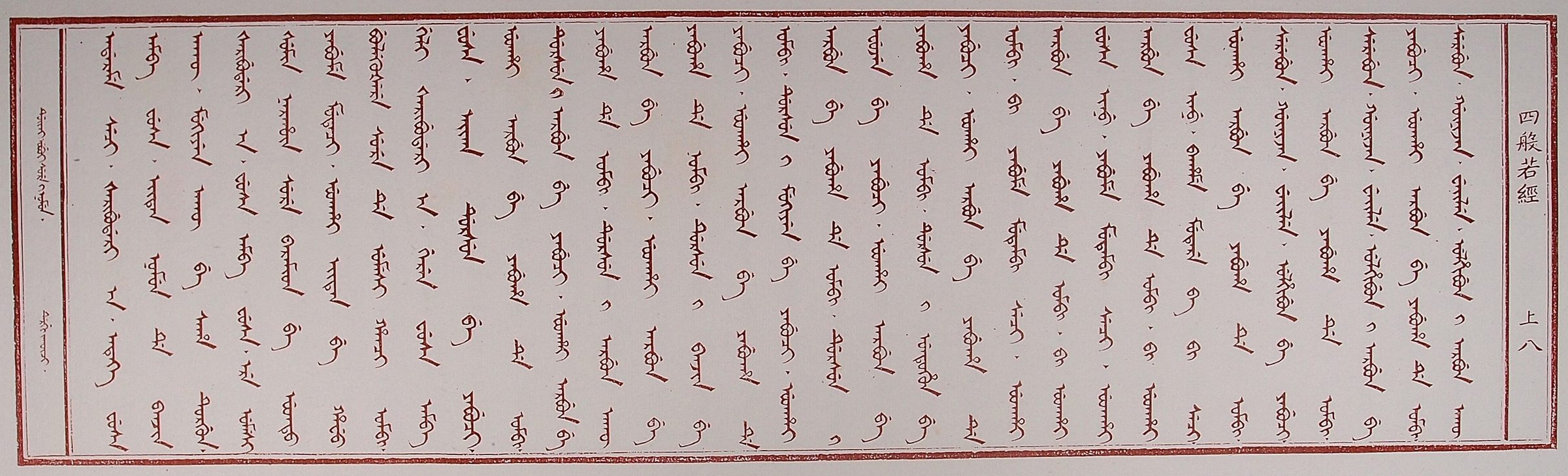 橫幅原圖 · 可左右捲動 · 點擊看大圖
三家原始輸出 · raw predictions(medoid 逐塊選骨架:nougat/nougat/res50,可自行複核)
逐詞解析 · word-by-word(186 單元 · 覆蓋 98.4%)
何謂舍利子?如此菩薩、大菩薩於一切經中知生無、滅無之故。舍利子,菩薩、大菩薩若能如是行此甚深微妙般若波羅蜜多,則與通達鑑照一切之慧極近。又,舍利子,諸菩薩、大菩薩若行色,即行相;若行相,即行相已。色無相,若行相,即行相已。若行色之滅,即行相已。若行色之壞,即行相已。若行色之空,即行相已。若謂我能行,即行相已。若謂我即菩薩亦能行,即行相已。若謂我即菩薩亦有能得之處,即行相已。若行覺、想、行、識,即行相已。若行覺、想、行、識之相,即行相已。覺、想、行、識無相。
EnglishWhat is meant by Śāriputra? Such bodhisattvas, great bodhisattvas, in all scriptures have known that there is no arising and no cessation. Śāriputra, if bodhisattvas, great bodhisattvas, can thus practice this most profound and subtle prajñāpāramitā, then (they) become extremely close to the wisdom that penetrates and mirrors all. Again, Śāriputra, if the many bodhisattvas, great bodhisattvas, practice form, then (they) practice appearance; if (they) practice appearance, then (they) have practiced appearance. Form is without appearance; if (they) practice appearance, then (they) have practiced appearance. If (they) practice the cessation of form, then (they) have practiced appearance. If (they) practice the destruction of form, then (they) have practiced appearance. If (they) practice the emptiness of form, then (they) have practiced appearance. If (one) says “I can practice,” then (one) has practiced appearance. If (one) says “I, the bodhisattva, can also practice,” then (one) has practiced appearance. If (one) says “I, the bodhisattva, also have a place that can be attained,” then (one) has practiced appearance. If (one) practices perception, thought, volition, and consciousness, then (one) has practiced appearance. If (one) practices the appearance of perception, thought, volition, and consciousness, then (one) has practiced appearance. Perception, thought, volition, and consciousness are without appearance.
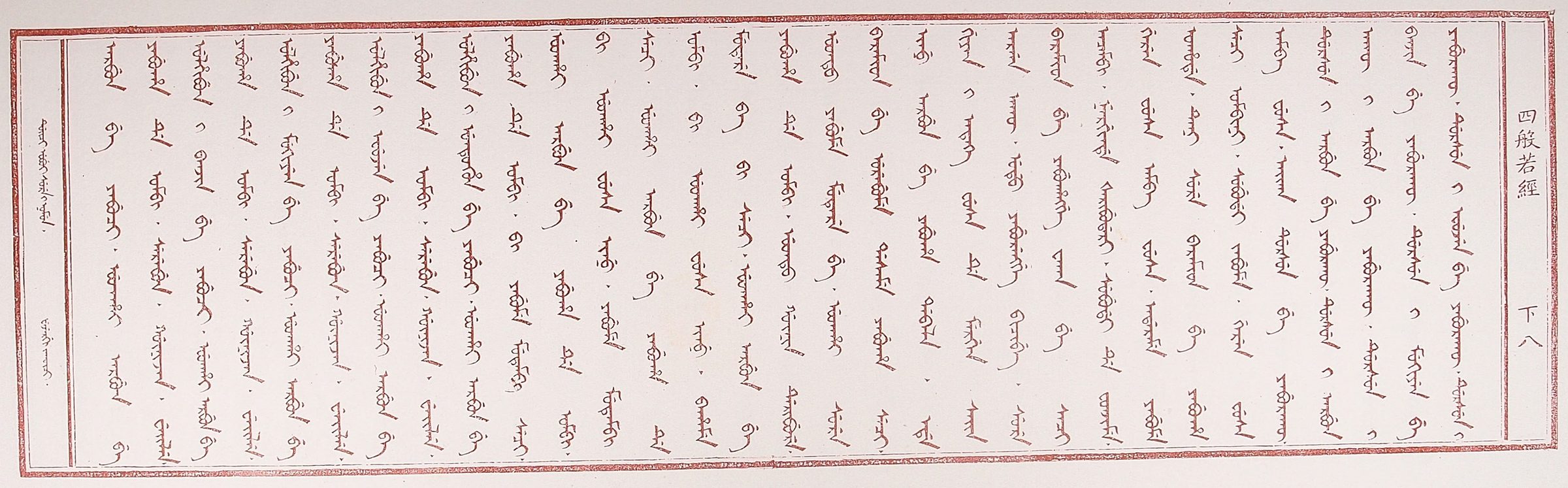 橫幅原圖 · 可左右捲動 · 點擊看大圖
三家原始輸出 · raw predictions(medoid 逐塊選骨架:nougat/nougat/donut,可自行複核)
逐詞解析 · word-by-word(217 單元 · 覆蓋 98.2%)
行於相,即為行於相。知覺、思量、罪業、誥示之生,行於相,即為行於相。知覺、思量、罪業、誥示之滅,行於相,即為行於相。知覺、思量、罪業、誥示之壞,行於相,即為行於相。知覺、思量、罪業、誥示之空,行於相,即為行於相。若謂我能行,即為行於相。若謂我即是菩薩,即為行於相。若謂我有所得處,即為行於相。如此起心、如此能行,即為修習般若波羅蜜多而行,亦不過行於相而已。因此,理宜知此等菩薩雖有種種善巧方便而行,然非行般若波羅蜜多。爾時,須菩提問諸菩薩、大菩薩:如何行時,方可謂行般若波羅蜜多?須菩提答曰:諸菩薩、大菩薩若不行體、不行體之相、不行無體之相、不行體之生、不行體之滅、不行體之壞、不行體之〔?〕
EnglishIf one practices form, then it is practicing form. The arising of perception, thought, action, and consciousness—if one practices form, then it is practicing form. The cessation of perception, thought, action, and consciousness—if one practices form, then it is practicing form. The destruction of perception, thought, action, and consciousness—if one practices form, then it is practicing form. The emptiness of perception, thought, action, and consciousness—if one practices form, then it is practicing form. If (s)he says, “I am able to practice,” then it is practicing form. If (s)he says, “I am indeed a bodhisattva,” then it is practicing form. If (s)he says, “There is a place I have attained,” then it is practicing form. Thus initiating thought and thus being able to practice—even if it is said that one cultivates and practices the perfection of wisdom, it is still merely practicing form. Therefore, it should be known that although such bodhisattvas may practice with various wise and skillful means, they are not practicing the perfection of wisdom. At that time, Subhūti asked the many bodhisattvas and great bodhisattvas: “How should one practice so that it may be said one practices the perfection of wisdom?” Subhūti answered: “If the many bodhisattvas and great bodhisattvas do not practice form, do not practice the appearance of form, do not practice the appearance of formlessness, do not practice the arising of form, do not practice the cessation of form, do not practice the destruction of form, do not practice the 〔?〕”
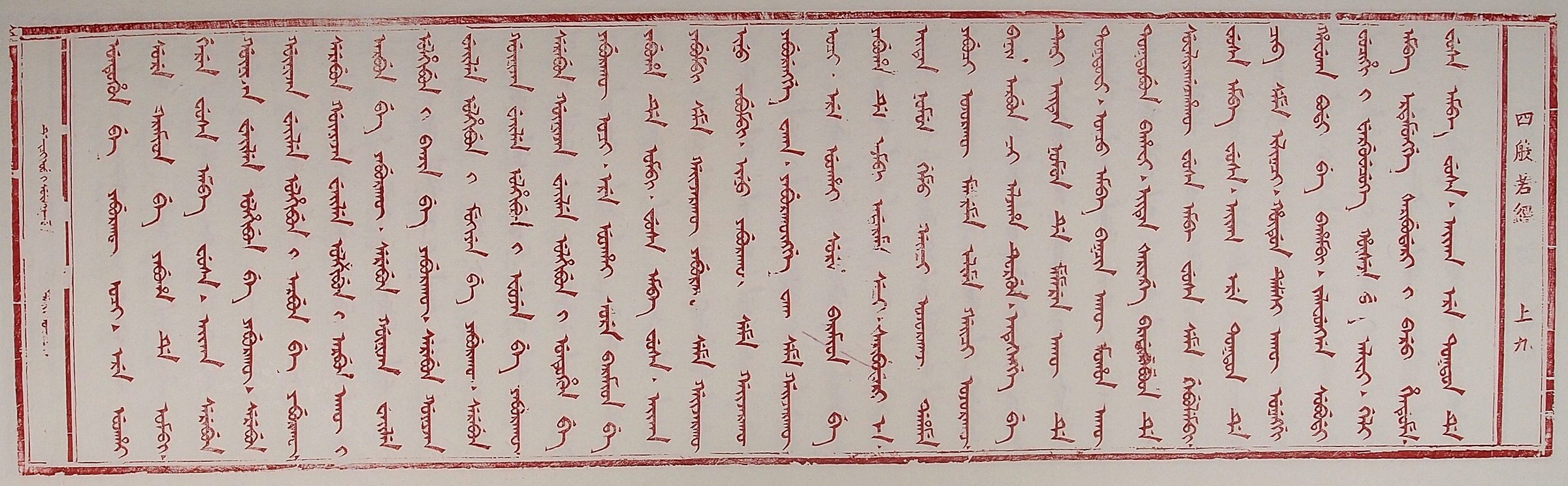 橫幅原圖 · 可左右捲動 · 點擊看大圖
三家原始輸出 · raw predictions(medoid 逐塊選骨架:nougat/res50/res50,可自行複核)
逐詞解析 · word-by-word(212 單元 · 覆蓋 91.5%)
行於空者,此即行於般若波羅蜜。諸菩薩、大菩薩,若有所覺,彼不於常、業、誥行;若有所覺,不於思量、業、誥之相行;若有所覺,不於無思量、業、誥之相行;若有所覺,不於心、業、誥之生行;若有所覺,不於心、業、誥之滅行;若有所覺,不於心、業、誥之滅行;若有所覺,不於心、業、誥之空行。行於空者,此即行於般若波羅蜜。諸菩薩、大菩薩,若行而不取,不行而不取,亦行亦不行而不取,非行非不行而不取,此即行於般若波羅蜜。何以故?舍利弗,一切經皆不可取,故不可行;如荞麥粒而立,不可取;性相離故。如此者,離性相故,方於一切經無所執著,得決定,得遼闊、無敵、無窮之定,與一切舍利弗〔?〕不相雜,名為菩薩、大菩薩。菩薩、大菩薩,若於此定悄然立止,速得彼等真實通達之菩提。具福須菩提,承佛神力,復向大德舍利弗言:菩薩、大菩薩,若於此定〔?〕
EnglishIf one courses in emptiness, this is coursing in the perfection of wisdom. All bodhisattvas, great bodhisattvas, if (they) perceive anything, (they) do not course in the constant, the deed, the proclamation; if (they) perceive anything, (they) do not course in the form of thought, deed, proclamation; if (they) perceive anything, (they) do not course in the form of no thought, deed, proclamation; if (they) perceive anything, (they) do not course in the arising of mind, deed, proclamation; if (they) perceive anything, (they) do not course in the cessation of mind, deed, proclamation; if (they) perceive anything, (they) do not course in the emptiness of mind, deed, proclamation. If one courses in emptiness, this is coursing in the perfection of wisdom. All bodhisattvas, great bodhisattvas, if (they) course without grasping, course not without grasping, both course and course not without grasping, neither course nor course not without grasping — this is coursing in the perfection of wisdom. Why is it so? Śāriputra, all scriptures are not to be grasped, therefore not to be coursed in; standing like a grain of buckwheat, not to be grasped; because of being separated from nature and form. Such ones, being separated from nature and form, only then, without clinging to any scripture, become fixed, obtain the vast, peerless, inexhaustible determination, and are not mixed with all Śāriputra〔?〕, (they) are named bodhisattvas, great bodhisattvas. Bodhisattvas, great bodhisattvas, if (they) stand still in this determination, swiftly obtain the truly penetrating bodhi of those. Blessed Subhūti, having received the Buddha's wondrous power, again spoke to the greatly virtuous Śāriputra: Bodhisattvas, great bodhisattvas, if in this determination〔?〕
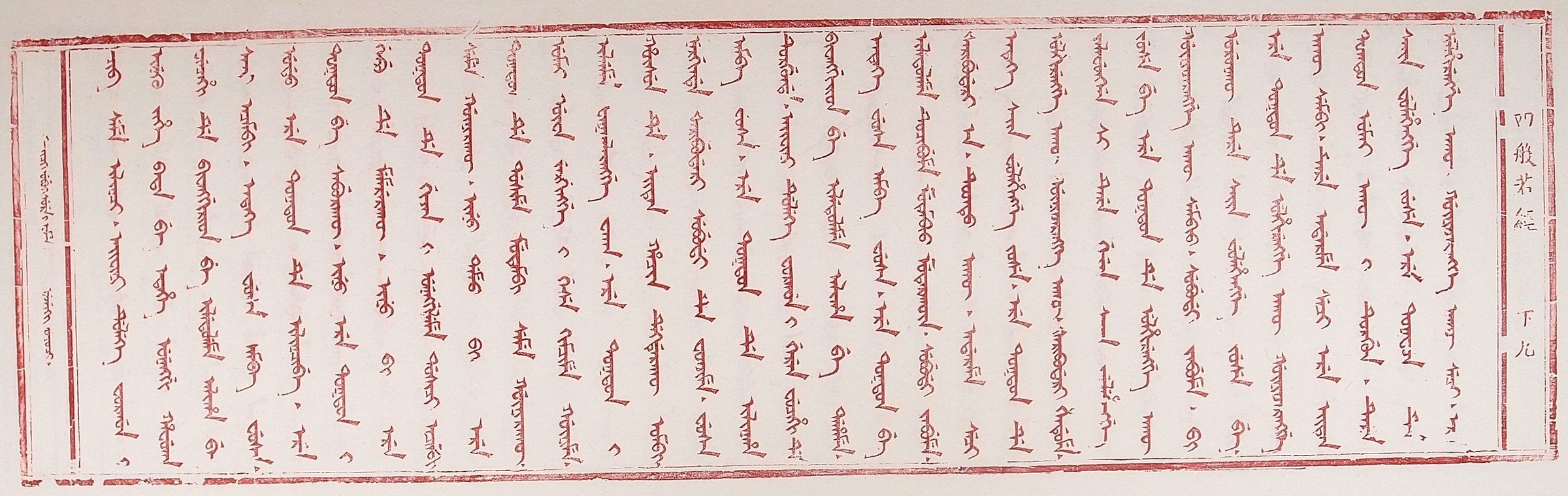 橫幅原圖 · 可左右捲動 · 點擊看大圖
三家原始輸出 · raw predictions(medoid 逐塊選骨架:donut/donut/nougat,可自行複核)
逐詞解析 · word-by-word(219 單元 · 覆蓋 90.4%)
「且住,早已過了時劫,本來的敵人已勝,眞實通達,於月輪中顯明承受,此宜相合。如此菩薩、大菩薩,雖於此定中安住,卻不見此定,亦不執著此定之名。我於此定,理宜眞誠趣入,故不思惟,亦不惟思『我能入此定』,並非如犬類般細察、思惟、分別、支撐。此定之力中,一切種類不能生起。爾時,須菩提即問:『菩薩、大菩薩,既於此定中安住,已於過去劫諸佛處顯明承受月輪,如此菩薩、大菩薩,能令此定顯現而出否?』須菩提答:『舍利弗,不然。何以故?此等善男子、善女人,於此定無所解、無所壞。』舍利弗言:『須菩提,長壽者,汝謂彼斤斤計較之諸子,於此定無所解、無所思否?』須菩提答:『我必謂彼善男子、善女人,於此定無所解、無所思。何以故?此一切定本無之故。彼善男子、善女人,若謂於此定無所思,則此……』」
English“Stay a while: the past eon has long passed, the original enemy has been conquered, truly penetrating, and in the moon-disc it has been clearly received—this is fitting. Such bodhisattvas, great bodhisattvas, though they abide in this concentration, do not see this concentration, nor do they cling to the name of this concentration. I should sincerely enter this concentration according to principle; therefore (s)he does not speculate, nor does (s)he merely speculate ‘I can enter this concentration.’ It is not like the manner of dogs—examining, thinking, discriminating, propping up. By the power of this concentration, all kinds [of thoughts] cannot arise. At that time Subhūti asked: ‘Bodhisattva, great bodhisattva, since you abide in this concentration and have clearly received the moon-disc from the buddhas of past eons, can such a bodhisattva, great bodhisattva cause this concentration to appear forth or not?’ Subhūti replied: ‘Śāriputra, it is not so. Why? These good men and good women neither understand nor destroy anything in this concentration.’ Śāriputra said: ‘Subhūti, you of long life, do you say that those children who weigh and calculate neither understand nor think anything in this concentration?’ Subhūti replied: ‘I would certainly say that those good men and good women neither understand nor think anything in this concentration. Why? Because all these concentrations are utterly without [inherent existence]. If those good men and good women are said to think nothing in this concentration, then this…’”
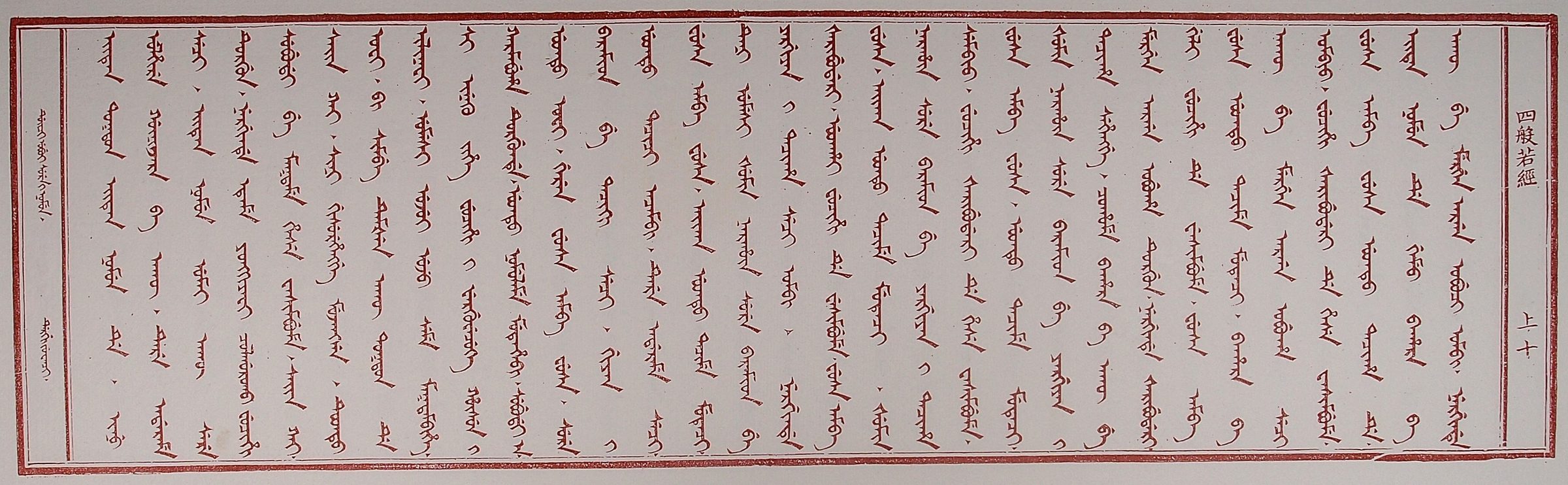 橫幅原圖 · 可左右捲動 · 點擊看大圖
三家原始輸出 · raw predictions(medoid 逐塊選骨架:nougat/donut/res50,可自行複核)
逐詞解析 · word-by-word(222 單元 · 覆蓋 91.0%)
一切定、一切經中亦無可解、可思之處。何以故?一切經本無所有,故爾時勝具超群之佛讚須菩提,降旨曰:「善哉,善哉,汝所言者誠然。故我不與汝諍,立於定中,極稱汝為第一中之第一。汝亦因蒙如來奇妙威力護佑,方能如是說法。須菩提,是故諸菩薩、大菩薩若欲學般若波羅蜜多,理應如是學。何以故?菩薩、大菩薩若能如是學,方可謂眞學甚深般若波羅蜜多。」爾時舍利弗即白佛言:「菩薩、大菩薩若能如是學,可謂眞學甚深般若波羅蜜多乎?」佛降旨舍利弗曰:「菩薩、大菩薩若能如是學,可謂以無所得為妙計,故眞學甚深般若波羅蜜多。」爾時舍利弗復白佛言:「菩薩、大菩薩若能如是學,可謂以無所得為妙計乎?」佛降旨舍利弗曰:「菩薩、大菩薩如是學時,於一切經中皆可以無所得為妙計。」爾時〔?〕
EnglishIn all fixed [teachings] and all sutras, there is also nothing to be understood or pondered. Why is that? Because all sutras are utterly without [self-nature]. Thereupon the Buddha, who had perfectly triumphed and stood transcendent, praised Subhūti, issuing an edict: “Good, good! What you have said is true. Therefore I, not contending with you, stand in the fixed [truth] and praise you most highly as the foremost of the foremost. You too, being protected by the wondrous power of the Tathāgata, have been able to preach thus. Subhūti, therefore if the many bodhisattvas, the great bodhisattvas, wish to study the perfection of wisdom, it is fitting that they study it thus. Why is that? If bodhisattvas, great bodhisattvas, are able to study thus, only then can it be said that they have truly studied the profound perfection of wisdom.” Thereupon Śāriputra immediately addressed the Buddha, saying: “If bodhisattvas, great bodhisattvas, are able to study thus, can it be said that they have truly studied the profound perfection of wisdom?” The Buddha issued an edict to Śāriputra: “If bodhisattvas, great bodhisattvas, are able to study thus, it is precisely because they have made non-attainment their skillful means that they have truly studied the profound perfection of wisdom.” Thereupon Śāriputra again addressed the Buddha, saying: “If bodhisattvas, great bodhisattvas, are able to study thus, can it be said that they have made non-attainment their skillful means?” The Buddha issued an edict to Śāriputra: “When bodhisattvas, great bodhisattvas, study thus, in all sutras they can make non-attainment their skillful means.” Thereupon 〔?〕
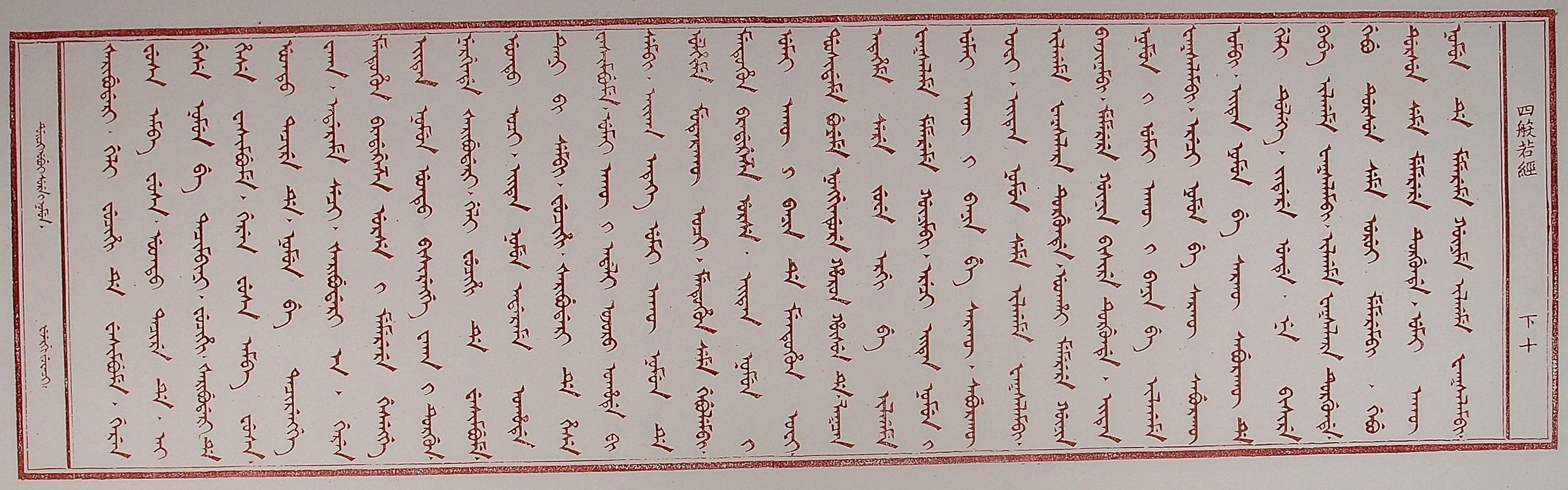 橫幅原圖 · 可左右捲動 · 點擊看大圖
三家原始輸出 · raw predictions(medoid 逐塊選骨架:donut/donut/res50,可自行複核)
逐詞解析 · word-by-word(223 單元 · 覆蓋 94.6%)
彌勒菩薩白佛言:「世尊!諸菩薩、大菩薩如是修學時,所學者何經?」佛告彌勒:「諸菩薩、大菩薩如是修學時,所學者非經。何以故?彌勒!諸愚癡凡夫所執著者,一切經皆非如是。其故,爾時彌勒復白佛言:『若如是,一切經當如何方為有?』佛告彌勒:『如無所有時,方為有。』若不能解如是無所有經,則名為愚癡。愚癡凡夫以一切經之無所有性愚癡故,貪取增益,威勢乳漿斷絕,常執二邊分別,狂吠不止。由此不知不見一切經之無所有性,故於一切經妄加分別。因分別故,即生執著之心。因有執著心故,於一切經之無所有性妄加分別。由此於經不知不見。於一切經不知不見,又於過去、未來、現在諸法妄加分別。因分別故,於名、相每每執著。因執著名、相故,於無所有經執著思惟,妄加分別。」
EnglishMaitreya Bodhisattva addressed the Buddha: “World-Honored One! When the bodhisattvas and great bodhisattvas thus study, what sutra is it that they study?” The Buddha gave instruction to Maitreya: “When the bodhisattvas and great bodhisattvas thus study, what is studied is not a sutra. Why is this? Maitreya, that to which foolish ordinary people cling—all sutras are not thus. For this reason, Maitreya again addressed the Buddha: ‘If it is so, how must all sutras be in order to exist?’ The Buddha gave instruction to Maitreya: ‘When they become like non-existence, they exist.’ If one cannot understand such a sutra of non-existence, one is called foolish. Because foolish ordinary people are foolish regarding the non-existence nature of all sutras, they greedily grasp and increase; the power and milk are cut off; they constantly discriminate the two extremes and bark on. From this, not knowing and not seeing the non-existence nature of all sutras, they discriminate all sutras. Because of discriminating, clinging thought arises. Because clinging thought exists, they discriminate the non-existence nature of all sutras. From this, the sutra is not known and not seen. In not knowing and not seeing all sutras, they further discriminate past, future, and present things. Because of discriminating, they always cling to name and form. Because of clinging to name and form, they cling to and think upon the sutra of non-existence, and discriminate.”
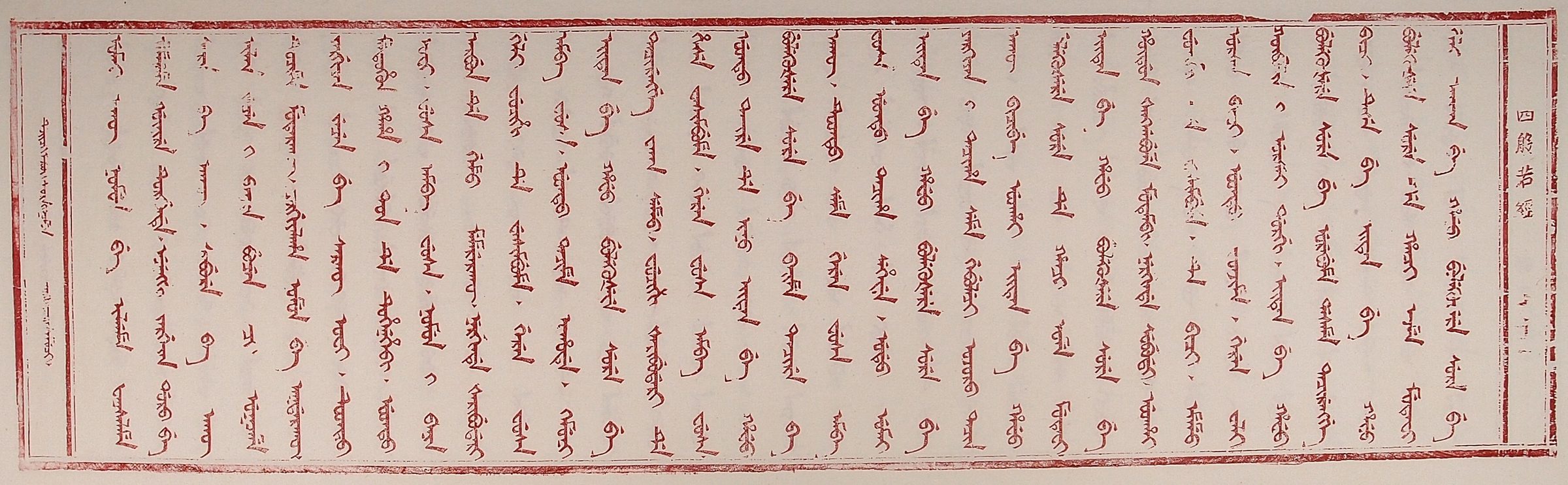 橫幅原圖 · 可左右捲動 · 點擊看大圖
三家原始輸出 · raw predictions(medoid 逐塊選骨架:donut/donut/res50,可自行複核)
逐詞解析 · word-by-word(211 單元 · 覆蓋 91.0%)
第四、第一,並無分別經義、祖母〔?〕之故,今日於真實之道,無所見、無所覺。三盤道之本性,雖能避死,然因不信所驗之一處,不知章佳邊疆,故墮於愚夫之數。是以,菩薩、大菩薩於經之性相皆不執著。臨時舍利弗又白佛言:諸菩薩、大菩薩如是學時,猶非學通達一切之智乎?佛降旨於舍利弗:諸菩薩、大菩薩如是學時,亦無所學通達一切之智。雖然,諸菩薩、大菩薩如是學已,雖無實學通達一切之智而可名之學,然即能近於通達一切之智,速成通達一切之智。時須菩提即從座起,合掌白佛言:諸〔?〕眾中,若有修習通達一切之智者,彼等可近於通達一切之智,又復〔?〕通達一切之智〔?〕
EnglishFourth, first, without distinguishing the sutra's meaning, because of grandmother〔?〕, today in the true Way there is nothing to be seen, nothing to be perceived. The nature of the three winding paths, though able to escape death, yet because (one) did not believe the one verified place, and did not know the Zhanggiya frontier, therefore (one) fell into the number of foolish men. Therefore, bodhisattvas and great bodhisattvas do not cling to the nature and form of the sutra. At that time Śāriputra again addressed the Buddha, saying: When the bodhisattvas and great bodhisattvas study thus, is it not studying the wisdom that penetrates all? The Buddha issued an edict to Śāriputra: When the bodhisattvas and great bodhisattvas study thus, there is also nothing to be studied in the wisdom that penetrates all. Although it is so, when the bodhisattvas and great bodhisattvas have studied thus, although there is no study that can truly be named as studying the wisdom that penetrates all, yet (they) can immediately draw near to the wisdom that penetrates all, and quickly accomplish the wisdom that penetrates all. At that time Subhūti immediately rose from (his) seat, joined (his) palms, and asked the Buddha, saying: Among the multitude of〔?〕, if there are those who cultivate and practice the wisdom that penetrates all, they can draw near to the wisdom that penetrates all, and again〔?〕 the wisdom that penetrates all〔?〕
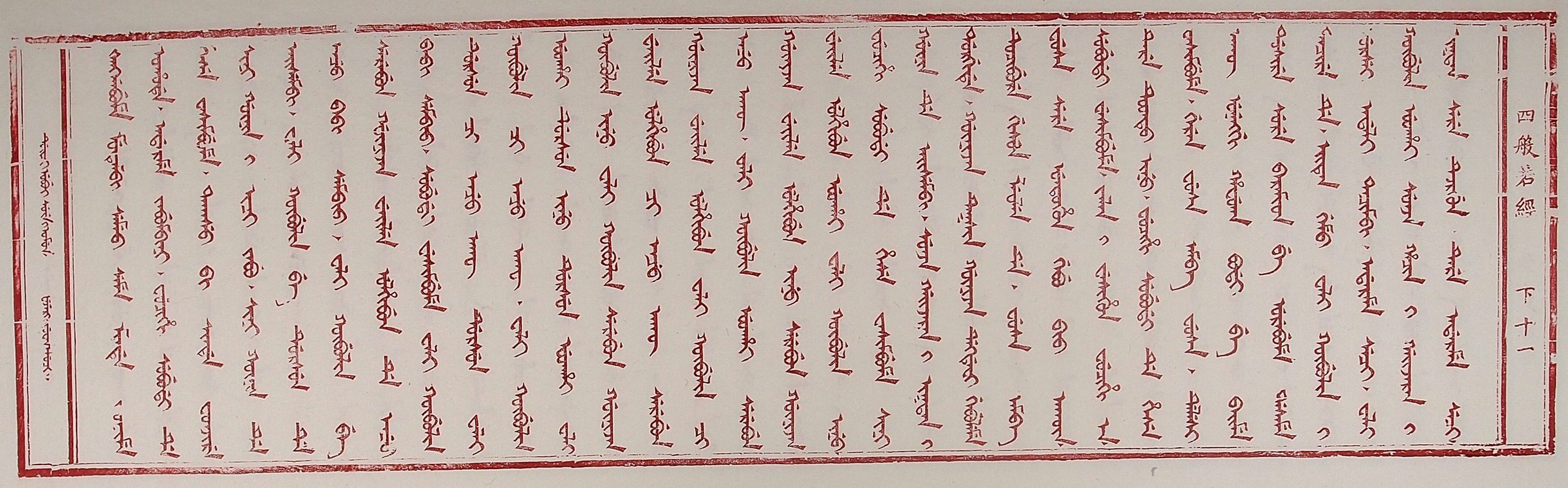 橫幅原圖 · 可左右捲動 · 點擊看大圖
三家原始輸出 · raw predictions(medoid 逐塊選骨架:res50/nougat/nougat,可自行複核)
逐詞解析 · word-by-word(204 單元 · 覆蓋 91.7%)
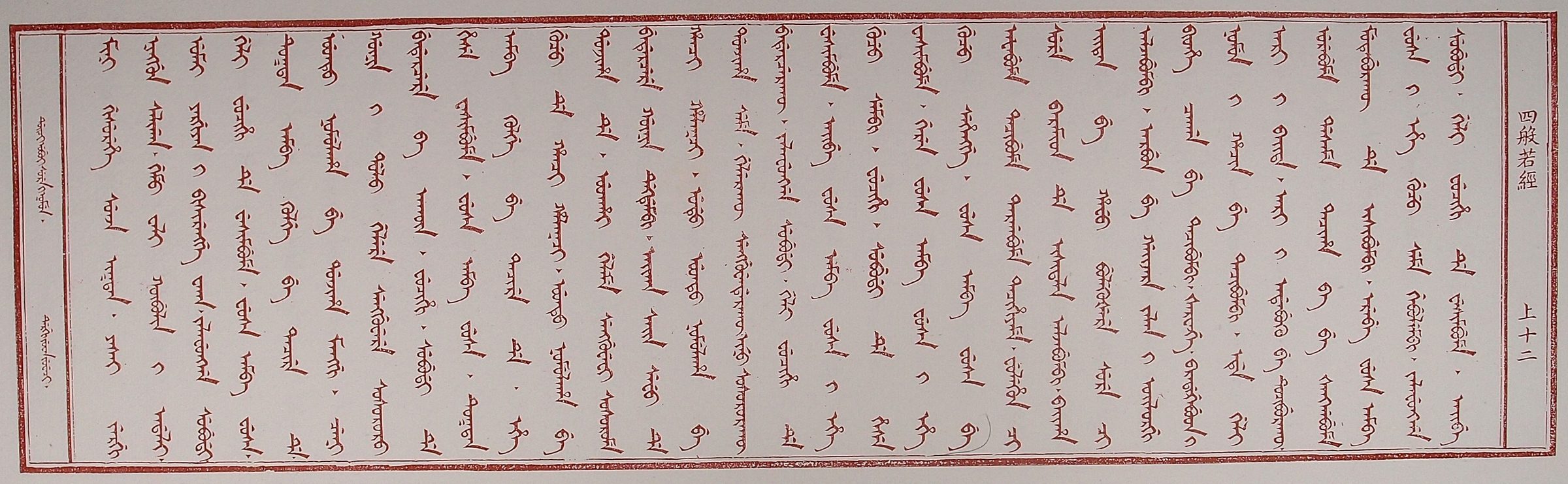
須菩提,能令心平靜、安息否?若於我有所問,當如何答?佛告須菩提:「且住,我問汝,隨汝意而答。汝意中,變化與形體有異否?幻化與知覺、思惟、造作、了別有異否?」須菩提白佛言:「幻化與形體無異,形體即幻化,幻化即形體。幻化與知覺、思惟、造作、了別亦無異,知覺、思惟、造作、了別即幻化,幻化即知覺、思惟、造作、了別。」佛告須菩提:「汝意云何?五取蘊中,有平等思惟生起,名為言說、議論中之菩薩、大菩薩,此是虛名否?」須菩提白佛言:「世尊,如是,如是。」佛告須菩提:「諸菩薩、大菩薩,欲趣入無上眞實通達之菩提,修習、磨鍊般若波羅蜜多時,一切皆如幻化之人而學。何以故?幻化即五取蘊之執取,所謂滋養。何以故?」
EnglishSubhūti, can (the mind) be pacified and brought to rest? If (you) ask me, how should (I) answer? The Buddha decreed to Subhūti: “Wait, I ask you; answer according to your own thought. In your thought, is there any difference between transformation and form? Is there any difference between illusion and perception, thought, formation, and consciousness?” Subhūti replied: “Illusion is not different from form; form is illusion; illusion is form. Illusion is not different from perception, thought, formation, and consciousness; perception, thought, formation, and consciousness are illusion; illusion is perception, thought, formation, and consciousness.” The Buddha decreed to Subhūti: “In your thought, what is said? Among the five aggregates of clinging, when even thought arises and is named, is ‘bodhisattva, great bodhisattva’ in speech and discourse an empty name, or not?” Subhūti replied: “World-honored One, it is so, it is so.” The Buddha decreed to Subhūti: “When all bodhisattvas, great bodhisattvas seek to enter the supreme, truly penetrating bodhi and train and refine the perfection of wisdom, they all learn in the manner of illusory persons. Why is this? Illusion is the clinging of the five aggregates, that is, what is called sustenance. Why is this?”
 橫幅原圖 · 可左右捲動 · 點擊看大圖
三家原始輸出 · raw predictions(medoid 逐塊選骨架:nougat/donut/nougat,可自行複核)
逐詞解析 · word-by-word(204 單元 · 覆蓋 95.6%)
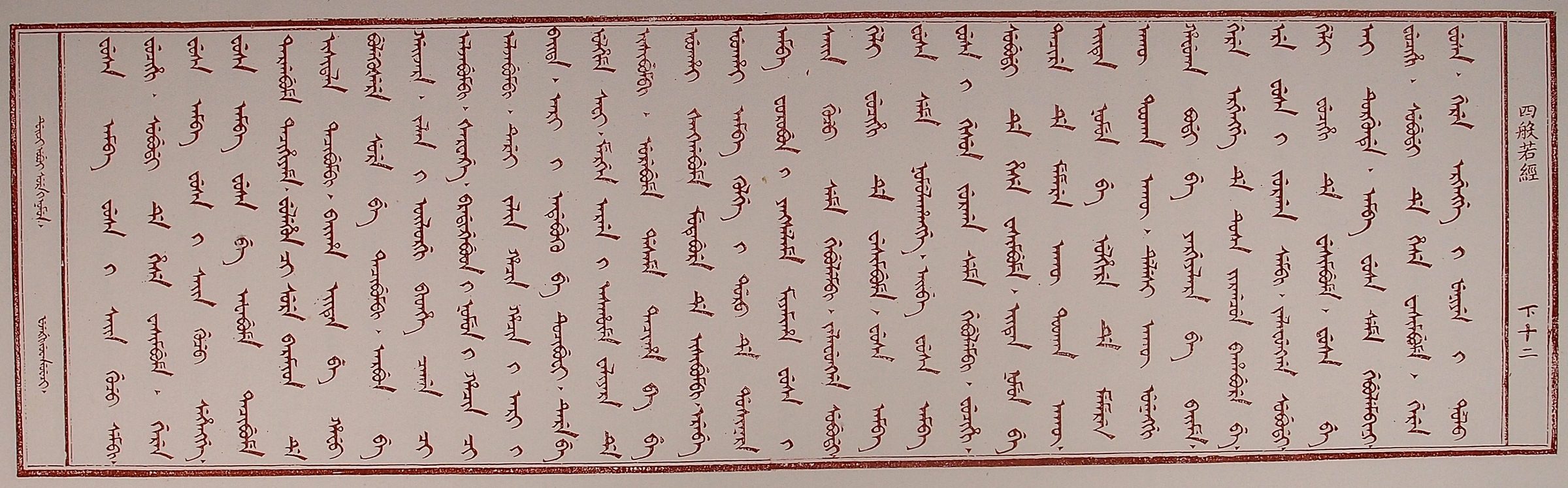
我所說的五種積聚、眼等六種略境,皆如幻化變現,並非實有。壽命具足者須菩提又向佛啟奏:「菩薩、大菩薩初學大乘時,聽聞如是說法之後,他們心中豈無畏懼、退縮之處?」佛向須菩提降旨:「菩薩、大菩薩初學大乘時,若親近惡友,聽聞如是說法,便生畏懼,退縮之心即起;若親近善師,雖聽聞如是說法,亦不畏懼、不退縮。」壽命具足者須菩提又向佛啟奏:「何謂菩薩、大菩薩之惡友?」佛向須菩提降旨:「所謂眾菩薩、大菩薩之惡友者,令菩薩、大菩薩交付、教導、警戒、訓誨,自恩惠至於般若波羅蜜多,令其離棄;自洞鑑之智,令其離棄一切所求;教以取相之世間典籍;教以聲聞、辟支佛之經類。由此又令其不顯發惡魔之事、惡魔之過失,令其不能修習、改正所學之處,成就所學。此即名為菩薩、大菩薩之惡友。」壽命具足者須菩提又向佛啟奏:「何謂……」
EnglishThe five accumulations I have spoken of, and the six lesser sense-spheres such as the eyes, are all like magical illusions and transformations, not truly existing. The long-lived Subhūti again addressed the Buddha, saying: “When bodhisattvas, great bodhisattvas, first study the Great Vehicle, upon hearing such teaching, is there no place in their minds for fear, dread, shrinking back, or retreat?” The Buddha issued a decree to Subhūti: “When bodhisattvas, great bodhisattvas, first study the Great Vehicle, if they draw near to evil friends, then upon hearing such teaching they immediately fear and dread, and the thought of shrinking back and retreating arises. If they draw near to a good teacher, even though they hear such teaching, they do not fear, do not dread, and do not shrink back or retreat.” The long-lived Subhūti again addressed the Buddha, saying: “What is called the evil friend of bodhisattvas, great bodhisattvas?” The Buddha issued a decree to Subhūti: “That which is called the evil friend of the many bodhisattvas, great bodhisattvas, is one who causes bodhisattvas, great bodhisattvas to be handed over, taught, warned, and instructed, yet causes them to be separated from grace up to the Perfection of Wisdom; causes them to be separated from the wisdom that thoroughly mirrors all that is sought; teaches them worldly books that grasp at appearances; teaches them the classes of scriptures of the śrāvakas and pratyekabuddhas. Thereby also, not bringing forth the deeds of the evil spirit and the faults of the evil spirit, (s)he brings them to the point where they cannot cultivate, correct, and perfect what they have studied. This is called the evil friend of bodhisattvas, great bodhisattvas.” The long-lived Subhūti again addressed the Buddha, saying: “What…”
 橫幅原圖 · 可左右捲動 · 點擊看大圖
三家原始輸出 · raw predictions(medoid 逐塊選骨架:donut/donut/donut,可自行複核)
逐詞解析 · word-by-word(218 單元 · 覆蓋 94.0%)
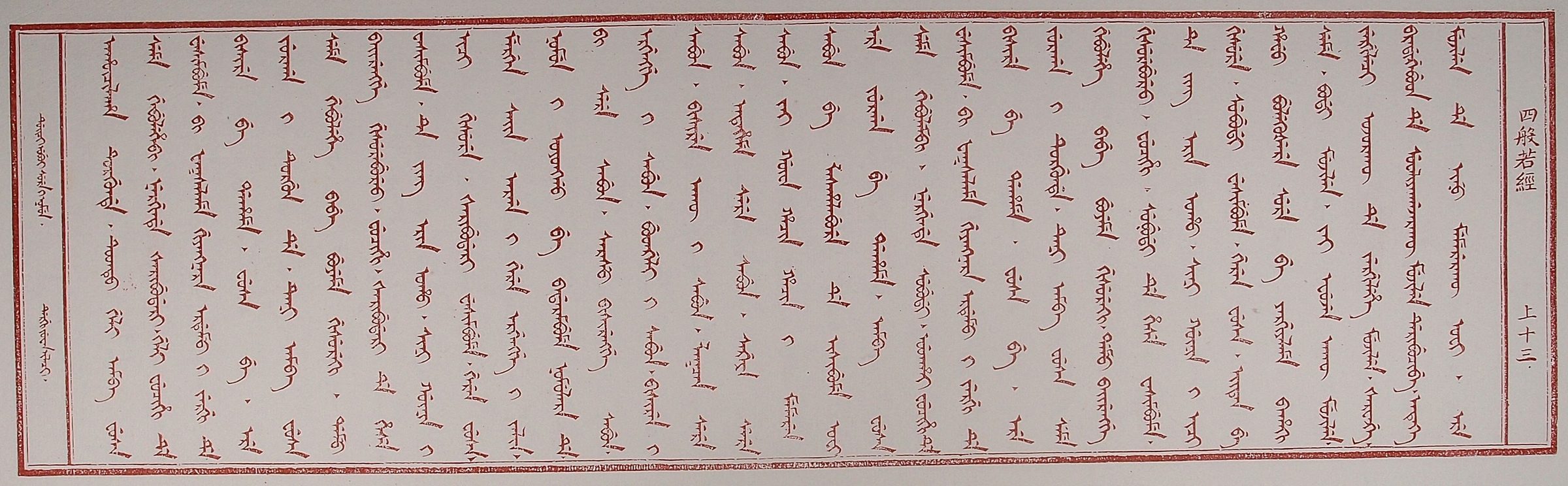
佛告須菩提:「諸菩薩、大菩薩之善友者,乃付囑、教誡、訓誨諸菩薩、大菩薩,自恩惠至於般若波羅蜜多而教之;凡所尋求,皆令通達明鑒;教此般若;取相之世間淺書,令離白淨;詐偽、虛構之經類,令離之。為此,令出種種魔事、魔過,知解彼已,以妙計擯棄之;熟練復修所學之處,即令能成就之。此即入大乘之道、以大願莊嚴之菩薩善友,是為稱名。」壽命具足須菩提復白佛言:「所稱菩薩、大菩薩者,何故名為菩薩、大菩薩之語義?」佛告須菩提:「凡學諸經時,不執、不滯;凡解諸經時,不執、不滯、不偏、真實通達,求證菩提,令眾生得利益安樂,此即菩薩之義。」壽命具足須菩提復白佛言:「菩薩以何故稱名為大菩薩?」佛告須菩提:「諸菩薩於諸眾生之群中……」
EnglishThe Buddha issued a decree to Subhūti: “What is called the good friend of the bodhisattvas and great bodhisattvas is this: entrusting, teaching, admonishing, and instructing the bodhisattvas and great bodhisattvas, (s)he teaches from grace up to the Perfection of Wisdom; whatever is sought, (s)he makes fully understood and illuminated; (s)he teaches this wisdom; the superficial worldly books that grasp at forms are made to be separated from the pure white; the deceitful and fabricated kinds of scriptures are made to be separated from them. For that reason, the various deeds of demons and the faults of demons are brought forth; having understood and known them, by skillful means they are cast aside and rejected. Having trained and again cultivated what has been learned, (s)he brings it to the point of being able to accomplish it. This is what is named the good friend of the bodhisattva who enters the way of the Great Vehicle and is adorned with the great vow.” The long-lived Subhūti again rose to speak to the Buddha: “As for what is called bodhisattva and great bodhisattva, what is named the meaning of the words ‘bodhisattva’ and ‘great bodhisattva’?” The Buddha issued a decree to Subhūti: “In learning all scriptures, without clinging and without delay; in understanding all scriptures, without clinging, without hindrance, without partiality, truly penetrating, seeking to verify bodhi, and causing all living beings to obtain benefit and happiness—this is called the meaning of bodhisattva.” The long-lived Subhūti again rose to speak to the Buddha: “For what reason is a bodhisattva named a great bodhisattva?” The Buddha issued a decree to Subhūti: “The bodhisattvas, within the multitude of all living beings……”
 橫幅原圖 · 可左右捲動 · 點擊看大圖
三家原始輸出 · raw predictions(medoid 逐塊選骨架:res50/donut/donut,可自行複核)
逐詞解析 · word-by-word(220 單元 · 覆蓋 93.6%)
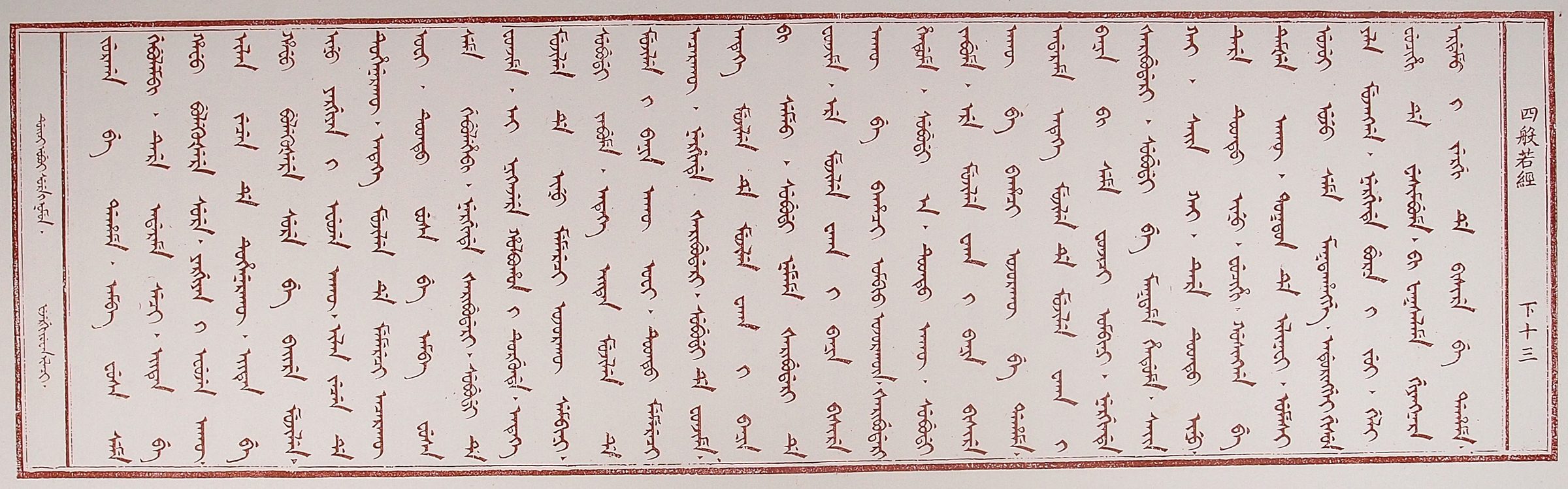
因自居長者,故又稱爲大菩薩。時舍利弗又白佛言:「我於分別講說功德之品中,既在,願說菩薩因此義故,方稱大菩薩之處,惟願令說。」佛降旨舍利弗:「今正其時,隨汝之意說。」舍利弗白言:「諸菩薩以善巧方便,爲諸衆生廣說經中要義。有見、有見衆生、有見聚、有有見、有無見、有斷見、有常見、有有見,及種種妄執之見,皆令斷除。因此義故,稱爲大菩薩。」時須菩提即白佛言:「我於分別講說功德之品中,既在,願說菩薩因此義故,方稱大菩薩之處,惟願令說。」佛降旨須菩提:「今正其時,隨汝之意說。」須菩提白言:「諸菩薩通達一切,欲實證此智,故於菩提心及不壞心、非尋常可比之心、並列之心、與生俱來不雜之心,雖起如是心亦不執著,因此〔?〕
EnglishBecause (he) took the position of elder, therefore (he) was also called a great bodhisattva. At that time Śāriputra again addressed the Buddha, saying: “Since I am among those of the rank of the virtue of analytical exposition, I wish to speak of the point by reason of which the bodhisattva is only then called a great bodhisattva; only let it be spoken.” The Buddha issued a decree to Śāriputra: “Now is just the time; speak according to your thought.” Śāriputra addressed (the Buddha), saying: “The bodhisattvas, by good and skillful means, for the sake of all living beings, expand and expound the essential points of the scriptures. There is the view of existence, the view of living beings, the view of a collection, the view of existence, the view of non-existence, the view of annihilation, the view of eternity, the view of existence, and all manner of clinging views — (they) cause (these) to be cut off. By reason of this principle, (they) are called great bodhisattvas.” At that time Subhūti immediately addressed the Buddha, saying: “Since I am among those of the rank of the virtue of analytical exposition, I wish to speak of the point by reason of which the bodhisattva is only then called a great bodhisattva; only let it be spoken.” The Buddha issued a decree to Subhūti: “Now is just the time; speak according to your thought.” Subhūti addressed (the Buddha), saying: “The bodhisattvas penetrate all things. Wishing to verify this wisdom, therefore in the mind of awakening and the indestructible mind, the mind beyond comparison, the mind made equal, the mind not mixed from the very beginning — although such a mind arises, (they) also do not cling to it. Therefore 〔?〕
 橫幅原圖 · 可左右捲動 · 點擊看大圖
三家原始輸出 · raw predictions(medoid 逐塊選骨架:res50/nougat/nougat,可自行複核)
逐詞解析 · word-by-word(209 單元 · 覆蓋 92.3%)
「度一切智」名大菩薩,何以故?通達鑑照之智,實無壞,不墮三際;求通達鑑照之智之心,亦實無壞,不墮三際。如此之心不應執著,故稱菩薩為大菩薩。爾時,舍利弗問須菩提:「以何因緣,如此之心亦不可執著?」須菩提答:「如此一切心,以心無自性故,不應執著。」爾時,舍利弗問須菩提:「如此心中,有非心之性乎?」須菩提先問舍利弗:「此有非心之性者,可得乎?不可得乎?」舍利弗曰:「須菩提,不然。」須菩提答:「此有非心之性者既不可得,云何可問如此心中有非心之性乎?」爾時,舍利弗讚須菩提曰:「善哉,善哉!如是如是。佛於無諍定中,讚為最上首者,聖言誠然。」爾時,富樓那之子復白佛言:「我於分別講說之德等中〔?〕」
English“One who has crossed over all wisdom” is called a great bodhisattva. Why is this so? The wisdom that penetrates and illumines all is truly without decay and does not fall into the three realms; the mind that seeks the wisdom that penetrates and illumines all is also truly without decay and does not fall into the three realms. Because such a mind should not be clung to, therefore the bodhisattva is called a great bodhisattva. At that time, Śāriputra asked Subhūti: “For what reason of connection is it that such a mind also cannot be clung to?” Subhūti answered: “Because all such minds have no nature of mind, therefore they should not be clung to.” At that time, Śāriputra asked Subhūti: “In such a mind, is there a nature that is not mind?” Subhūti first asked Śāriputra: “Can this thing that has a nature which is not mind be obtained, or not?” Śāriputra said: “Subhūti, it is not so.” Subhūti answered: “Since this thing that has a nature which is not mind cannot be obtained, how can it be asked whether in such a mind there is a nature that is not mind?” At that time, Śāriputra praised Subhūti, saying: “Good, good! It is so, it is so. That which the Buddha, in the samādhi of non-contention, praised as the foremost of the foremost—the words of the sage are indeed true.” At that time, the son of Pūrṇa again addressed the Buddha, saying: “Since I am among those of the virtue of analytical exposition…” 〔?〕
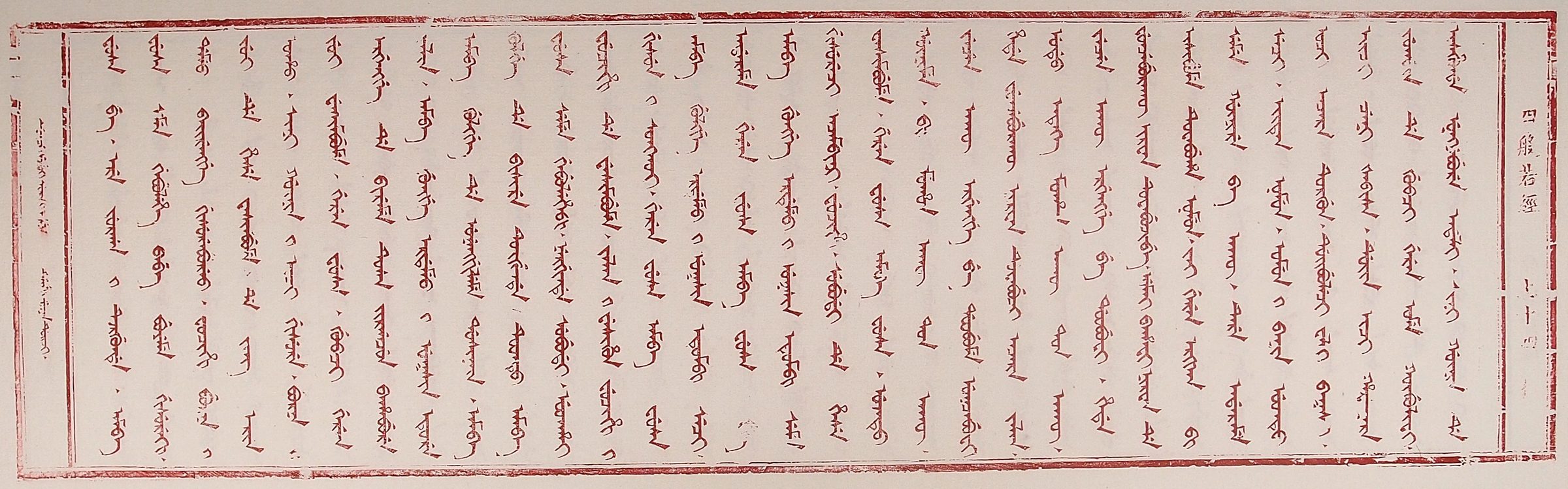 橫幅原圖 · 可左右捲動 · 點擊看大圖
三家原始輸出 · raw predictions(medoid 逐塊選骨架:donut/donut/nougat,可自行複核)
逐詞解析 · word-by-word(214 單元 · 覆蓋 92.1%)
菩薩。因此義故,於此大菩薩稱名之處,願為宣說。惟願世尊為諸眾生宣說,令彼等得聞。時,時節已至,其自心所念,與眾不同。諸菩薩普令一切眾生悉得安樂,以大山、大功德、大甲胄,精勤趣入大乘,具足大乘。以此因緣,名為大菩薩。爾時,須菩提即白佛言:「世尊!若依佛語,諸菩薩、大菩薩著大功德甲胄,云何諸菩薩、大菩薩名為著大功德甲胄?」佛告須菩提:「諸菩薩、大菩薩應如是念:我當滅度無量、無數、無邊眾生,令無餘涅槃。雖滅度如是無量、無數、無邊眾生,令無餘涅槃,而實無有一眾生得滅度者。何以故?須菩提!若菩薩有我相、人相、眾生相、壽者相,即非菩薩。復次,須菩提!一切法皆同一性,若如是者,則不應有所謂。譬如幻師及其弟子,於四衢道中化作大眾,互相惱害。於汝意云何?」
EnglishBodhisattva. For this reason, at the place where (they) are called great Bodhisattvas, (I) wish to speak. Only (I) pray: may (the Buddha) proclaim (it) to the children of the land. The time has come. His/their(?) own thoughts, being spoken differently from others, (they) present (it) upward. All Bodhisattvas, bringing ease and happiness to all living beings universally, with great mountain, great merit, and armor, sincerely enter into the great vehicle. Because of this, (they) are called great Bodhisattvas. At that time Subhūti immediately addressed the Buddha, saying: “World-Honored One, if according to the Buddha’s words the Bodhisattvas, the great Bodhisattvas, are to put on the armor of great merit, how should the Bodhisattvas, the great Bodhisattvas, be said to put on the armor of great merit?” The Buddha issued a decree to Subhūti: “The Bodhisattvas, the great Bodhisattvas, should think thus: ‘I shall cause measureless, countless, boundless living beings to cross over, causing them to enter nirvāṇa without remainder. Although (I) cause such measureless, countless, boundless living beings to cross over and enter nirvāṇa without remainder, there is not any living being who has been caused to attain nirvāṇa.’ Why is this so? Subhūti, if a Bodhisattva has the notion of a self, the notion of a person, the notion of a living being, or the notion of a life-span, (that one) is not a Bodhisattva. Furthermore, Subhūti, all dharmas are of one nature; if this is so, then there should be no such designation. It is like an illusionist and his disciples conjuring a great crowd at a crossroads, who harm one another. What do you think?”
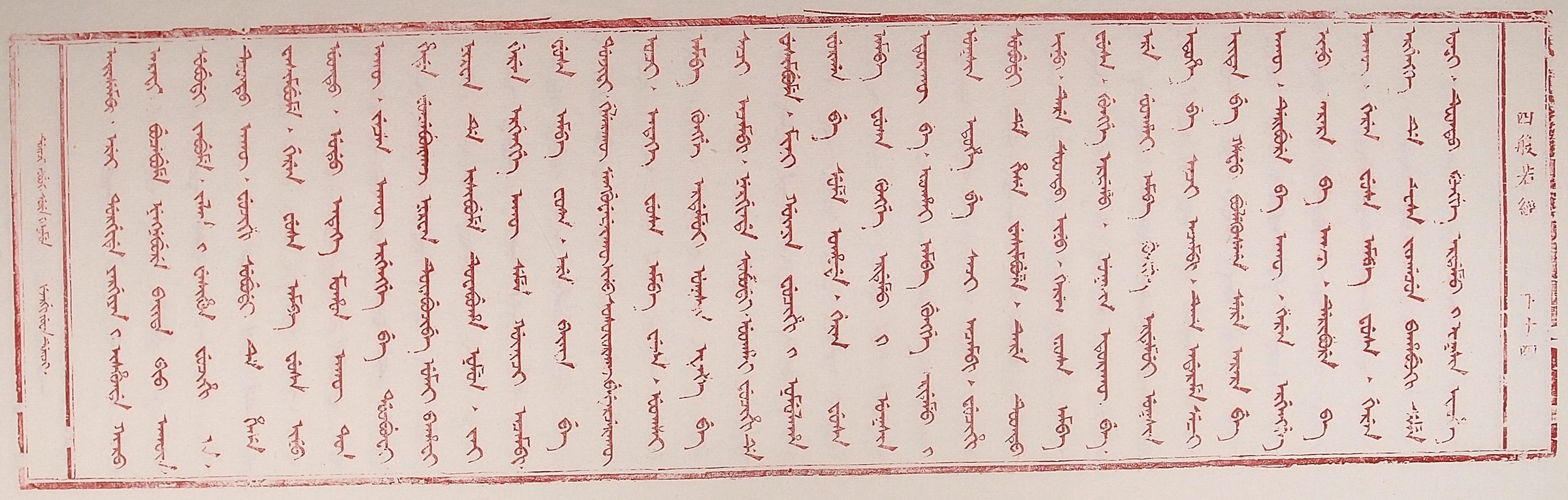 橫幅原圖 · 可左右捲動 · 點擊看大圖
三家原始輸出 · raw predictions(medoid 逐塊選骨架:res50/donut/donut,可自行複核)
逐詞解析 · word-by-word(205 單元 · 覆蓋 91.7%)
〔?〕此中有眞實互相樹立旗幟、致令死生之事否?須菩提答言:世尊,佛不然。佛告須菩提:諸菩薩、大菩薩亦如是。雖以如是無量、無數、無邊眾生度之,令無餘殘存,示現涅槃,然實不能令至涅槃。經又言:當觀諸眾生為無。菩薩、大菩薩若聞此事,不懼、不驚、不怖、不畏,則當知是等菩薩、大菩薩即著大功德之甲。時須菩提即白佛言:世尊,若解佛所說義,則諸菩薩、大菩薩不著功德之甲,即當知已著大功德之甲。佛告須菩提:如是如是。諸菩薩、大菩薩不著功德之甲,此即當知已著大功德之甲。何謂?一切割刈、〔?〕、造作皆無,無起始之處;諸眾生亦無造作、無起始之處。諸菩薩、大菩薩為令諸眾生得利益故,如是著功德之甲〔?〕。
English〔?〕 Is there in this a matter of truly setting up banners against one another and causing death and life? Subhūti answered: World-honoured One, the Buddha is not so. The Buddha gave instruction to Subhūti: All bodhisattvas and great bodhisattvas are also thus. Although beings—so many, without end, without number, without limit—are caused to cross over, and not a remnant is left remaining, and nirvāṇa is displayed, yet they cannot actually be brought to nirvāṇa. The sūtra also says: beings should be regarded as non-existent. If bodhisattvas and great bodhisattvas, upon hearing this matter, do not fear, are not startled, are not terrified, and do not tremble, then it should be known that such bodhisattvas and great bodhisattvas have straightway put on the armour of great merit. At that time Subhūti straightway addressed the Buddha, saying: World-honoured One, if the meaning taught by the Buddha is explained, then when bodhisattvas and great bodhisattvas do not put on the armour of merit, it should be known that they have put on the armour of great merit. The Buddha instructed Subhūti: So it is, so it is. When bodhisattvas and great bodhisattvas do not put on the armour of merit, this should be known as having put on the armour of great merit. What is meant? All cutting, 〔?〕, and making are non-existent; there is no point of beginning. Beings also have no making and no point of beginning. Because bodhisattvas and great bodhisattvas wish to bring benefit to beings, they thus put on the armour of merit 〔?〕.
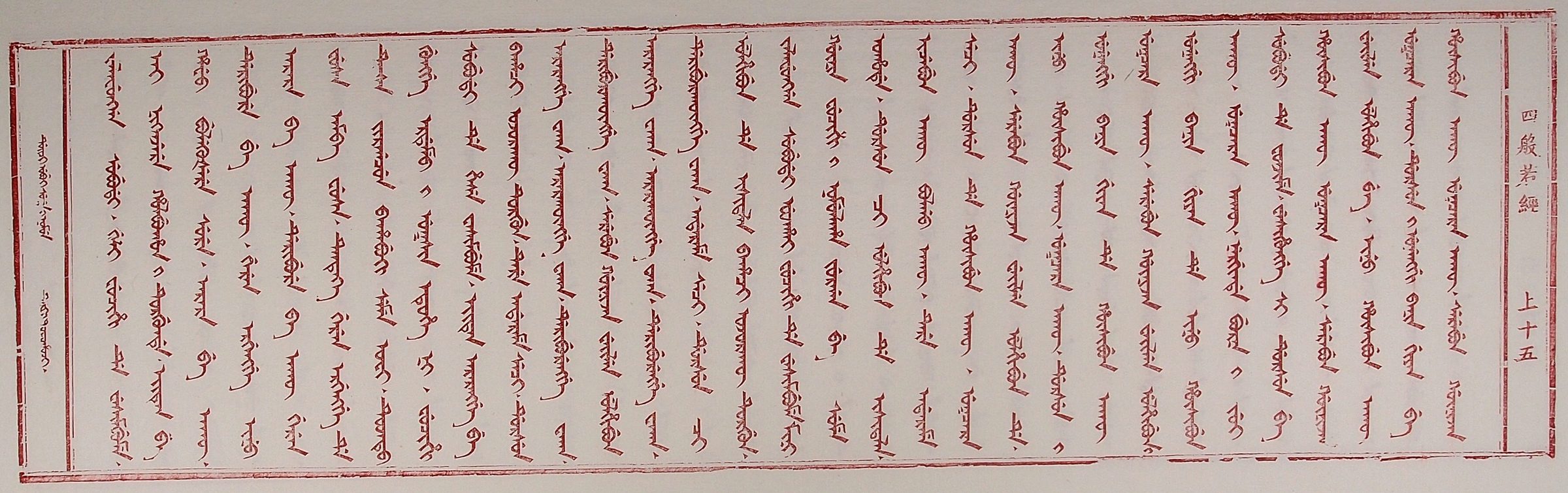 橫幅原圖 · 可左右捲動 · 點擊看大圖
三家原始輸出 · raw predictions(medoid 逐塊選骨架:nougat/donut/donut,可自行複核)
逐詞解析 · word-by-word(224 單元 · 覆蓋 91.5%)
善現復白佛言:「世尊,頗有眾生,得聞如是言說章句,生實信不?」佛告須菩提:「莫作是說。如來滅後,後五百歲,有持戒修福者,於此章句能生信心,以此為實。當知是人,不於一佛二佛三四五佛而種善根,已於無量千萬佛所種諸善根。聞是章句,乃至一念生淨信者。須菩提,如來悉知悉見,是諸眾生得如是無量福德。何以故?是諸眾生無復我相、人相、眾生相、壽者相,無法相,亦無非法相。何以故?是諸眾生若心取相,則為著我、人、眾生、壽者。若取法相,即著我、人、眾生、壽者。何以故?若取非法相,即著我、人、眾生、壽者。是故不應取法,不應取非法。以是義故,如來常說:汝等比丘,知我說法,如筏喻者。法尚應捨,何況非法。」
EnglishSubhūti again addressed the Buddha, saying: “World-honoured One, will there be any beings who, hearing such words and phrases as these, give rise to true faith?” The Buddha told Subhūti: “Do not speak thus. After the Tathāgata has passed away, in the last five hundred years, there will be those who keep the precepts and cultivate merit, who can give rise to faith in these phrases and take them as true. Know that such persons have planted good roots not with one Buddha, two Buddhas, three, four, or five Buddhas, but have already planted good roots with immeasurable thousands of myriads of Buddhas. Hearing these phrases, they give rise to even a single thought of pure faith. Subhūti, the Tathāgata fully knows and fully sees them; those beings thus obtain immeasurable merit. Why? Because those beings have no further mark of self, mark of person, mark of beings, or mark of life; they have no mark of dharma, and also no mark of non-dharma. Why? If the minds of those beings grasp at marks, then they cling to self, person, beings, and life. If they grasp at the mark of dharma, they cling to self, person, beings, and life. Why? If they grasp at the mark of non-dharma, they cling to self, person, beings, and life. Therefore one should not grasp at dharma, and should not grasp at non-dharma. For this reason the Tathāgata always says: ‘You monks, know that my teaching of the Dharma is like the parable of the raft. Even the Dharma should be relinquished, how much more so what is not the Dharma.’”
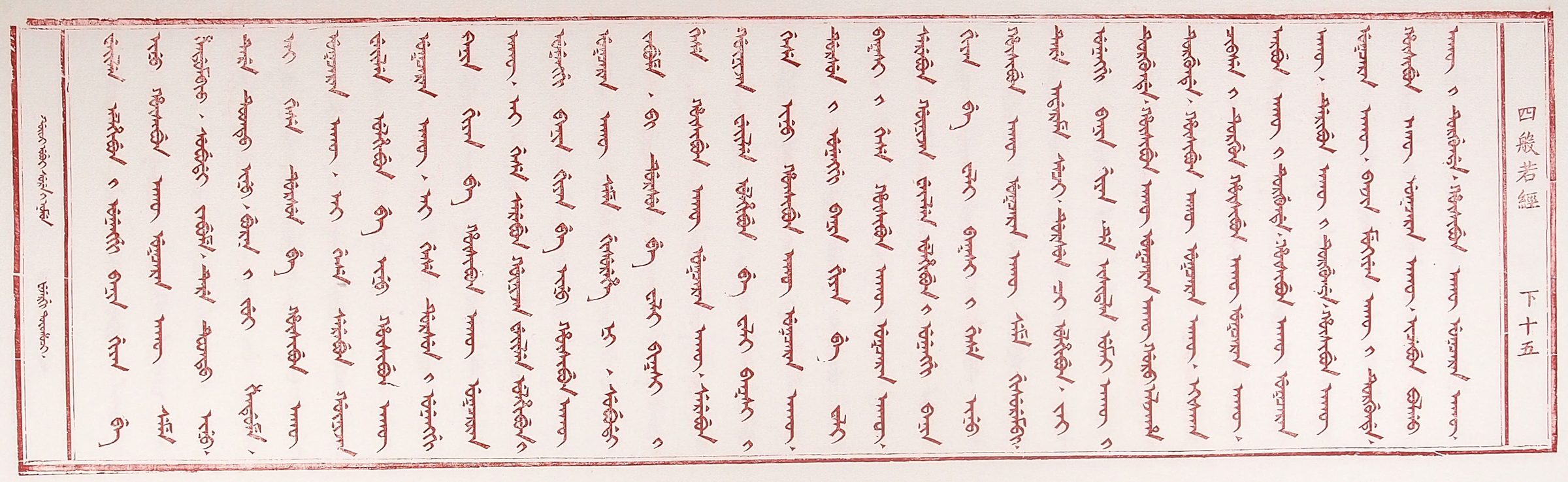 橫幅原圖 · 可左右捲動 · 點擊看大圖
三家原始輸出 · raw predictions(medoid 逐塊選骨架:donut/nougat/nougat,可自行複核)
逐詞解析 · word-by-word(224 單元 · 覆蓋 95.1%)
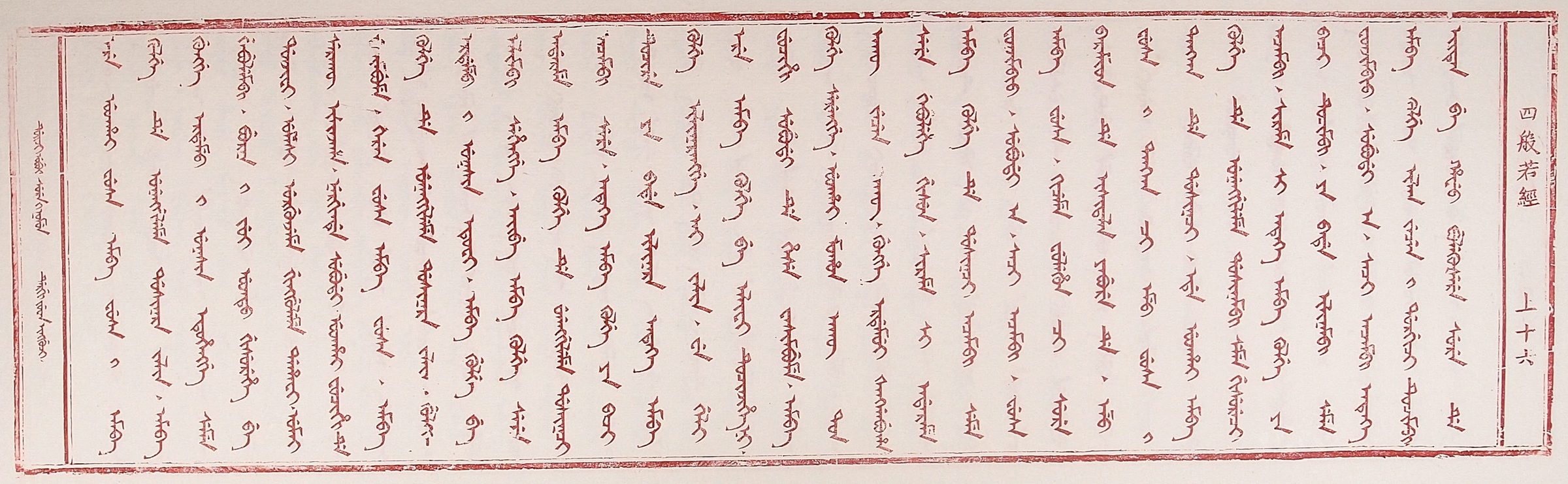
第四算作聰穎之洋下第十五〔?〕罪,以遲緩之眞誠本性之理,亦無阻礙、無脫離,是這樣說的嗎?須菩提答曰:「如是,如是。」須菩提之子〔?〕說:「何種形相,無阻礙、無脫離?何種知覺、〔?〕念、造作、曉諭,亦無阻礙、無脫離?何種形相之眞誠本性之理,無阻礙、無脫離?何種知覺、〔?〕念、造作、曉諭之眞誠本性之理,亦無阻礙、無脫離?」如是說已。須菩提答曰:「我捨形相,如幻術師之無阻礙、無脫離;知覺、〔?〕念、造作、曉諭,捨之如巴克什,亦無阻礙、無脫離;形相之眞誠本性之理,捨之如巴克什,無阻礙、無脫離;知覺、〔?〕念、造作、曉諭之眞誠本性之理,捨之如巴克什,亦無阻礙、無脫離。」如是說。何以故?自形相至曉諭,乃至眞誠本性之理,因一無所有,故無阻礙、無脫離;因遠離故,無阻礙、無脫離;因寂靜之緣故,無阻礙、無脫離;因無形相之緣故,無阻礙、無脫離;因無起始之緣故,無阻礙、無脫離;因生滅俱無之緣故,無阻礙、無脫離;因染淨俱無之緣故,無阻礙、無脫離。
EnglishThe fourth is counted as “the fifteenth below the ocean of wisdom”〔?〕: is it said that the principle of the true nature, by the crime of slowness, is also unobstructed and non-separated? Subhūti answered: “So it is, so it is.” The son of Pūrṇa(?) said: “What kind of form is unobstructed and non-separated? What kind of perception, thought(?), construction, and instruction is also unobstructed and non-separated? What kind of form’s principle of true nature is unobstructed and non-separated? What kind of perception’s, thought’s(?), construction’s, and instruction’s principle of true nature is also unobstructed and non-separated?” Thus it was spoken. Subhūti answered: “I abandon form — like an illusionist, it is unobstructed and non-separated; perception, thought(?), construction, and instruction, abandoned like a baksī, are also unobstructed and non-separated; the principle of the true nature of form, abandoned like a baksī, is unobstructed and non-separated; the principle of the true nature of perception, thought(?), construction, and instruction, abandoned like a baksī, is also unobstructed and non-separated.” Thus it is said. Why is that? From form to instruction, and even to the principle of true nature, because there is nothing at all, it is unobstructed and non-separated; because of being far removed, it is unobstructed and non-separated; because of the cause of stillness, it is unobstructed and non-separated; because of the cause of having no appearance, it is unobstructed and non-separated; because of the cause of having no beginning, it is unobstructed and non-separated; because of the cause of having neither arising nor extinction, it is unobstructed and non-separated; because of the cause of having neither defilement nor purity, it is unobstructed and non-separated.
 橫幅原圖 · 可左右捲動 · 點擊看大圖
三家原始輸出 · raw predictions(medoid 逐塊選骨架:nougat/nougat/donut,可自行複核)
逐詞解析 · word-by-word(201 單元 · 覆蓋 95.0%)
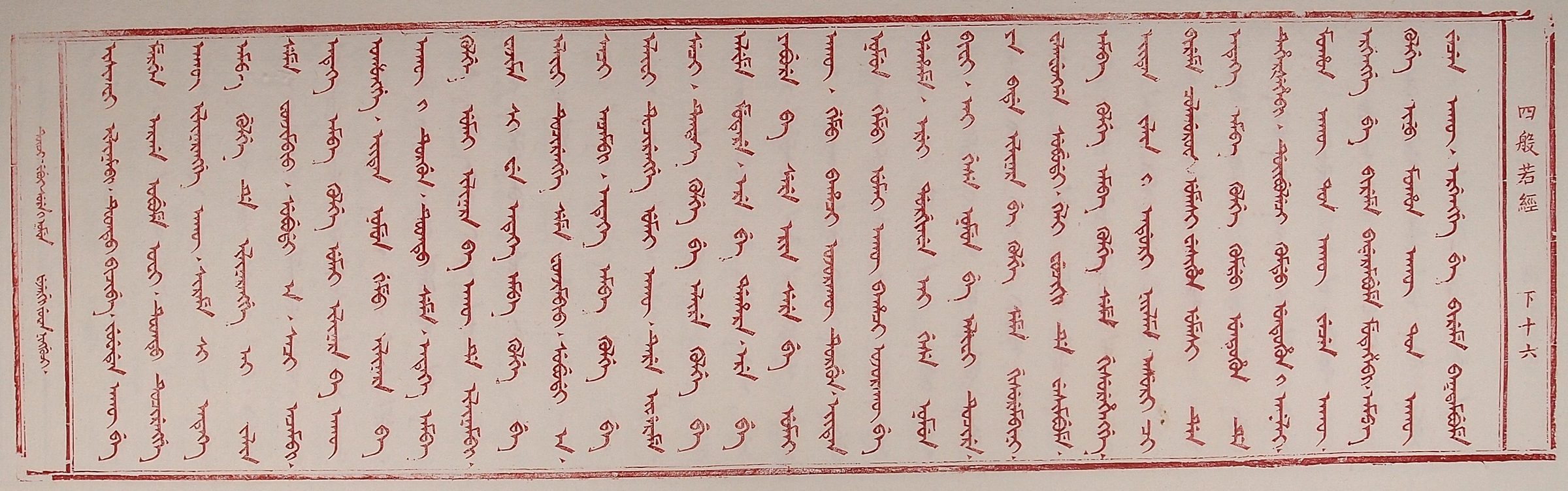
此即為菩薩、大菩薩於大乘中至誠趣入之故,名為大功德鎧甲堅固者。梵志之子聞如是說,甚為歡喜,恭敬隨順,默然無語。至其時,須菩提即白佛言:諸菩薩、大菩薩於大乘中至誠趣入之故,著功德鎧甲而受大乘者,何為大乘?云何於大乘中至誠趣入?如是之大乘從何而出、於何處住?如是之大乘住者為何?誰復能受持此大乘而出?佛降旨諭須菩提曰:大乘者,即名無窮、無數、無邊功德圓滿之語。復次,汝云何問「云何於大乘中趣入」?須菩提,應知:菩薩、大菩薩從初發心乃至般若波羅蜜多之行,從一菩薩之地趣入一菩薩之地,由此即可說為於大乘中至誠趣入。復次,汝云何問「如是之大乘從何而出、於何處住」?須菩提,應知:如是之大乘從三界之內而出,通達一切,於此般若中……
EnglishThis is called “the one whose armor of great merit and virtue is strong,” because the bodhisattvas and great bodhisattvas sincerely enter into the Great Vehicle. When the son of the brahmin heard this said, (s)he rejoiced greatly, respectfully followed, and remained silent without a word. At that moment Subhūti then addressed the Buddha, saying: “The bodhisattvas and great bodhisattvas, because they sincerely enter into the Great Vehicle, put on the armor of merit and virtue and receive the Great Vehicle — what is the Great Vehicle? How should one sincerely enter into the Great Vehicle? From where does such a Great Vehicle come forth, and where does it abide? For what reason does such a Great Vehicle abide? Who, moreover, having received this Great Vehicle, has come forth?” The Buddha issued a decree to Subhūti, saying: “The Great Vehicle is the saying named ‘the completion of merit and virtue that is without end, without number, without boundary.’ Further, why do you ask, ‘How should one enter into the Great Vehicle?’ Subhūti, it should be known: when bodhisattvas and great bodhisattvas practice from the first aspiration for enlightenment up to the perfection of wisdom, entering from one bodhisattva-stage into another bodhisattva-stage, thereby it may be said that they sincerely enter into the Great Vehicle. Further, why do you ask, ‘From where does such a Great Vehicle come forth, and where does it abide?’ Subhūti, it should be known: such a Great Vehicle comes forth from within the three realms, penetrating all things, in this wisdom…”
 橫幅原圖 · 可左右捲動 · 點擊看大圖
三家原始輸出 · raw predictions(medoid 逐塊選骨架:donut/donut/donut,可自行複核)
逐詞解析 · word-by-word(212 單元 · 覆蓋 93.4%)
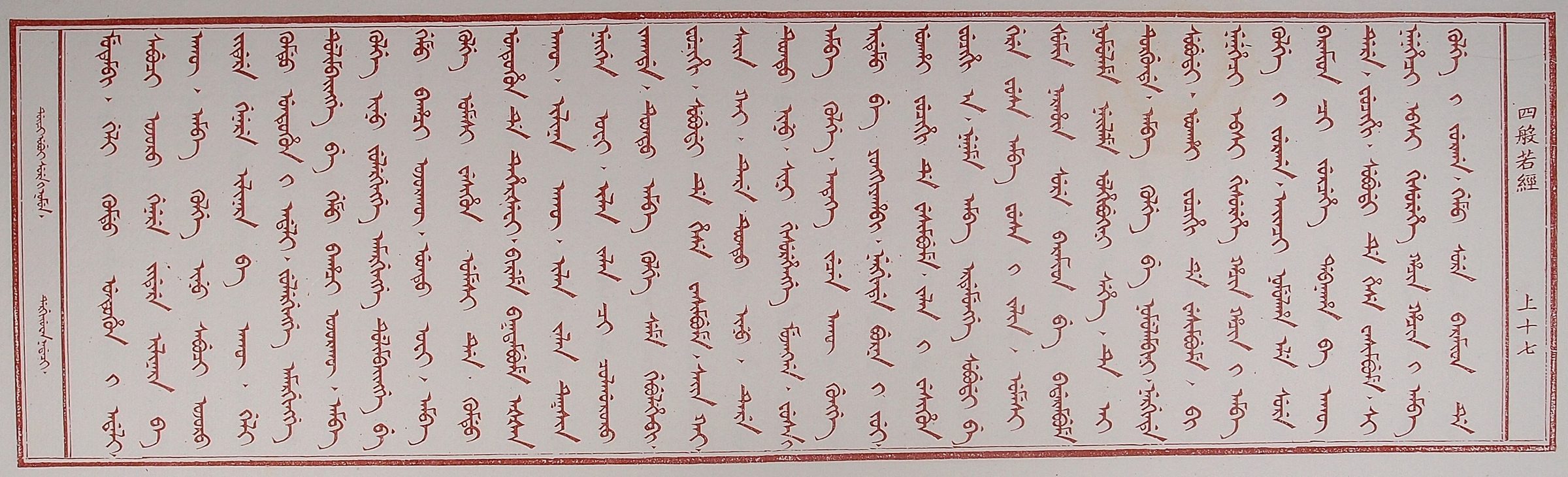
到達而止住。雖然如此,因無有二,故為妙計。所以不出、不止。接著你問:如此大乘,因何而止?須菩提,應知:如此大乘,並無止處。一切經皆無止處,其故如此。雖然如此,如此大乘,於無止處而止。末了,你問:誰持如此大乘而出?須菩提,應知:持如此大乘而出者,並無所有。若說彼持,則不能持如是乘、不能受如是乘。既此隨、此行、此處、此時,皆無所有、皆不可得,一切經既皆無所有、不可得,則其中有何等經、持何等經而出、止於何處,而名為乘耶?善哉須菩提,復白佛言:大乘大乘所說者,超一切世間人天,最尊最上。如此大乘,與虛空等。譬如虛空,能徧覆無量無數無邊眾生;大乘亦能徧容無量無數無邊眾生。
EnglishHaving arrived, (it) stops. Even so, because there is no duality, (this) is made a skillful device. Therefore (it) does not go out, does not stop. Then you ask: For what reason does such a great vehicle stop? Subhūti, (you) should know: such a great vehicle has no place of stopping at all. All scriptures have no place of stopping; for that reason, although it is so, such a great vehicle stops at (the point where) there is no place of stopping. Finally, you ask: Who takes up such a great vehicle and goes forth? Subhūti, (you) should know: (there is) nothing at all that takes up such a great vehicle and goes forth. If (one) says “that one takes it up,” then (one) cannot take up such a vehicle, cannot receive such a vehicle. Since this following, this practice, this place, this time are all nothing at all and cannot be obtained, and since all scriptures are all nothing at all and cannot be obtained, within these, what kind of scripture is there, what kind of scripture is taken up and goes forth, and at what place does (it) stop, that (it) is spoken of as a vehicle? Auspicious Subhūti again addressed the Buddha, saying: “Great vehicle, great vehicle”—that which is spoken of surpasses all worldly gods and humans, (is) most exalted, most high. Such a great vehicle is equal to empty space. By comparison, empty space is able to cover immeasurable, countless, boundless living beings; the great vehicle also is able to contain immeasurable, countless, boundless living beings.
 橫幅原圖 · 可左右捲動 · 點擊看大圖
三家原始輸出 · raw predictions(medoid 逐塊選骨架:nougat/nougat/nougat,可自行複核)
逐詞解析 · word-by-word(204 單元 · 覆蓋 97.5%)
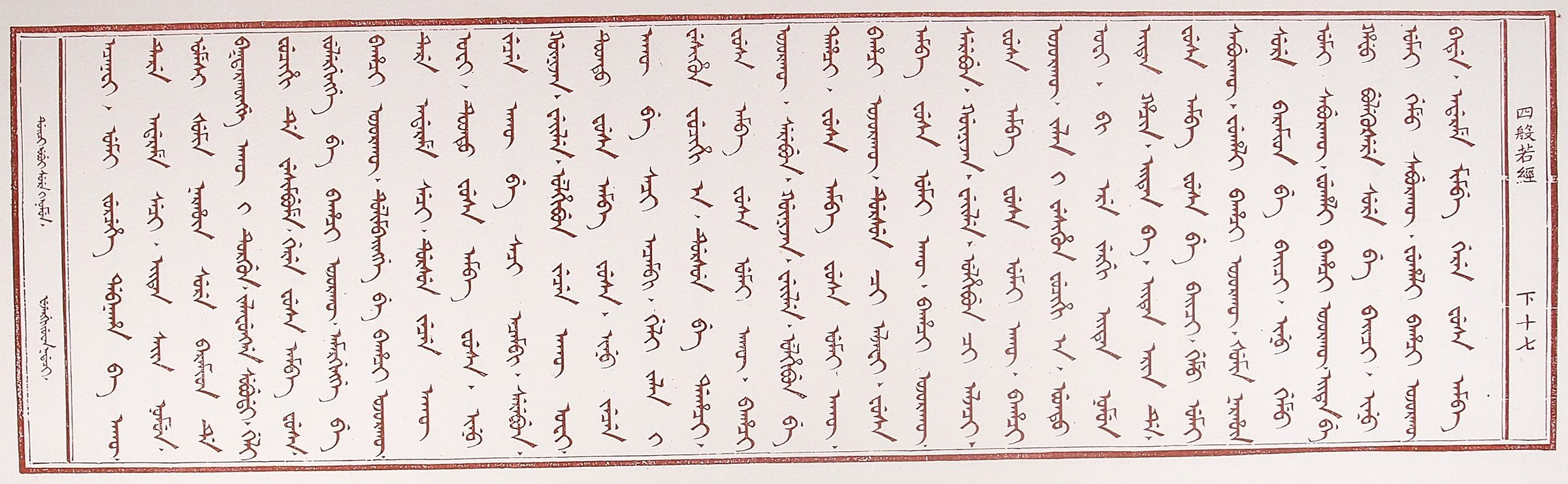
能。又似空虛,視之不可得,往來無有止處。大乘亦視之不可得,往來無有止處。又似空虛,南、北、中皆不可得。大乘亦南、北、中皆不可得。因此,大乘極尊極高,與空虛相等,遍包一切,不動不止,三世均平,超於三世,故名曰大乘。佛諭須菩提曰:善哉善哉,如是如是,汝所言誠然。菩薩之大乘,具足如是無邊功德。時須菩提即白佛言:世尊,佛先為諸菩薩、大菩薩,令廣說甚深微妙般若波羅蜜多,開示曉諭。今以何故說大乘耶?時須菩提即白佛言:我自昔以來所說種種大乘之義,想無有違越般若波羅蜜多之處。佛諭須菩提曰:汝自昔以來所說種種大乘之義,皆於般若波羅蜜多〔?〕
EnglishIt can be. Again, like emptiness and void, it cannot be seen; in coming and going there is no place of stopping. The Great Vehicle also cannot be seen; in coming and going there is no place of stopping. Again, like emptiness and void, the southern, northern, and middle ones cannot all be grasped. The Great Vehicle also cannot have the southern, northern, and middle ones all grasped. Therefore, the Great Vehicle is most exalted and most high, equal to emptiness and void, encompassing all, without moving and without stopping. Because it is even and balanced throughout the three times and transcends the three times, it has been named the Great Vehicle. The Buddha issued an edict to Subhūti, saying: Good, good. It is so, it is so. What you have said is true. The bodhisattva's Great Vehicle is complete with such boundless merit and virtue. At that time, Subhūti immediately addressed the Buddha, saying: World-Honored One, the Buddha previously, for the sake of the many bodhisattvas and great bodhisattvas, caused the very profound and subtle prajñāpāramitā to be expanded, preached, opened, and made understood. Now for what reason is the Great Vehicle being preached? At that time, Subhūti immediately addressed the Buddha, saying: In the various meanings of the Great Vehicle that I have spoken from earlier until now, there is, I suppose, no place that has transgressed or exceeded the prajñāpāramitā. The Buddha issued an edict to Subhūti, saying: The various meanings of the Great Vehicle that you have spoken from earlier until now are all in the prajñāpāramitā 〔?〕
 橫幅原圖 · 可左右捲動 · 點擊看大圖
三家原始輸出 · raw predictions(medoid 逐塊選骨架:nougat/donut/nougat,可自行複核)
逐詞解析 · word-by-word(210 單元 · 覆蓋 96.2%)
允協無違,亦無逾越之處。彼何謂也?一切善經,甚深微妙,般若波羅蜜多中無所不攝。其故,壽者須菩提復白佛言:諸菩薩、大菩薩,前際不可得,後際不可得,中際不可得。彼何謂也?以無際故,諸菩薩、大菩薩亦當知無際。知覺、覺、業、誥,以無際故,諸菩薩、大菩薩亦當知無際。又,世尊,若隨相,則諸菩薩、大菩薩竟不可得;知覺、覺、業、誥,若隨,則諸菩薩、大菩薩竟不可得。離相,則諸菩薩、大菩薩竟不可得;知覺、覺、業、誥,若離,則諸菩薩、大菩薩竟不可得。世尊,因此我於此等一切經、一切種、一切處、一切時中,求諸菩薩、大菩薩,皆悉不見,竟不可得;求甚深微妙般若波羅蜜多,亦皆悉不見,竟不可得;求通達一切之鑑智,亦皆悉不見,竟不可得。如是,何故令我〔?〕諸菩薩、大〔?〕
EnglishBeing in accord, there is nothing transgressed or overstepped. What does that mean? All good scriptures, extremely deep and subtle, there is nothing not contained in prajñāpāramitā. For that reason, the long-lived Subhūti again addressed the Buddha, saying: The bodhisattvas, the great bodhisattvas—the former cannot be obtained, the latter cannot be obtained, the middle cannot be obtained. What does that mean? Because there is no boundary, therefore the bodhisattvas, the great bodhisattvas also should be known as without boundary. Perception, consciousness, action, instruction—because there is no boundary, therefore the bodhisattvas, the great bodhisattvas also should be known as without boundary. Again, O World-Honored One, if following form, then the bodhisattvas, the great bodhisattvas cannot be obtained at all; perception, consciousness, action, instruction—if following them, the bodhisattvas, the great bodhisattvas cannot be obtained at all. If separated from form, the bodhisattvas, the great bodhisattvas cannot be obtained at all; perception, consciousness, action, instruction—if separated from them, the bodhisattvas, the great bodhisattvas cannot be obtained at all. O World-Honored One, therefore I, in all these scriptures, all kinds, all places, all times, seeking the bodhisattvas, the great bodhisattvas, see none at all, and cannot obtain them at all; seeking the extremely deep and subtle prajñāpāramitā, also see none at all, and cannot obtain it at all; seeking the mirror-like wisdom that penetrates all, also see none at all, and cannot obtain it at all. That being so, why is it that I am made to be(?) the bodhisattvas, the great(?)
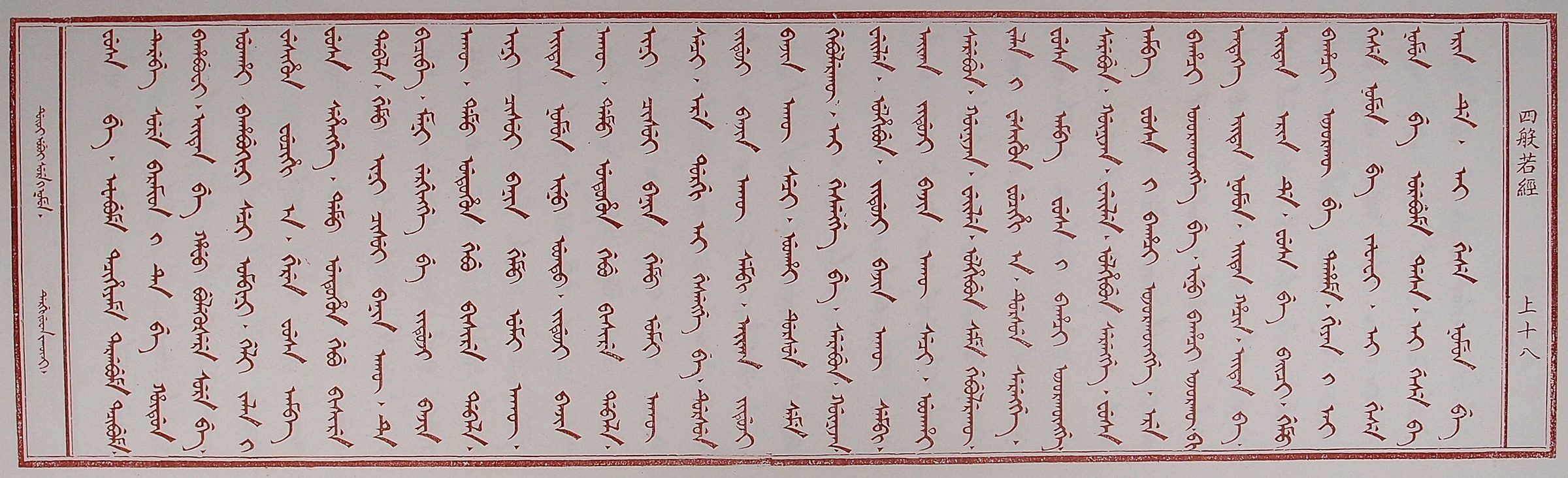 橫幅原圖 · 可左右捲動 · 點擊看大圖
三家原始輸出 · raw predictions(medoid 逐塊選骨架:nougat/donut/nougat,可自行複核)
逐詞解析 · word-by-word(214 單元 · 覆蓋 95.8%)
若欲交付菩薩、教誨之、警戒之、訓導之,使其速得聰慧之極致,通達一切、洞鑑之慧即令得之,則可也。又,世尊佛及諸菩薩、大菩薩者,唯有虛名而已,皆無自性。且今我等之輩,畢竟無生,唯有虛名而已,其自性皆無。一切經亦如是,畢竟無生,唯有虛名而已,其自性皆無。若問此中何為體?曰:畢竟無生。若言畢竟無生,則不名為體。何為覺、想、業、誥?曰:畢竟無生。若言畢竟無生,則不名為覺、想、業、誥。世尊佛,體者,菩薩、大菩薩之所不可得者也。不可得者,覺、想、業、誥者,菩薩、大菩薩之所不可得者也。此不可得者,亦不可得也。如是,於一切經、一切種、一切處、一切時中求菩薩,皆不可得故,理應持何等經、修何等經、於何等處、何等時、以何等經〔?〕
EnglishIf one wishes to entrust [it] to the Bodhisattva, to teach, to admonish, to instruct, and to cause [them] to quickly attain the utmost of wisdom, and to immediately obtain the wisdom that penetrates and illuminates all — this can be done. Furthermore, the World-Honored Buddha and the many Bodhisattvas, the great Bodhisattvas — these are merely empty names; they all have no inherent nature. Even now, as for those of our kind, ultimately there is no arising; there are merely empty names; their inherent nature is entirely nonexistent. All scriptures are also thus: ultimately there is no arising; there are merely empty names; their inherent nature is entirely nonexistent. If [one asks] what is form within this? It is said: ultimately no arising. If it is said to be ultimately no arising, then it is not called form. What are perception, thought, action, and understanding? It is said: ultimately no arising. If it is said to be ultimately no arising, then they are not called perception, thought, action, and understanding. World-Honored Buddha, as for form — it is that which Bodhisattvas and great Bodhisattvas cannot obtain. That which cannot be obtained — perception, thought, action, and understanding — is that which Bodhisattvas and great Bodhisattvas cannot obtain. This unobtainable [itself] is also unobtainable. Thus, since in all scriptures, all kinds, all places, and all times, when the Bodhisattva is sought, [the Bodhisattva] cannot be obtained at all, therefore by principle, what scripture should be grasped, what scripture should be cultivated, and in what place, at what time, with what scripture 〔?〕
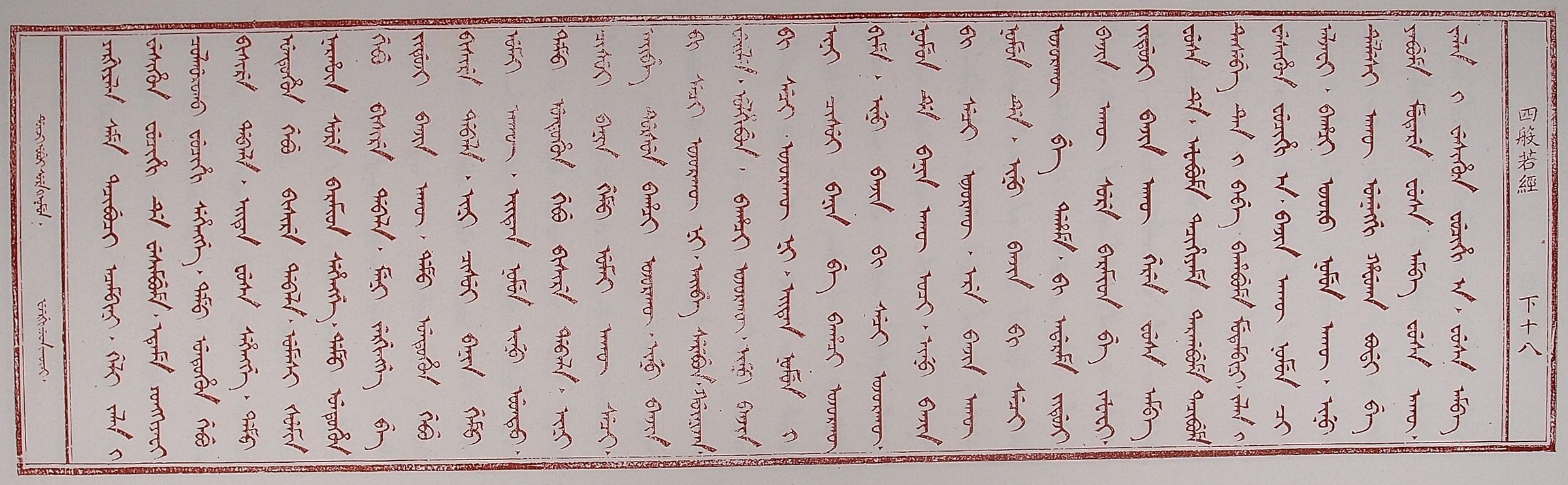 橫幅原圖 · 可左右捲動 · 點擊看大圖
三家原始輸出 · raw predictions(medoid 逐塊選骨架:donut/res50/res50,可自行複核)
逐詞解析 · word-by-word(164 單元 · 覆蓋 96.3%)
若欲驗實而教之,可乎?又,向上於佛奏昇,勝而具備超卓之佛云者,但有空名而已。一切菩薩云者,但有空名而已。甚深微妙般若波羅蜜多云者,但有空名而已。我等之輩,究竟無性,但有空名而已。其自然之性皆悉無有,一切經亦如此,但有空名而已。若謂其自然所生皆悉無有,則不可謂有。何所覺知?心意所生之十誥不可得。伊穆生有,則如何究竟無生?執般若波羅蜜多,究竟無生,能令諸菩薩、大菩薩付囑、教誨、警戒、教授,使彼得至極處。世尊,無生,於經中不可得經,亦無上,能行眞實通達菩提之菩薩、大菩薩,世尊,佛、菩薩、大〔?〕。
EnglishIf one would verify and teach, is it fitting? Moreover, when presented upward to the Buddha, “Buddha who has overcome and is fully endowed and transcendent” is but an empty name. All “bodhisattvas” are but an empty name. “The extremely profound and subtle prajñāpāramitā” is but an empty name. Those of our kind are ultimately without nature; it is but an empty name. Their inherent nature is entirely nonexistent; all scriptures are also thus, but an empty name. If it is said that all that arises naturally is entirely nonexistent, then it cannot be said to exist. What is perceived? The ten proclamations born of thought cannot be obtained. If Imu has birth/existence, how is it ultimately without birth? Grasping prajñāpāramitā, ultimately without birth, (s)he is able to entrust, instruct, admonish, and teach all bodhisattvas and great bodhisattvas, causing them to attain the ultimate point. World-Honored One, without birth, from the scriptures no scripture can be obtained; there is also nothing above. The bodhisattva, great bodhisattva who can practice true penetrating bodhi—World-Honored One, Buddha, bodhisattva, great〔?〕.
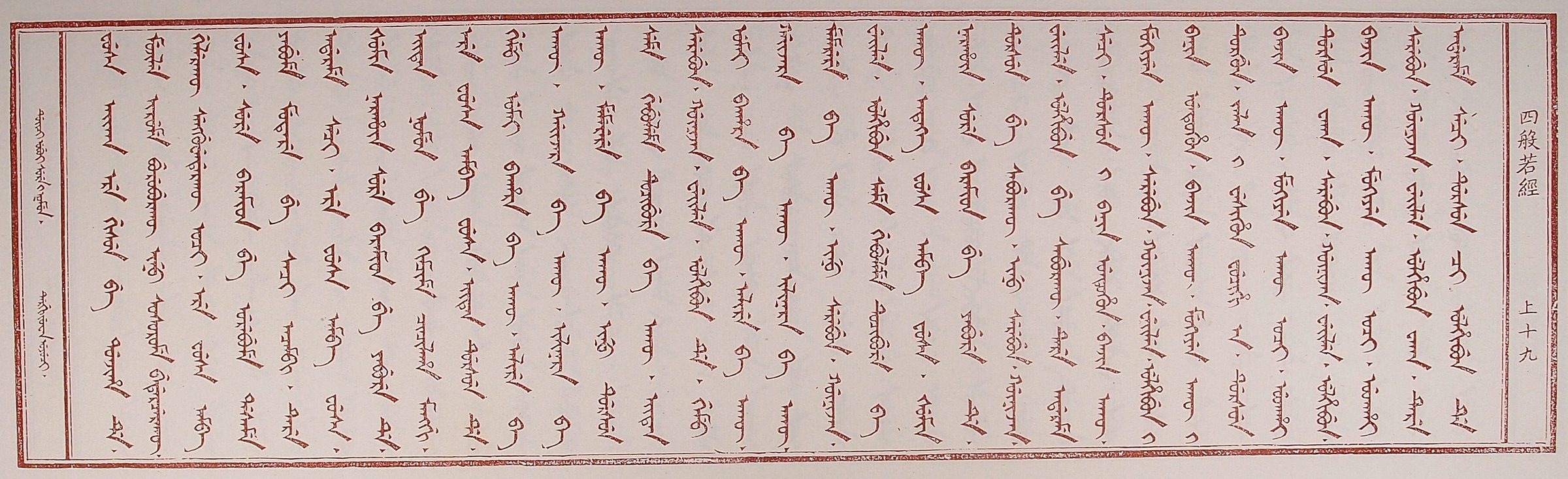 橫幅原圖 · 可左右捲動 · 點擊看大圖
三家原始輸出 · raw predictions(medoid 逐塊選骨架:res50/nougat/nougat,可自行複核)
逐詞解析 · word-by-word(201 單元 · 覆蓋 98.0%)
菩薩若聞此語,心不沉沒、不消沮,亦不退縮、不迴避、不畏懼、不驚怖者,當知此菩薩是大菩薩,能修習般若波羅蜜多。何以故?此菩薩大菩薩行深般若波羅蜜多時,於一切法諦審觀察已,此菩薩大菩薩於一切相皆無所得、無所受、無所取、無所住、無所執,亦無可名之為相者;於一切覺、想、行、識皆無所得、無所受、無所取、無所住、無所執,亦無可名之為覺、想、行、識者。如是菩薩大菩薩行深般若波羅蜜多時,不見相,亦不見覺、想、行、識。何以故?相之性空,無生無滅;覺、想、行、識之性空,無生無滅。其故,世尊,佛說相無生無滅者,即非相;覺、想、行、識無生無滅者,即非覺、想、行、識。何以故?從相至識〔?〕
EnglishIf a bodhisattva, upon hearing these words, with mind not sinking, not vanishing, also not shrinking back, not retreating, not fearing, not trembling—then this bodhisattva should be known as a great bodhisattva, able to cultivate and practice the profound prajñāpāramitā. Why is this so? When this bodhisattva, a great bodhisattva, practices the profound prajñāpāramitā, after thoroughly examining all dharmas, this bodhisattva, a great bodhisattva, in all forms has nothing obtained, nothing accepted, nothing taken, nothing abided in, nothing clung to, nor is there anything that can be named “form”; in all perceptions, thoughts, actions, and consciousnesses has nothing obtained, nothing accepted, nothing taken, nothing abided in, nothing clung to, nor is there anything that can be named “perception, thought, action, consciousness.” When such a bodhisattva, a great bodhisattva, practices the profound prajñāpāramitā, (s)he does not see form, nor does (s)he see perception, thought, action, consciousness. Why is this so? The nature of form is empty, without arising, without cessation; the nature of perception, thought, action, and consciousness is empty, without arising, without cessation. For this reason, O World-Honored One, form being without arising and without cessation is precisely not form; perception, thought, action, and consciousness being without arising and without cessation are precisely not perception, thought, action, and consciousness. Why is this so? From form to consciousness〔?〕
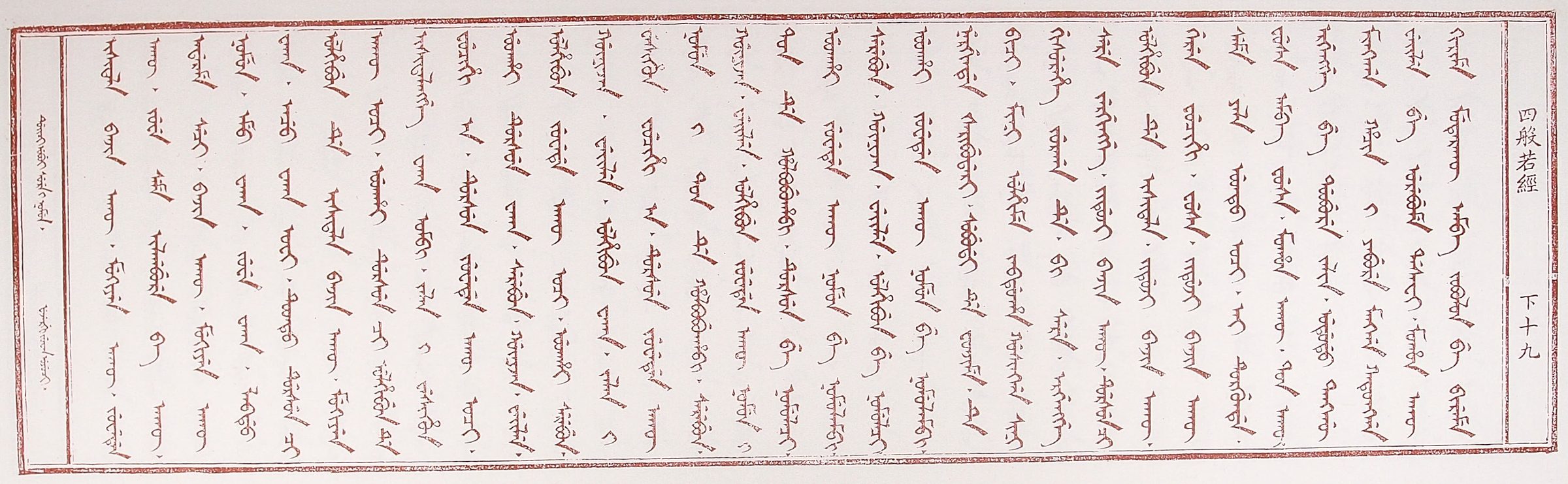 橫幅原圖 · 可左右捲動 · 點擊看大圖
三家原始輸出 · raw predictions(medoid 逐塊選骨架:donut/nougat/donut,可自行複核)
逐詞解析 · word-by-word(201 單元 · 覆蓋 96.5%)
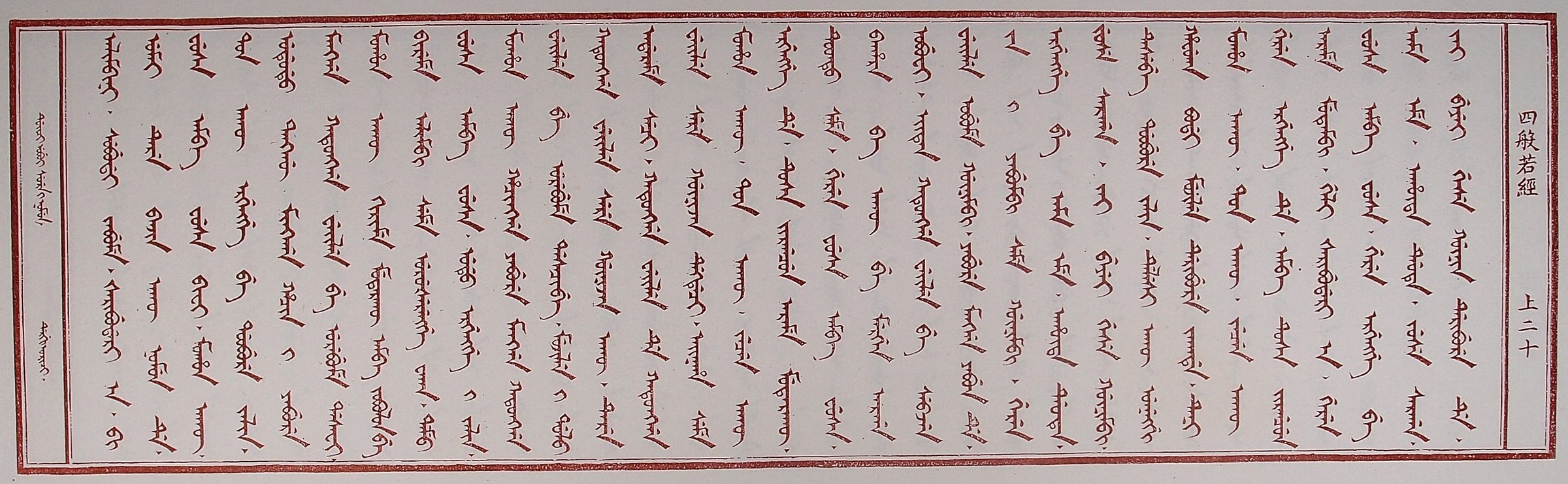
至於生無、滅無,二者無別,無有二相。何謂?生無、滅無,經非一、非二、非多、非異。故自體至誥,生無、滅無者,即非自體至誥。世尊佛之體,若無二,即非體。知覺、思惟、罪業、誥,若無二,即非知覺、思惟、罪業、誥。世尊佛之體,無二,繫於經之數。知覺、思惟、罪業、誥,無二,繫於經之數。若說體,即無二;說經,即說知覺、思惟、罪業、誥;若說知覺、思惟、罪業、誥,即無二,即說經。爾時,舍利弗問須菩提:「今有,我之解悟已妥。仁者,汝所說義中,我所謂眾生、所謂等類,究竟生無;自體至誥,究竟生無;一切佛、菩薩,究竟生無。果然如此,則何以故,菩薩、大菩薩為度無量無數眾生,修習數百千種難行苦行,而能忍無量、不能忍之大苦,一概〔?〕」
EnglishAs to birthless and extinctionless, in the two there is no distinguishing of two. How so? Birthless and extinctionless: the scripture is not one, not two, not many, not different. Therefore, from form to instruction, if birthless and extinctionless, then it is not that which reaches from form to instruction. The World-honored Buddha's form: if without duality, then it is not form. Perception, thought, karma, instruction: if without duality, then they are not perception, thought, karma, instruction. The World-honored Buddha's form is without duality, bound to the number of the scripture. Perception, thought, karma, instruction are without duality, bound to the number of the scripture. If the form is preached, then it is without duality; the scripture is preached, that is, perception, thought, karma, instruction are preached. If perception, thought, karma, instruction are preached, then they are without duality; the scripture is preached. At that time, Śāriputra asked Subhūti: "Now, my understanding has become complete. Benevolent one, in the meaning you have spoken, those whom I call sentient beings, those called such classes, are ultimately birthless; from form to instruction, ultimately birthless; all Buddhas and bodhisattvas, ultimately birthless. If it is truly so, then for what reason do bodhisattvas, great bodhisattvas, for the sake of ferrying across limitless, countless sentient beings, train and cultivate many hundreds and thousands of kinds of difficult and arduous practices, and endure all the great sufferings that cannot be endured—〔?〕"
 橫幅原圖 · 可左右捲動 · 點擊看大圖
三家原始輸出 · raw predictions(medoid 逐塊選骨架:res50/nougat/res50,可自行複核)
逐詞解析 · word-by-word(210 單元 · 覆蓋 98.6%)
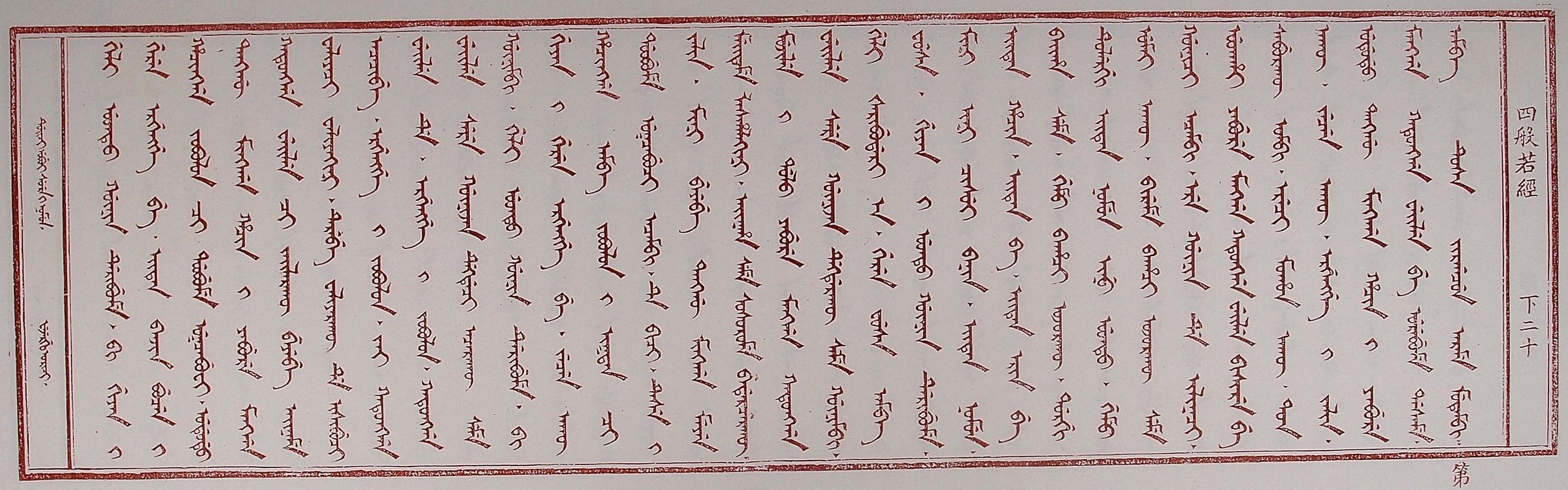
須菩提答言:「舍利弗!我非謂彼無生經中,有菩薩、大菩薩,為度無量無數眾生,修習多百千種難行苦行,能忍無量、不堪忍之大苦而稱許之。唯菩薩、大菩薩雖為眾生修習無量種難行苦行,心中無『苦行』之念。何謂?若於苦行生『苦行』之念,則斷不能為無量、無數、無邊眾生作利益安樂。故諸菩薩、大菩薩以無所得為妙計,觀一切苦行為樂行,觀難行之行為易行,觀眾生如父母、兄弟、子女、妻子及自身。為度彼等,發起無偏、真實、堅固之菩提心,方能為無量、無數、無邊眾生作大利益安樂。又,舍利弗!諸菩薩、大菩薩觀眾生如父母、兄弟、子女、妻子及自身之心,初發起時……」
EnglishSubhūti replied: “Śāriputra! I do not say that in that unborn sūtra there are bodhisattvas, great bodhisattvas, who—for the sake of delivering immeasurable, countless sentient beings—train in many hundreds and thousands of kinds of difficult and austere practices, and who endure immeasurable, unbearable great suffering, and are thereby praised. Rather, although bodhisattvas, great bodhisattvas train in immeasurable kinds of difficult and austere practices for the sake of sentient beings, in their minds there is no thought of ‘austere practice.’ What does this mean? If, in austere practice, the thought of ‘austere practice’ arises, then by no means can benefit and happiness be made for immeasurable, countless, boundless sentient beings. Therefore the many bodhisattvas, great bodhisattvas take non-attainment as a skillful device, regard all austere practices as joyful practices, regard difficult conduct as easy conduct, and regard sentient beings as fathers, mothers, elder brothers, younger brothers, children, wives, and as themselves. For the sake of delivering them, because a non-partial, true, firm bodhi-mind is initiated, only then can great benefit and happiness be made for immeasurable, countless, boundless sentient beings. Again, Śāriputra! When the many bodhisattvas, great bodhisattvas first initiate the mind that regards sentient beings as fathers, mothers, elder brothers, younger brothers, children, wives, and as themselves…”
 橫幅原圖 · 可左右捲動 · 點擊看大圖
三家原始輸出 · raw predictions(medoid 逐塊選骨架:nougat/donut/donut,可自行複核)
逐詞解析 · word-by-word(212 單元 · 覆蓋 97.2%)
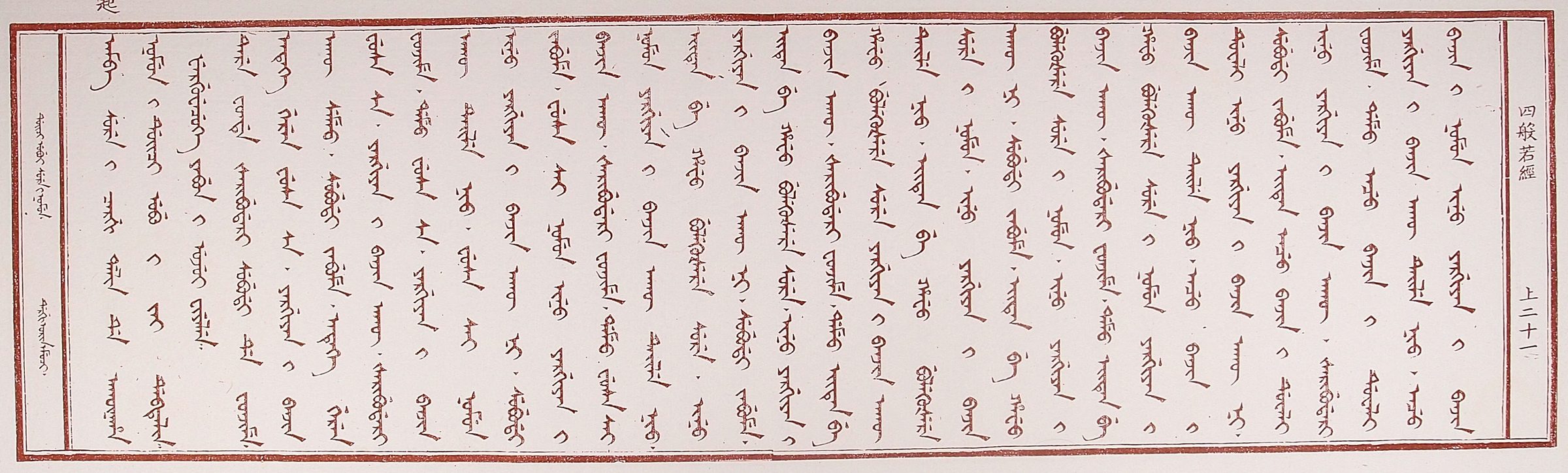
又如此起念:我理應將群生從一切生死諸般苦難中渡脫,縱有數百千種難行之苦行亦不迴避;己身任其捨棄則捨棄,不捨棄亦當令至其所應至。然於眾生之苦及苦行,心中不應生起「眾生之苦、苦行」之念。又如此起念:我理應將群生從無邊種種大苦之積聚中渡脫。今有為彼等故,縱令我身斷作百千段,斷然不退縮;心中不應生起「難行之苦行」之念。又,舍利弗,諸菩薩、大菩薩理應如此起念:我舍利弗,自性一切經、一切種、一切處、一切時,雖求亦皆不可得;內外一切經亦如是,皆無所有,不可遍得。若住此念,即不見有難行之苦行。由此,能為無窮、無數、無邊眾生,修習對治數百千種難行之苦行,而作大利益、安樂。
EnglishAgain, thus generating the thought: I ought to deliver all living beings from the manifold sufferings of birth and death; even if there are many hundreds and thousands of kinds of difficult practices and ascetic disciplines, I do not avoid them. As for my own body, if it is to be cast away, let it be cast away; if it is not cast away, let it be brought to where it ought to be. Yet concerning the suffering of living beings and the ascetic disciplines, the thought “the suffering of living beings, the ascetic disciplines” should not arise in the mind. Again, thus generating the thought: I ought to deliver all living beings from the accumulation of boundless, manifold great sufferings. Now, for their sake, even if my body were cut into a hundred thousand pieces, I would by no means shrink back; in my mind the thought “difficult practices and ascetic disciplines” should not arise. Again, Śāriputra, all bodhisattvas and great bodhisattvas ought thus to generate the thought: O Śāriputra, intrinsic nature, all scriptures, all kinds, all places, all times—though sought, none can be obtained; inner and outer, all scriptures are likewise entirely without anything, and cannot be wholly obtained. If one abides in this thought, then one does not see that there are difficult practices and ascetic disciplines. From this, for the sake of infinite, countless, boundless living beings, one is able to cultivate and remedy many hundreds and thousands of kinds of difficult practices and ascetic disciplines, and thereby bring about great benefit and happiness.
 橫幅原圖 · 可左右捲動 · 點擊看大圖
三家原始輸出 · raw predictions(medoid 逐塊選骨架:nougat/donut/nougat,可自行複核)
逐詞解析 · word-by-word(221 單元 · 覆蓋 91.4%)
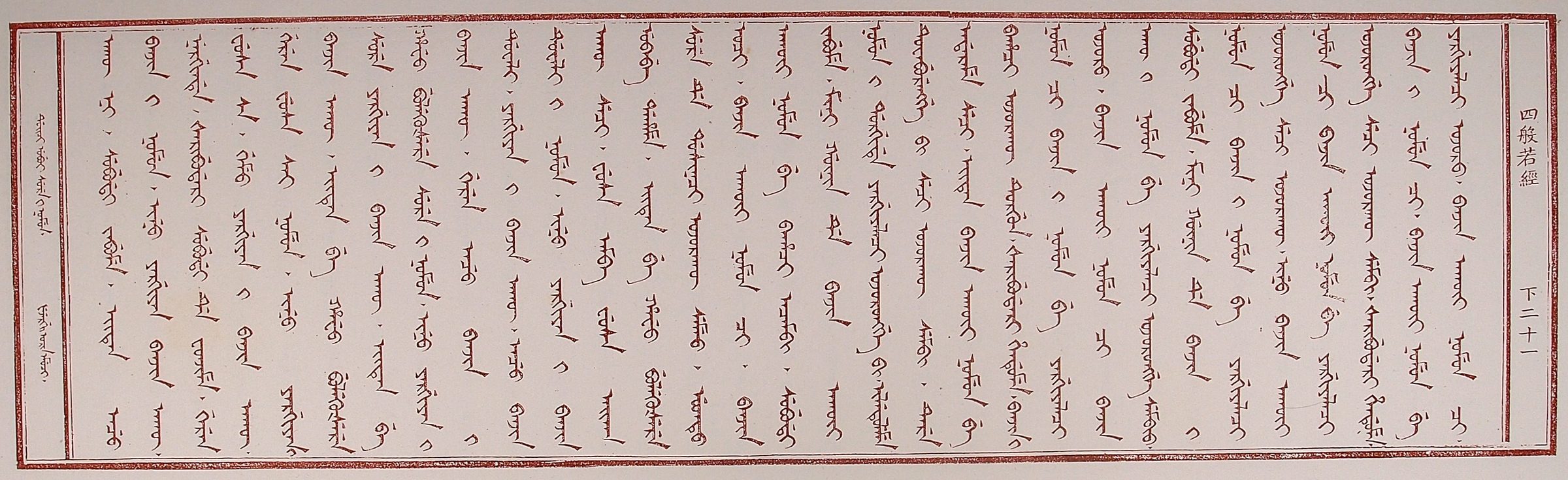
《大般若波羅蜜多經》第四分第二卷〈妙行品〉第一 爾時,舍利子問須菩提:「如是諸菩薩,實無生耶?」 須菩提答:「如是諸菩薩,實無生。」 舍利子問:「但諸菩薩實無生而已耶?菩薩法亦實無生耶?」 須菩提答:「菩薩法亦實無生。」 舍利子問:「但菩薩法實無生而已耶?一切徧知般若亦實無生耶?」 須菩提答:「一切徧知般若亦實無生。」 舍利子問:「但一切徧知般若實無生而已耶?一切徧知般若法亦實無生耶?」 須菩提答:「一切徧知般若法亦實無生。」 舍利子問:「但一切徧知般若法實無生而已耶?異生類亦實無生耶?」 須菩提答:「一切異生類亦實無生。」 舍利子問:「但異生類實無生而已耶?異生法亦實無生〔耶?〕」
EnglishThe Perfection of Wisdom in Twenty-five Thousand Lines, Fourth Section, Second Fascicle, Chapter on Wondrous Conduct, Part One At that time Śāriputra asked Subhūti: “Are all these bodhisattvas truly without birth?” Subhūti replied: “All these bodhisattvas are truly without birth.” Śāriputra asked: “Is it only that the bodhisattvas are truly without birth? Is the Dharma of the bodhisattvas also truly without birth?” Subhūti replied: “The Dharma of the bodhisattvas is also truly without birth.” Śāriputra asked: “Is it only that the Dharma of the bodhisattvas is truly without birth? Is the all-knowing wisdom also truly without birth?” Subhūti replied: “The all-knowing wisdom is also truly without birth.” Śāriputra asked: “Is it only that the all-knowing wisdom is truly without birth? Is the Dharma of the all-knowing wisdom also truly without birth?” Subhūti replied: “The Dharma of the all-knowing wisdom is also truly without birth.” Śāriputra asked: “Is it only that the Dharma of the all-knowing wisdom is truly without birth? Are the classes of ordinary beings also truly without birth?” Subhūti replied: “All classes of ordinary beings are also truly without birth.” Śāriputra asked: “Is it only that the classes of ordinary beings are truly without birth? Is the Dharma of ordinary beings also truly without birth〔?〕”
 橫幅原圖 · 可左右捲動 · 點擊看大圖
三家原始輸出 · raw predictions(medoid 逐塊選骨架:res50/nougat/nougat,可自行複核)
逐詞解析 · word-by-word(219 單元 · 覆蓋 96.8%)
第四〔?〕下。般若經〔?〕無〔?〕。須菩提答曰:一切異生之經,亦眞實無生。時,舍利弗問須菩提:諸菩薩等皆眞實無生,諸菩薩之經亦眞實無生。通達一切之般若,眞實無生;通達一切之般若經,亦眞實無生。諸異生之類,眞實無生;異生類之經,亦眞實無生。若謂無〔?〕,菩薩、大菩薩若依此,豈不能入通達一切之般若乎?若是,則應從無生經中得無生經。須菩提答曰:以我之意,無生經中可證實者、可顯示者,不可謂有。何以故?一切無生經不可得故。舍利弗言:從生經中可證實生經,從無生經中可證實無生經,可謂有乎?須菩提答曰:以我之意,從生經中可證實生經,不可謂有;亦從無生經中可證實〔?〕經,不可謂有。舍利弗言:從生經中可證實無生經,從無生經中〔?〕
EnglishThe fourth〔?〕descends. The Prajñāpāramitā Sūtra〔?〕without〔?〕. Subhūti replied: The sūtras of all different kinds of beings are also truly without arising. At that time, Śāriputra asked Subhūti: All bodhisattvas are truly without arising; the sūtras of all bodhisattvas are also truly without arising. The prajñā that penetrates all is truly without arising; the sūtra of the prajñā that penetrates all is also truly without arising. The various classes of different beings are truly without arising; the sūtras of the classes of different beings are also truly without arising. If it is said to be without〔?〕, if bodhisattvas and great bodhisattvas follow this, can they not enter into the prajñā that penetrates all? If so, then from the sūtra of non-arising, the sūtra of non-arising should be obtained. Subhūti replied: In my mind, within the sūtra of non-arising, that which can be verified and that which can be displayed cannot be said to exist. Why is that? Because all sūtras of non-arising cannot be obtained. Śāriputra said: From the sūtra of arising, the sūtra of arising can be verified; from the sūtra of non-arising, the sūtra of non-arising can be verified — can this be said to exist? Subhūti replied: In my mind, from the sūtra of arising, the sūtra of arising can be verified — it cannot be said to exist; also from the sūtra of non-arising, the sūtra of〔?〕can be verified — it cannot be said to exist. Śāriputra said: From the sūtra of arising, the sūtra of non-arising can be verified; from the sūtra of non-arising〔?〕
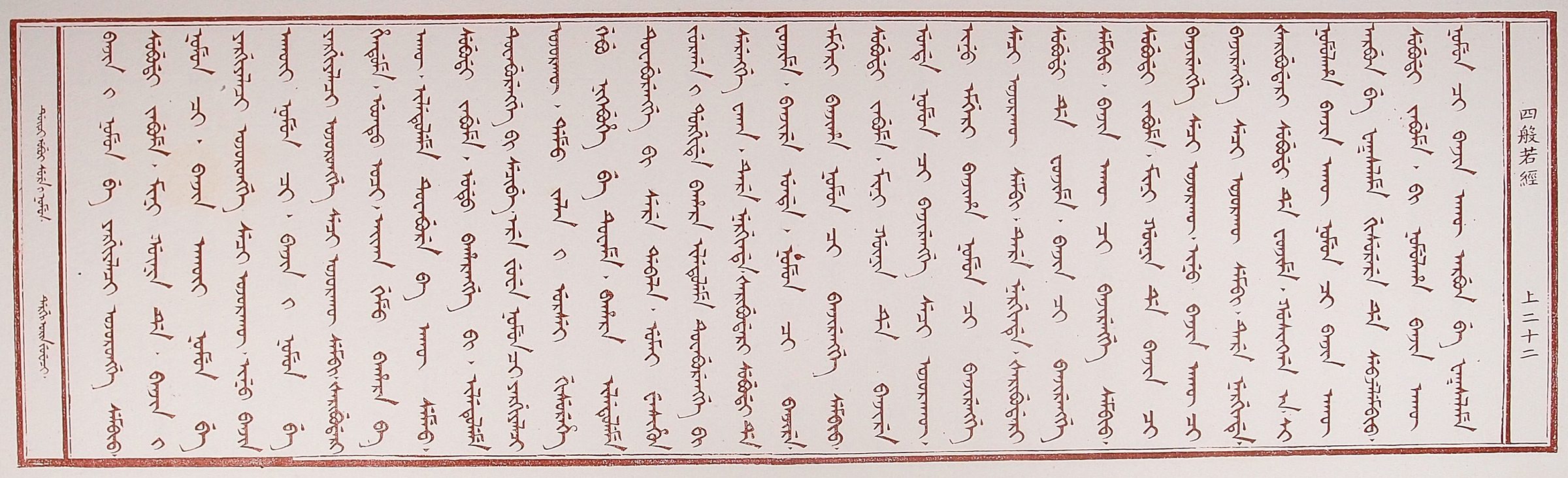 橫幅原圖 · 可左右捲動 · 點擊看大圖
三家原始輸出 · raw predictions(medoid 逐塊選骨架:nougat/nougat/nougat,可自行複核)
逐詞解析 · word-by-word(208 單元 · 覆蓋 94.2%)
「生經可得而驗乎?」須菩提答曰:「以我之意,於生經不可謂生無經可得而驗,亦不可謂生無經中生經可得而驗。」舍利弗曰:「若是,則豈一切無所得、無所示乎?」須菩提答曰:「雖有所得、有所示,然於此二經不可驗,惟觀世人所說之名所託,方有所得、有所示耳,非謂於勝義之中有所得、有所示也。」爾時,舍利弗問須菩提曰:「從未生之經生乎?從已生之經生乎?」須菩提答曰:「以我之意,不可謂從未生之經生,亦不可謂從已生之經生。」爾時,舍利弗問須菩提曰:「從生生乎?從無生生乎?」須菩提答曰:「以我之意,不可謂從生生,亦不可謂從無生生。」爾時,舍利弗問須菩提曰:「仁者,汝於所說無生經中,分別無生之相而樂乎?」須菩提答曰:「我於所說無生經中,分別無生之相〔?〕」
English“Can the Scripture of Birth be verified?” Subhūti answered: “In my mind, it cannot be said that from the Scripture of Birth the Scripture of Non-Birth can be verified; nor can it be said that from the Scripture of Non-Birth the Scripture of Birth can be verified.” Śāriputra said: “If so, is it that there is nothing at all to be obtained and nothing to be shown?” Subhūti answered: “Although there is something obtained and something shown, yet from these two scriptures it cannot be verified. Only by observing the names and designations spoken by worldly people is there something obtained and something shown — it is not that within the sublime principle there is something obtained and something shown.” At that time, Śāriputra asked Subhūti: “Is it born from the scripture not yet born, or born from the scripture already born?” Subhūti answered: “In my mind, it cannot be said to be born from the scripture not yet born; nor can it be said to be born from the scripture already born.” At that time, Śāriputra asked Subhūti: “Is it born from birth, or born from non-birth?” Subhūti answered: “In my mind, it cannot be said to be born from birth; nor can it be said to be born from non-birth.” At that time, Śāriputra asked Subhūti: “O benevolent one, do you take delight in distinguishing the marks of non-birth within the Scripture of Non-Birth that you have expounded?” Subhūti answered: “I, within the expounded Scripture of Non-Birth, distinguishing the marks of non-birth〔?〕”
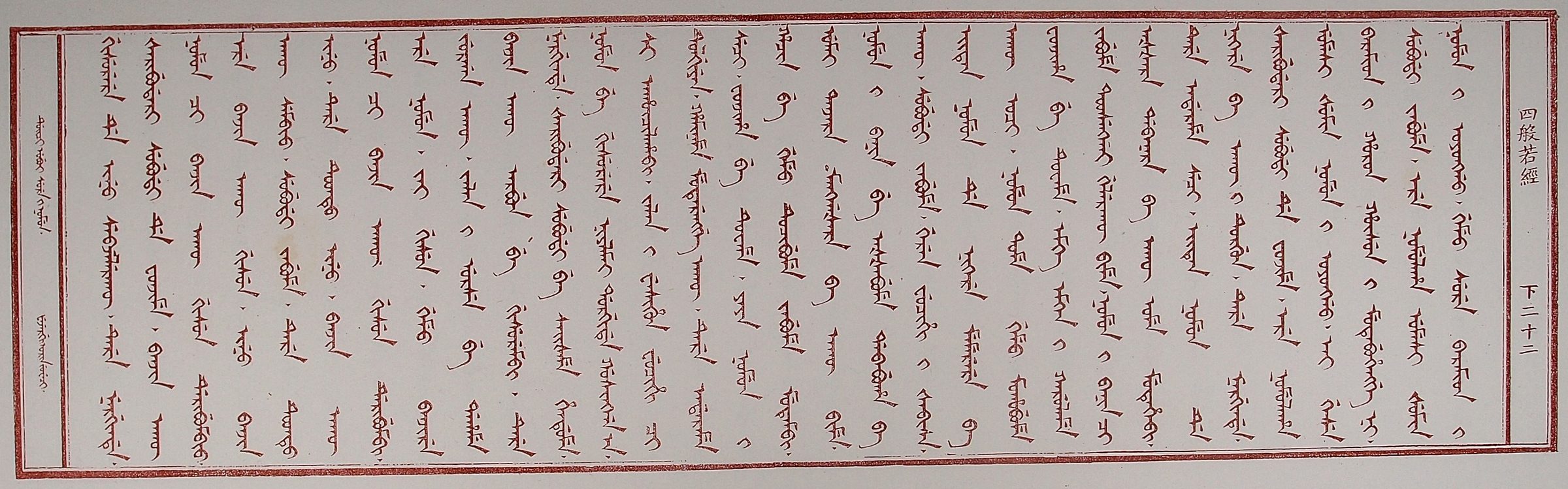 橫幅原圖 · 可左右捲動 · 點擊看大圖
三家原始輸出 · raw predictions(medoid 逐塊選骨架:nougat/res50/nougat,可自行複核)
逐詞解析 · word-by-word(211 單元 · 覆蓋 95.7%)
說時亦不樂。彼時舍利弗問須菩提:「無生經中,無生之言起乎?此無生之言亦是無生乎?」須菩提答曰:「如是,無生;亦如是,無生。經中無生之言起,此經餘言皆無生義。隨世間人故,說無生之相。」彼時舍利弗讚須菩提曰:「說經之人中,仁者最為第一。世間尊佛以外,無能及者。何以故?隨所問,凡經之種類皆能答出,毫無口吃為難之處,且不動經之性、無所踰越。」須菩提答曰:「諸佛弟子若於一切經無所倚著、無所執取,則於每經皆能窮詰隨問,一一酬答,有權而不畏,且能不離經性、無所動轉踰越。何以故?以於一切經無所倚著故。」彼時舍利弗問須菩提:「此說法甚深,經之要者何似?以般若波羅蜜多之威力所成者歟?」須菩提答曰:「此說法甚深,經之要者,皆般若波羅蜜多之〔力〕。」
EnglishWhile speaking, (s)he was not joyful either. At that time Śāriputra asked Subhūti: “In the unborn sūtra, does the word ‘unborn’ arise? Is this word ‘unborn’ also unborn?” Subhūti answered: “So it is, unborn; so it is also unborn. The word ‘unborn’ arises from the sūtra; the remaining words of this sūtra are all without the principle of birth. Following worldly people, (they) speak of the form of the unborn.” At that time Śāriputra praised Subhūti, saying: “Among those who expound the sūtras, you, O benevolent one, are foremost. Except the world-honored Buddha, there is none who can approach (you). Why is that? Looking at what is asked, (you) can bring forth and answer every kind of sūtra, with no stammering or difficulty at all, and without moving the nature of the sūtra or causing any excess.” Subhūti answered: “If the disciples of all Buddhas have no reliance or clinging in any sūtra, then in every sūtra (they) can exhaustively question, answering one by one as asked, with authority and without fear, and can achieve being without moving or exceeding from the nature of the sūtra. Why is that? Because of having no reliance in any sūtra.” At that time Śāriputra asked Subhūti: “This teaching of the Dharma is extremely profound; what is the essential point of the sūtra like? Is it accomplished by the power and might of prajñāpāramitā?” Subhūti answered: “This teaching of the Dharma is extremely profound; the essential points of the sūtra are all of prajñāpāramitā.”
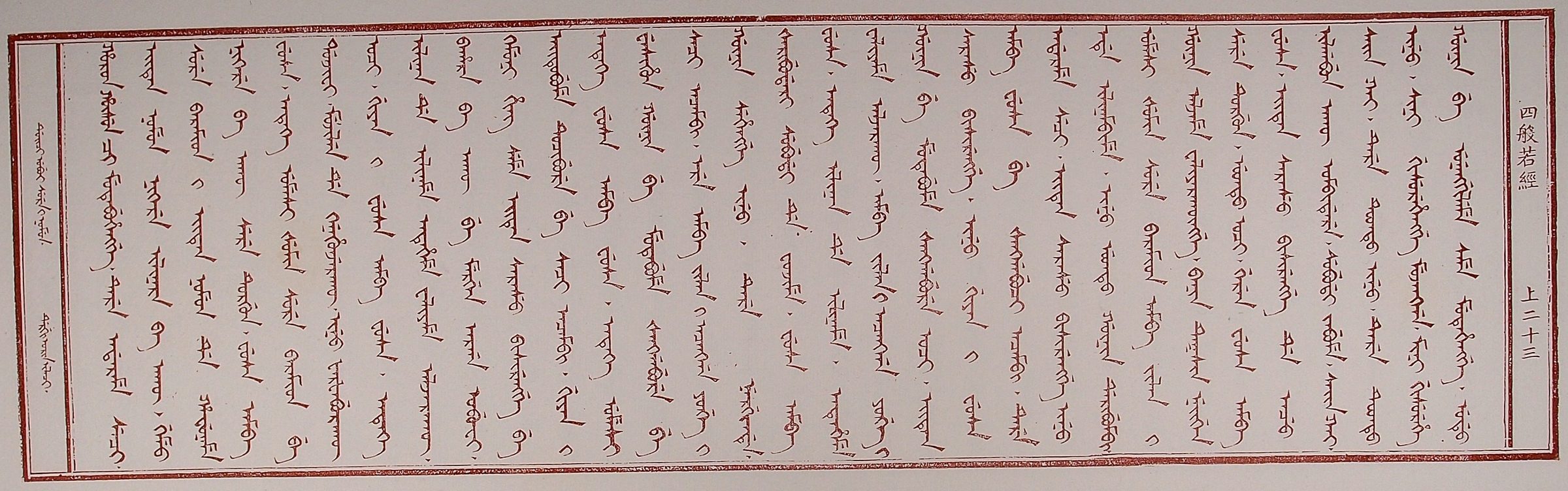 橫幅原圖 · 可左右捲動 · 點擊看大圖
三家原始輸出 · raw predictions(medoid 逐塊選骨架:res50/res50/res50,可自行複核)
逐詞解析 · word-by-word(217 單元 · 覆蓋 97.7%)
威力所成者,何謂也?一切經無所倚、無所止,皆以般若波羅蜜多於一切經中通達無所倚止故。菩薩、大菩薩若聞如是甚深般若波羅蜜多,心中不疑、亦不迷亂,則理應知菩薩、大菩薩如是住於止中,永不捨離、無所得,以此為妙計,仍懇切救度一切有識者。理應知如是菩薩、大菩薩能成就、圓滿如是至勝之心。此大慈相應瑜伽之心者,即彼時舍利弗問須菩提:「菩薩、大菩薩如是住於止中,永不捨離,若能成就、圓滿大慈相應瑜伽之心,則一切有識者亦理應圓滿菩薩、大菩薩。」何謂也?一切有識者亦於此住止,亦如是起心。甚深般若波羅蜜多不捨大慈之心者,以本性均平故。若是,則諸菩薩、大菩薩於一切有識者應無異別歟?須菩提答曰:「善哉!善哉!彼如是,彼如是。汝所言誠能知我所說之意,雖……」
EnglishThat which is accomplished from power—what is it called? All scriptures have no place of leaning, no place of standing; because through prajñāpāramitā one penetrates all scriptures without any place of leaning. If a bodhisattva, a great bodhisattva, having heard such extremely profound prajñāpāramitā, does not doubt in mind and is not confused, then it should be known that a bodhisattva, a great bodhisattva, thus standing in that standing, never abandoning, having nothing to be obtained—taking this as a skillful device, still sincerely delivering all those who have knowledge—it should be known that such a bodhisattva, a great bodhisattva, can accomplish and perfect such a most exalted mind. This mind of great compassion, the connected yoga—at that time Śāriputra asked Subhūti: “If a bodhisattva, a great bodhisattva, thus standing in that standing, never abandoning, can accomplish and perfect the mind of great compassion, the connected yoga, then all those who have knowledge should also accordingly perfect the bodhisattva, the great bodhisattva.” What is that called? All those who have knowledge also stand therein, and also thus give rise to mind. The extremely profound prajñāpāramitā does not abandon the mind of great compassion, because its nature is even and level. If it is so, then should all bodhisattvas, great bodhisattvas, be without any difference from all those who have knowledge? Subhūti answered: “Good! Good! It is so, it is so. What you have said can truly know the meaning I have spoken, although……”
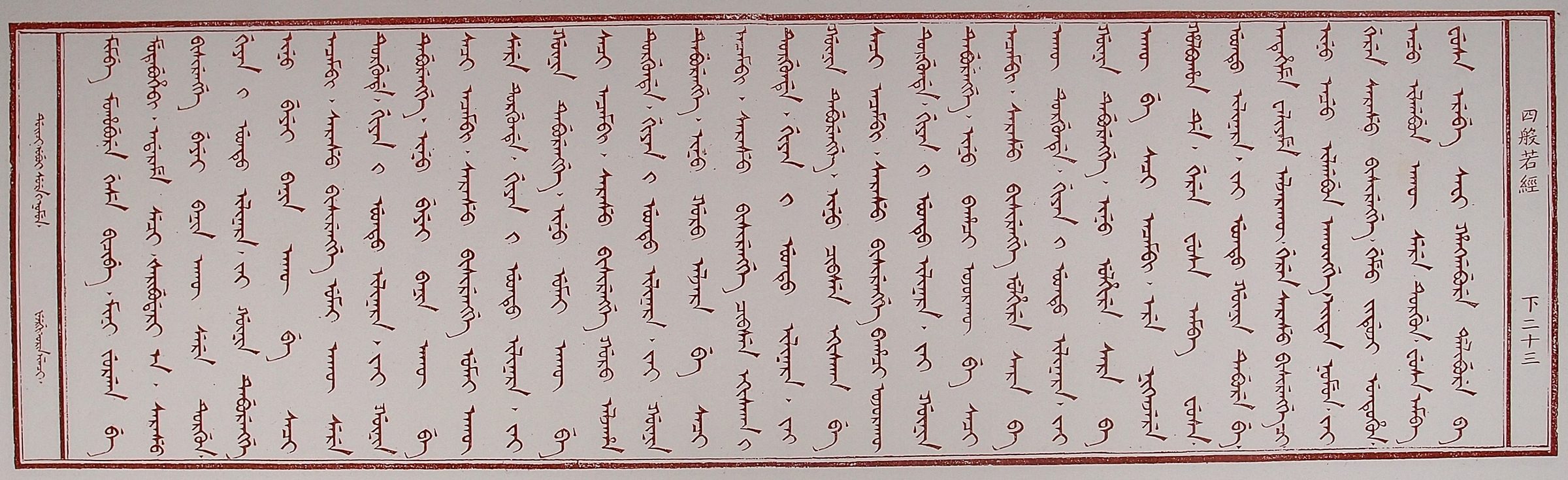 橫幅原圖 · 可左右捲動 · 點擊看大圖
三家原始輸出 · raw predictions(medoid 逐塊選骨架:nougat/res50/res50,可自行複核)
逐詞解析 · word-by-word(212 單元 · 覆蓋 98.6%)
雖似窮詰於我,然已成就我之義。何謂?有識者,因自性本無,理應如是止住;復次,攝心者,亦當知自性本無。有識者,因實無所有,理應如是止住;復次,攝心者,亦當知實無所有。有識者,因遠離故,理應如是止住;復次,攝心者,亦當知遠離。有識者,因寂靜安閑故,理應如是止住;復次,攝心者,亦當知寂靜安閑。有識者,因不可得故,理應如是止住;復次,攝心者,亦當知不可得。有識者,因無了知處故,理應如是止住;復次,攝心者,亦當知無了知處。於此親近結縛之中,諸菩薩、大菩薩如是止住、如是攝心,永不捨離;諸有識者亦無異別。一切經及諸有識者,究竟皆空、無異別故,菩薩、大菩薩知此,乃能遮止、蔽護之處。
EnglishThough it may seem to exhaust me, it has fulfilled my duty. How so? For those who have knowledge, because their own nature is non-existent, it is fitting that they thus stand still; moreover, those who settle the mind should also know that their own nature is non-existent. For those who have knowledge, because there is truly nothing at all, it is fitting that they thus stand still; moreover, those who settle the mind should also know that there is truly nothing at all. For those who have knowledge, because of being far removed, it is fitting that they thus stand still; moreover, those who settle the mind should also know the being far removed. For those who have knowledge, because of stillness and quietude, it is fitting that they thus stand still; moreover, those who settle the mind should also know stillness and quietude. For those who have knowledge, because of being unobtainable, it is fitting that they thus stand still; moreover, those who settle the mind should also know the being unobtainable. For those who have knowledge, because there is no place of understanding or knowing, it is fitting that they thus stand still; moreover, those who settle the mind should also know that there is no place of understanding or knowing. In this approaching bond, the many bodhisattvas and great bodhisattvas thus stand still and thus settle the mind, never abandoning it; those who have knowledge are also without distinction. Because all sutras and all those who have knowledge are ultimately empty and without distinction, the bodhisattvas and great bodhisattvas, knowing this, are able to obstruct and conceal.
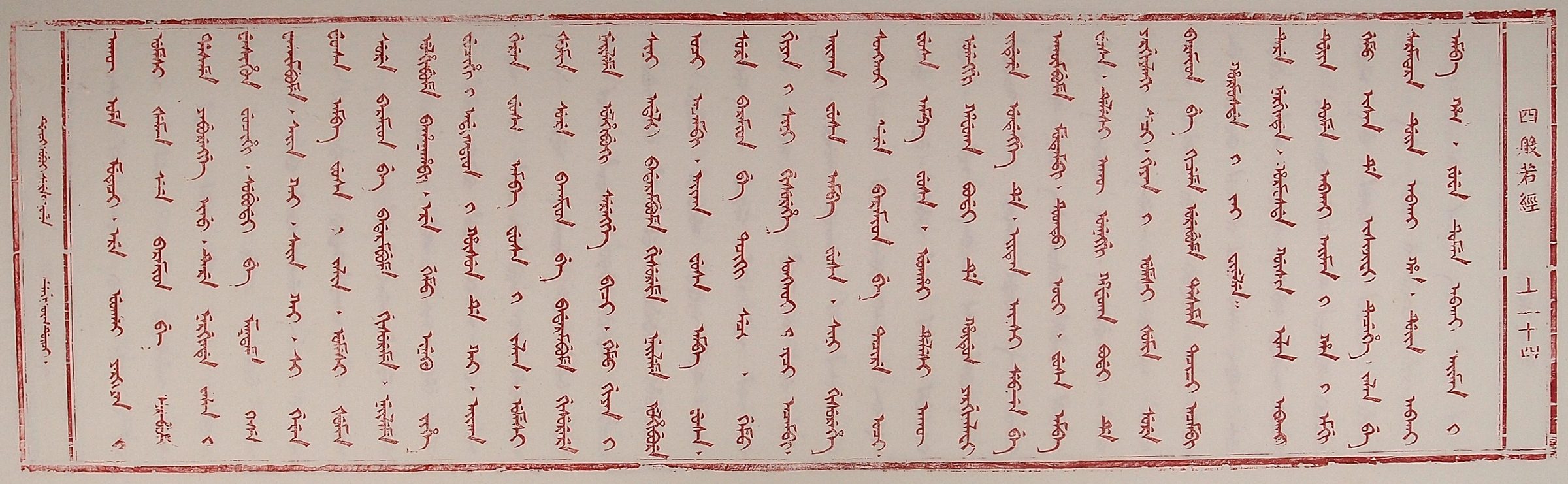 橫幅原圖 · 可左右捲動 · 點擊看大圖
三家原始輸出 · raw predictions(medoid 逐塊選骨架:res50/donut/donut,可自行複核)
逐詞解析 · word-by-word(213 單元 · 覆蓋 91.5%)
若能無有疑惑,此即是雅爾、燕之極深般若波羅蜜多,復行於彼時,稱讚世尊須菩提,善哉善哉。諸菩薩、大菩薩,為甚深般若波羅蜜多,能廣說、開示、曉諭,此皆亦乘須菩提之力也。若欲為諸菩薩、大菩薩廣說、開示甚深般若波羅蜜多,理應如汝廣說、開示。若諸菩薩、大菩薩欲學般若波羅蜜多,皆應依汝所說而行。若諸菩薩、大菩薩依汝所說學般若波羅蜜多,則諸菩薩、大菩薩即能於無上眞通之宅,決定將來,能令一切利樂無有。故諸菩薩、大菩薩若欲於無上眞通之宅驗實,理應勤習甚深般若波羅蜜多,修治而學。帝釋品第二。爾時,瑪達、金斗、三、四萬天、諸部汗等,俱來集會而坐,攝受世間之四天王、四大王、二萬天部之〔?〕。
EnglishIf (one) can be without doubt, this is indeed the very profound prajñāpāramitā of Yari and Yan; practicing it again at that time, (they) praised the World-Honored Subhūti, saying “Good, good.” The many bodhisattvas and great bodhisattvas, for the sake of the very profound prajñāpāramitā, were able to expound, reveal, and explain it extensively — this too was all by the power of Subhūti, who had come. If (one) wishes to expound, reveal, and explain extensively the very profound prajñāpāramitā for the many bodhisattvas and great bodhisattvas, it is fitting to expound, reveal, and explain it extensively just as you do. If the many bodhisattvas and great bodhisattvas wish to study the prajñāpāramitā, they should all act in accordance with what you have said. If the bodhisattvas and great bodhisattvas study the prajñāpāramitā according to what you have said, then the bodhisattvas and great bodhisattvas will be able, in the abode of unsurpassed true penetration, to verify and come, and to make all benefit and joy without [lack]. Therefore, if the bodhisattvas and great bodhisattvas wish to verify [it] in the abode of unsurpassed true penetration, it is fitting that they diligently train in, cultivate, and study the very profound prajñāpāramitā. The Second Chapter of Śakra. At that time, Mārada(?), Jindou(?), the three [and] four myriads of heavenly kings, the khans of the heavenly tribes, and others all came together to the assembly and sat down; the four heavenly kings who protect the world, the four great heavenly kings, and the two myriad heavenly tribes of 〔?〕.